Daily Priene, Miletos & Didyma Tours: Three Ancient Ionian Cities in One Day
Daily Priene, Miletos, and Didyma tours take in three of the most significant ancient cities of the Ionian coast in a single guided day — a circuit covering a philosopher's birthplace, a 15,000-seat theatre, and one of the largest temple complexes ever built in the ancient world. All three sites lie within 70 km of Selçuk, making Apasas Travel — based 15 km from Priene — the most geographically efficient operator for this day trip available in Turkey.
The three cities form a logical historical narrative: Priene, the hilltop Ionian polis aligned by Hippodamus's grid plan; Miletos, the commercial and philosophical powerhouse that colonised 90 cities across the Mediterranean; and Didyma, where the Oracle of Apollo at the Temple of Apollo drew pilgrims for six centuries. Visiting them in sequence reveals how a single Aegean coastline produced both the foundations of Western science and the most ambitious sacred architecture of antiquity.
Daily Priene Tours: The Hilltop Grid City of the Ionians
Priene is an ancient Ionian city built on a series of terraces on the steep southern slope of Mount Mykale, overlooking the alluvial plain where the Meander River once met the sea. The city was laid out using the Hippodamian grid plan — the world's first systematic urban grid, attributed to Milesian architect Hippodamus — with streets running east–west and north–south regardless of the hillside terrain.
Temple of Athena Polias in Priene
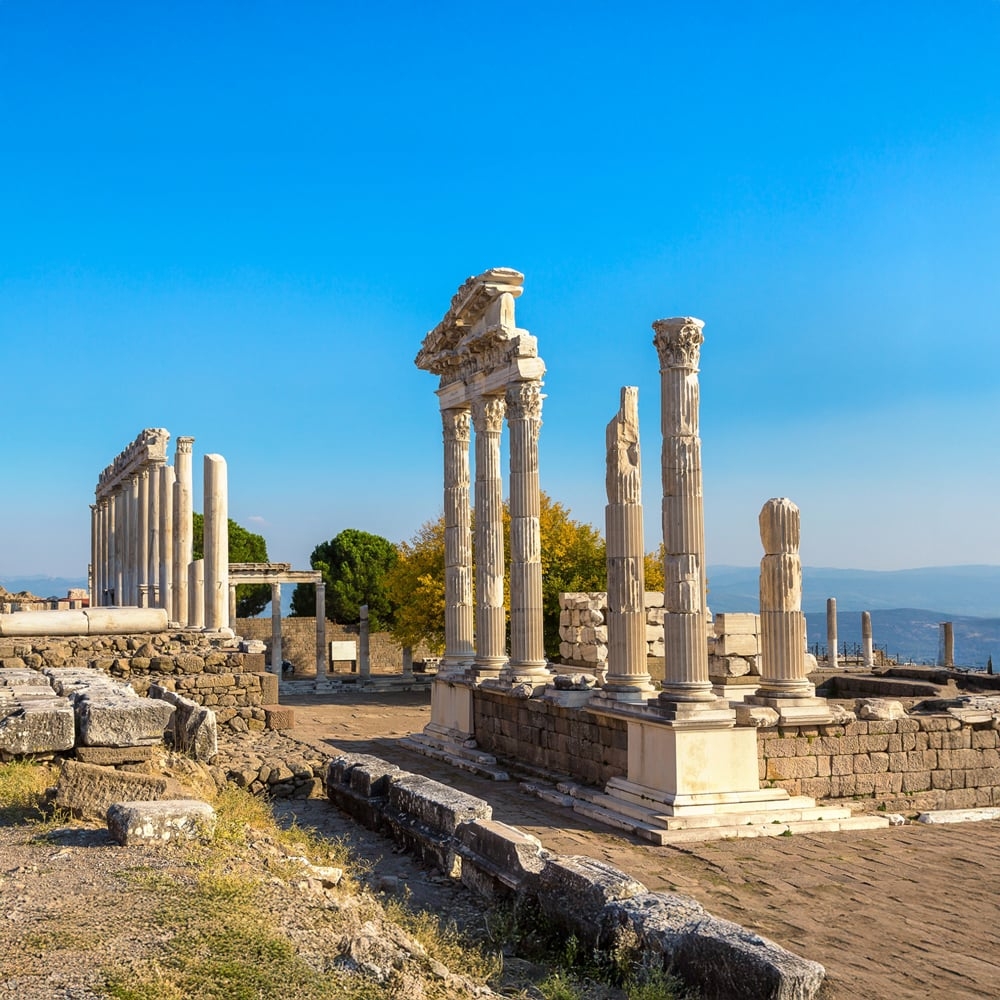
The Temple of Athena Polias in Priene was dedicated in 334 BC by Alexander the Great, who personally paid for its construction and left an inscription recording his donation — a text now held in the British Museum. The temple was designed by Pytheos, the same architect responsible for the Mausoleum at Halicarnassus (Bodrum), one of the original Seven Wonders of the Ancient World. Five of the original 30 columns have been re-erected and stand to their full height, giving the site a strong visual anchor within the overgrown terraces.
Theatre of Priene
The Theatre of Priene holds 5,000 spectators and is one of the best-preserved Hellenistic theatres in western Turkey. It features the original prohedria — the front-row marble thrones for city officials and priests — carved with arm rests and inscriptions naming the seat holders. The theatre's acoustics remain functional; a spoken word from the stage is audible in the back rows without amplification.
Priene Agora and Bouleuterion
Priene's Agora (marketplace) was the civic and commercial centre of the city, flanked by the Bouleuterion (council house) where the city's 640-member council debated legislation. The Bouleuterion is among the most intact in Ionia, with tiered seating still visible and the original altar of Hestia still positioned at the centre of the floor. The Agora's Sacred Stoa, a portico running the full northern edge, provided covered space for merchants and public transactions.
Daily Miletos Tours: The Birthplace of Western Philosophy
Miletos was the most powerful city of ancient Ionia — a merchant republic that colonised over 90 cities from the Black Sea to southern France between the 8th and 6th centuries BC, spreading Ionian culture, trade, and intellectual traditions across the Mediterranean. The city was the birthplace of Thales, Anaximander, and Anaximenes — the first three pre-Socratic philosophers — who replaced mythological explanations of the natural world with material causes, founding Western rational inquiry. Miletos now sits 8 km from the sea, stranded inland by the silt deposits of the Meander River.
Great Theatre of Miletos
The Great Theatre of Miletos held 15,000 spectators in its Hellenistic configuration and was expanded to 25,000 capacity under Roman rule, making it one of the largest theatres in Asia Minor. The cavea (seating bowl) is cut into a natural hillside, with a Byzantine fortress built on the uppermost section of the hill above the stage building. The stage building's elaborate marble facade, though partially collapsed, remains the site's most architecturally complex remnant.
Miletos Archaeological Museum
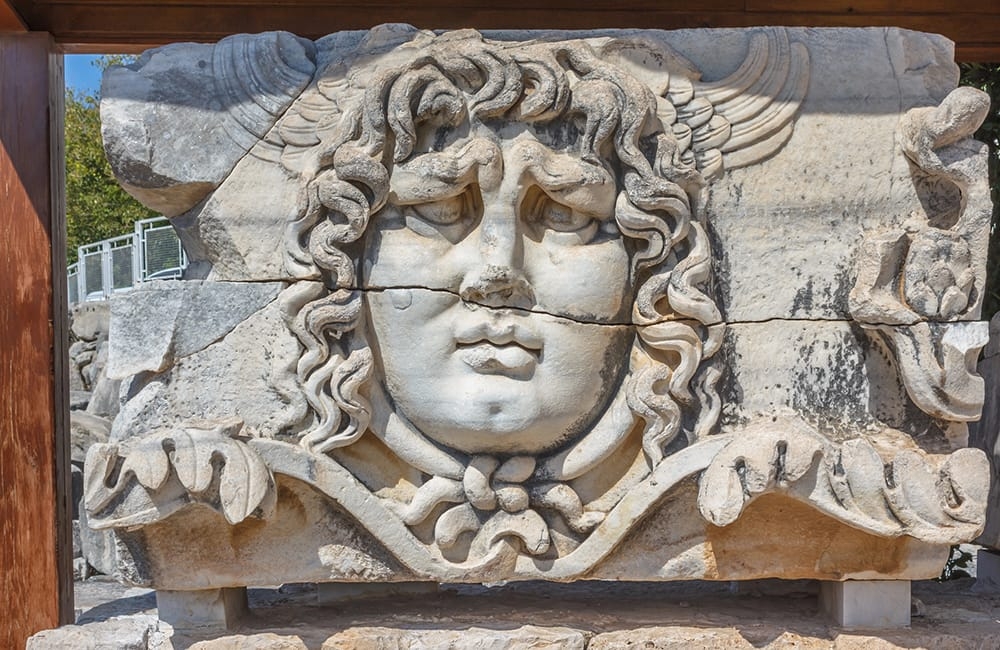
The Miletos Archaeological Museum, located at the entrance to the ancient city, holds finds from excavations conducted by the German Archaeological Institute since 1899. The collection includes the Medusa head fragment from the Miletos Agora, Archaic-period ceramics, and Roman-era portrait sculptures. The museum provides essential context for understanding the scale of the ancient city before entering the site.
Daily Didyma Tours: The Oracle Temple of Apollo
Didyma was not a city but a sanctuary — a sacred site centred on the Oracle of Apollo, one of the most important oracular sites in the ancient Greek world alongside Delphi and Dodona. The Temple of Apollo at Didyma is the third largest temple ever constructed in antiquity, measuring 109 metres in length and 51 metres in width, with a design calling for 122 columns at full completion — a project begun around 300 BC that was never fully finished, still under construction when Christian emperors closed pagan sanctuaries in the 4th century AD.
Temple of Apollo at Didyma
The Temple of Apollo at Didyma is classified as dipteral Ionic — meaning two complete rows of columns surrounding the inner sanctuary — with each column standing 19.7 metres tall. Fifteen complete columns survive standing, giving Didyma the most visually impressive columnar remains of any ancient site in the Aegean region. Inside the temple's central court (adyton), a smaller shrine housed the sacred spring through which the oracle delivered prophecies, transmitted by a prophetess (the promantis) after drinking the spring water and inhaling vapours from the ground.
Sacred Road from Miletos to Didyma
The Sacred Road from Miletos to Didyma was a 19-km processional route lined with seated statues of priests and priestesses, many of which now stand in the British Museum. The road was walked annually during the Didymeia festival, when pilgrims processed from Miletos to Didyma to consult the oracle. Excavations along the route have revealed more than 80 marble statues, representing the largest collection of Archaic Greek religious sculpture from a single site anywhere in the world.
Priene, Miletos & Didyma Daily Tour: Practical Information
The three sites are spread across a 60-km arc south of Kusadasi and Selçuk. A standard day itinerary departs at 08:30 from Kusadasi or Selçuk, visits Priene first (1.5 hours, steepest terrain), then Miletos with a lunch break at a local restaurant in the town of Akkoy (30 minutes), then Didyma in the afternoon (1.5 hours), returning to Kusadasi by approximately 17:30. Total walking distance across all three sites is approximately 6–8 km on mixed-quality terrain.
Apasas Travel departs from Selçuk, 15 km from Priene — the closest operational base of any licensed tour company. Istanbul or Izmir-based operators arrive at the first site 1–2 hours later than Apasas, meaningfully shortening time at each location.
Book Your Daily Priene, Miletos & Didyma Tour
Three of antiquity's most significant sites, one expertly guided day. Apasas Travel departs from Selçuk, 15 km from Priene — closer than any other licensed tour operator. No deposit required.
Book This Tour Explore All Daily Tours