Daily Pamukkale Tours: White Travertines & Hierapolis from Multiple Departure Points
Daily Pamukkale tours visit one of Turkey's most distinctive natural and archaeological sites — the UNESCO World Heritage Site combining Pamukkale's white calcium carbonate terraces with the Greco-Roman city of Hierapolis, all in a single full-day itinerary. Tours depart from Kusadasi, Izmir, and Selçuk, with options for guests staying at Pamukkale hotels. Both shared group and fully private tour formats are available.
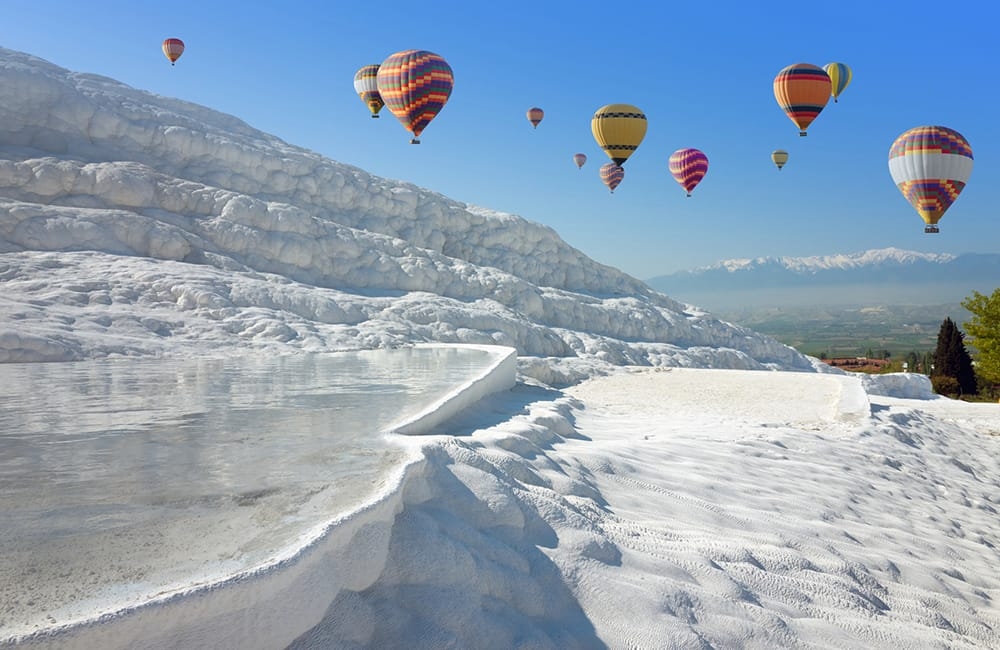
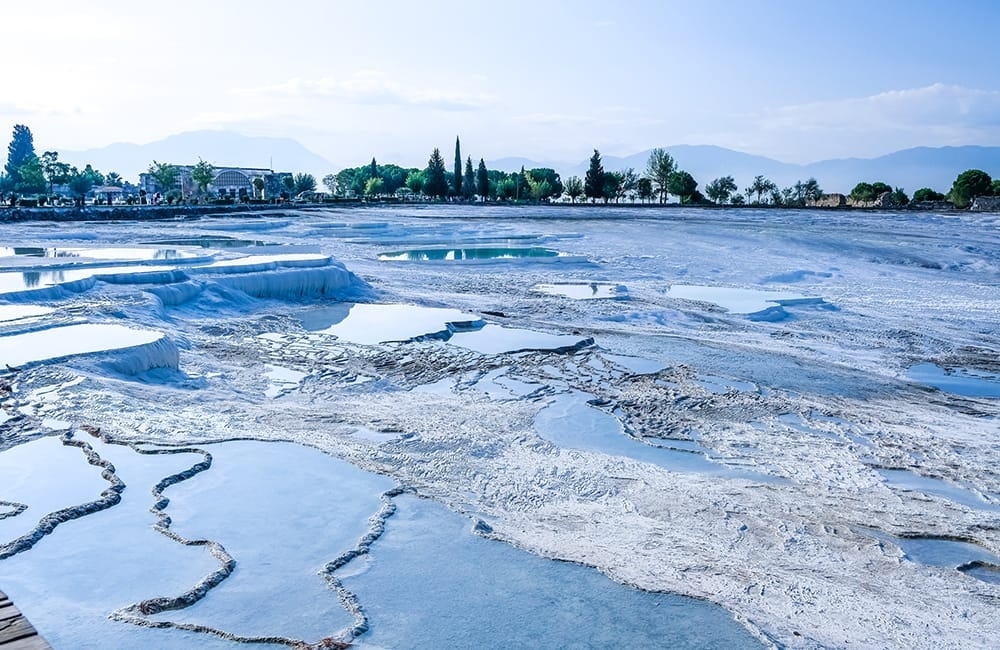
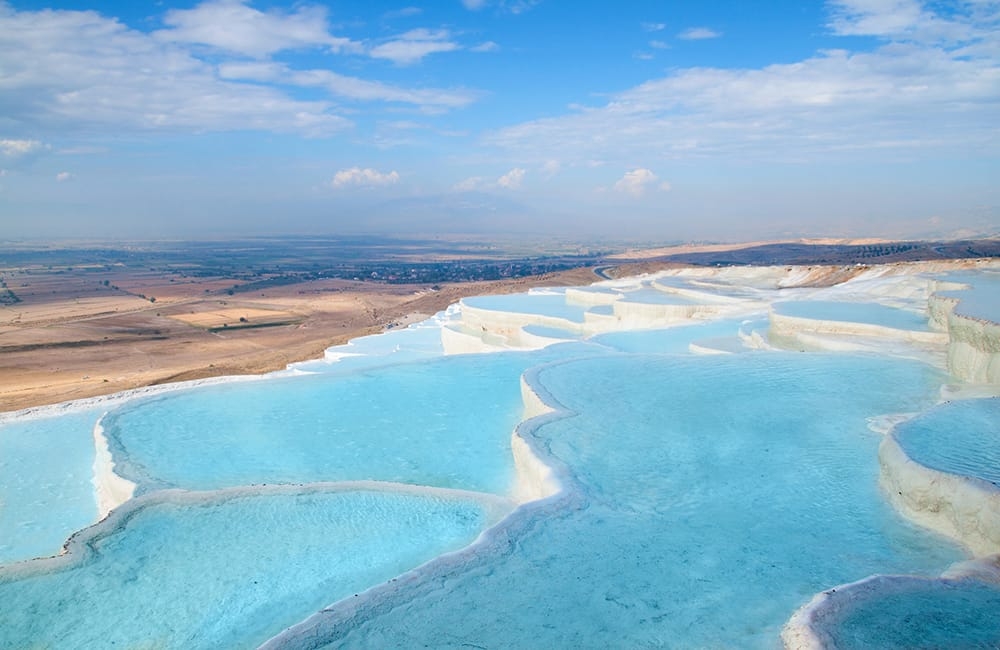
Pamukkale means "cotton castle" in Turkish, and the name fits: bright white terraces spill down the hillside like frozen waves, shaped by mineral-rich thermal water over thousands of years. The site has been recognised as a UNESCO World Heritage Site since 1988 — among the earliest UNESCO inscriptions in Turkey — and it remains one of the most photographed places in the country. The contrast of blue thermal water and white travertine is genuinely unlike anything else in Turkey or Europe.
Why Visit Pamukkale: The White Terraces and More
Pamukkale is more than a landscape viewpoint. The thermal spring at the top of the terraces flows at approximately 400 litres per second at a constant 35°C, carrying dissolved calcium bicarbonate that precipitates as white travertine when exposed to air — building the stepped pools at approximately 1–2 mm per year. The total travertine accumulation covers 2,700 metres of cliff face, a natural formation of a scale that has no parallel in Europe.
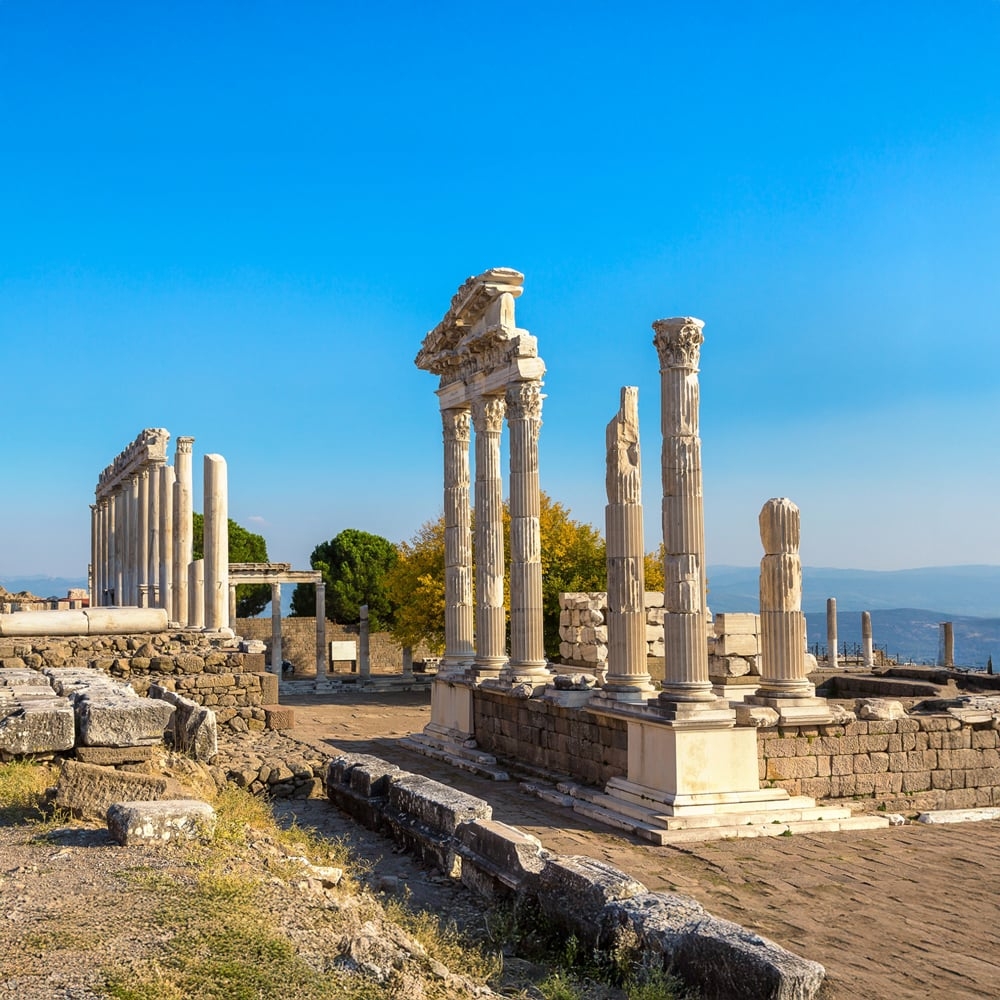
Above the travertines, the Greco-Roman city of Hierapolis was founded in the 2nd century BC as a spa settlement around the same thermal springs. It became a prosperous Roman city under Augustus, reaching an estimated population of 100,000 in the 2nd century AD, and was one of the earliest cities in Asia Minor with a significant Christian community. The Apostle Philip was martyred in Hierapolis in 80 AD; the Martyrion of Philip — a large octagonal 5th-century funerary church — sits 500 metres north of the city centre, currently under excavation by Italian archaeologists.
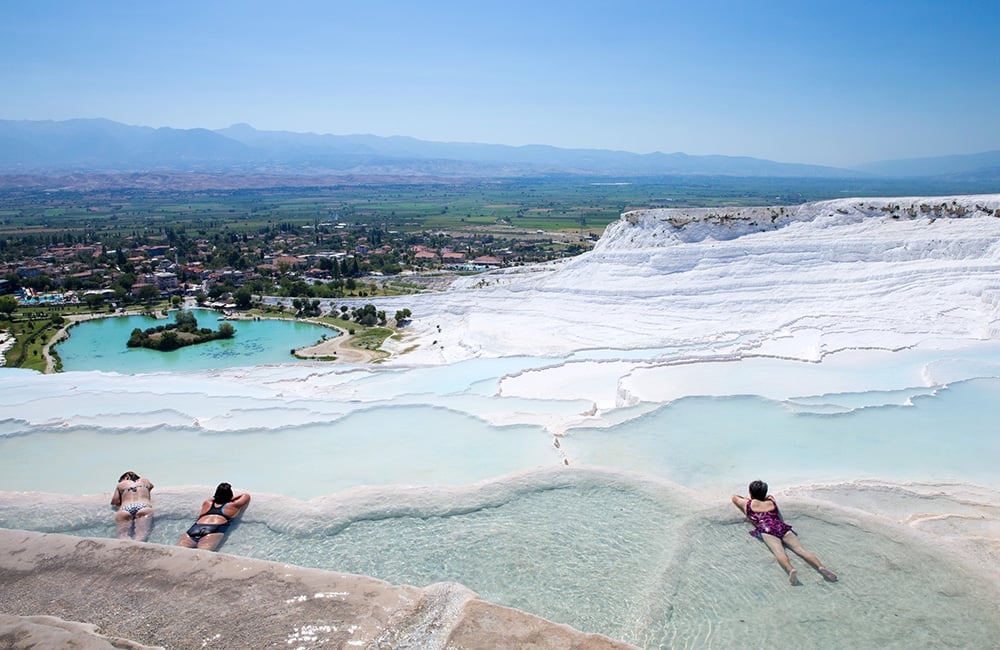
The site combination — natural thermal landscape and archaeological depth — gives Pamukkale a range that purely natural or purely historical sites cannot match. Walking barefoot on the travertines, stepping into warm thermal pools, exploring Roman streets and a theatre, and optionally swimming in the Antique Pool (Cleopatra's Pool) among submerged ancient columns produces a day that covers both wonder and substance.
All Daily Pamukkale Tours
Pamukkale Tour from Kusadasi with Lunch
The Kusadasi-to-Pamukkale daily tour is a full-day programme covering the complete Pamukkale and Hierapolis circuit: the Hierapolis Archaeological Museum, the Hierapolis Necropolis (one of the largest ancient cemeteries in Anatolia, with over 1,200 tomb monuments along a 2 km road), the travertine terraces (barefoot walk, approximately 45–60 minutes), and optional Cleopatra's Pool. Lunch is included at a local restaurant near the site. Duration: 11 hours total. From $109 per person.
Pamukkale Day Tour from Izmir
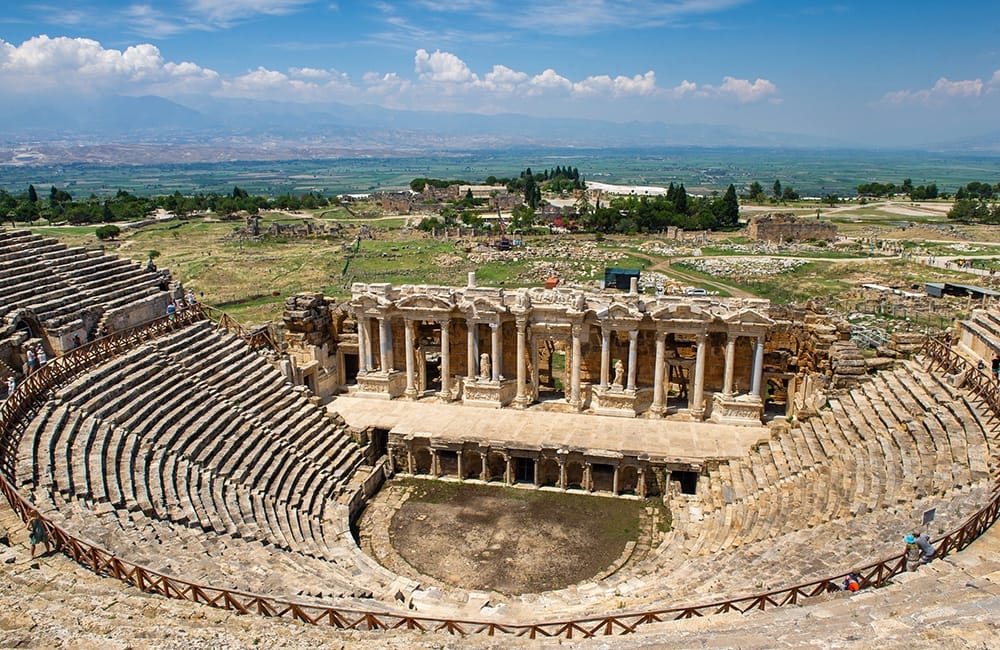
The Izmir-to-Pamukkale daily tour covers 195 km east from Izmir to the Denizli region, approximately 2.5 hours each way. The full-day itinerary allows a complete Pamukkale and Hierapolis visit — the Frontinus Gate, the Hierapolis Theatre (12,000 capacity, with exceptionally well-preserved stage building relief panels), the colonnaded street, and the travertine terraces — with return to Izmir in the evening. This is the longest travel-day format of the Pamukkale daily tours. Duration: 13 hours total. From $139 per person.
Pamukkale Tour from Selcuk
The Selçuk-based daily Pamukkale tour departs from the town adjoining Ephesus (120 km west of Pamukkale) and covers the same full-day Pamukkale and Hierapolis programme. This is the recommended format for guests combining an Ephesus stay with a Pamukkale day trip — Selçuk's central Aegean position makes it the most efficient base for both sites. Duration: 11 hours total. From $109 per person.
Pamukkale Tour from Pamukkale Hotels
For guests already staying in Pamukkale town, Apasas offers a guided day tour starting from the hotel. The 7-hour programme covers Hierapolis Archaeological Museum, the Hierapolis site (theatre, necropolis, Frontinus Gate, Plutonium), and the travertine terraces. Without the long transfer drive, more site time is available. From $75 per person.
Private Pamukkale Tour from Kusadasi or Selcuk
The private Pamukkale tour from Kusadasi or Selçuk operates with your group only — private vehicle, private guide, customisable itinerary. The private format allows extended time at the Antique Pool (Cleopatra's Pool), a more detailed visit to the Hierapolis Archaeological Museum, and an optional stop at the ancient city of Laodikeia (10 km north of Pamukkale, currently under active excavation with a recently uncovered 40,000-seat stadium). Duration: 11 hours. From $245 per person.
Private Pamukkale and Afrodisias Tour
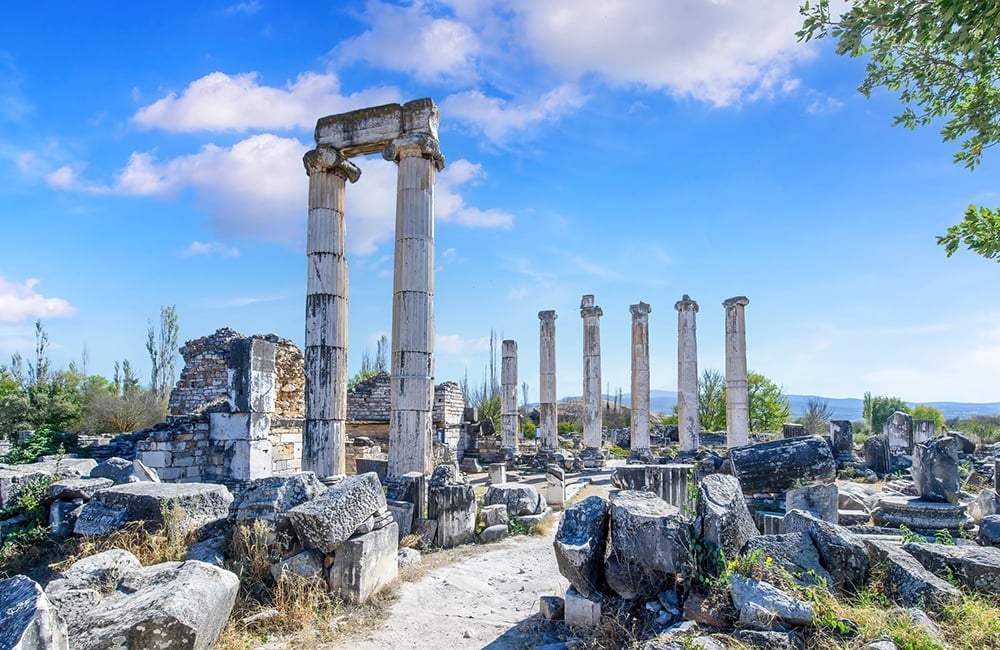
The combined Pamukkale and Afrodisias private tour is the most historically comprehensive daily Pamukkale option available. Afrodisias — the ancient city of Aphrodite, dedicated to the goddess of love and the arts — is located 100 km from Pamukkale and holds one of the best-preserved ancient stadiums in the world (270 metres long, 30,000 capacity), the Aphrodisias Sculpture Museum (the finest collection of Aphrodisian marble sculpture anywhere), and a uniquely well-preserved Sebasteion (the imperial cult monument with relief panels depicting Julius Caesar and Augustus). Afrodisias was inscribed as a UNESCO World Heritage Site in 2017. Duration: 14 hours. From $315 per person.
Key Sites on Daily Pamukkale Tours
Pamukkale Travertine Terraces
The travertine terraces are accessed barefoot at designated entry points; shoes are carried during the walk. The main cascade runs from the cliff top (where the ancient hot spring source is located) downward in a series of stepped pools filled with 35°C mineral water. Swimming is permitted only in designated sections. The walk across the terraces takes 45–60 minutes at a comfortable pace. During periods of low water flow (typically January–March), some lower pools may be dry.
Hierapolis Archaeological Museum
The Hierapolis Archaeological Museum is housed in the Roman-era bathhouse at the site's southern entrance — a two-storey Roman bath complex adapted as a museum space. The collection contains the most important sculptural material from the Aegean interior: the complete marble relief friezes from the Hierapolis Theatre stage building (narrative scenes from the lives of Apollo and Artemis), and the Sarcophagus of Marcus Aurelius Ammianos — an exceptional 3rd-century Roman relief sarcophagus showing mythological battle scenes. The visit takes 45–60 minutes.
Antique Pool (Cleopatra's Pool)
The Antique Pool (Antik Havuz) is an outdoor thermal swimming pool fed by Pamukkale's natural spring at 35–36°C. The pool floor contains fallen marble columns from the ancient Hierapolis colonnade, submerged when an earthquake collapsed the portico into the pool in the 7th century AD. Swimming in the pool (entrance approximately €15, swimwear required) takes 30–45 minutes and is offered as an option on all daily Pamukkale tours.
Book Your Daily Pamukkale Tour
Daily Pamukkale tours from Kusadasi, Izmir, and Selçuk — private and group, with and without Afrodisias. White travertines, Hierapolis, and optional Cleopatra's Pool. TURSAB-licensed. No deposit.
Book Your Pamukkale Tour All Daily Tours in Turkey