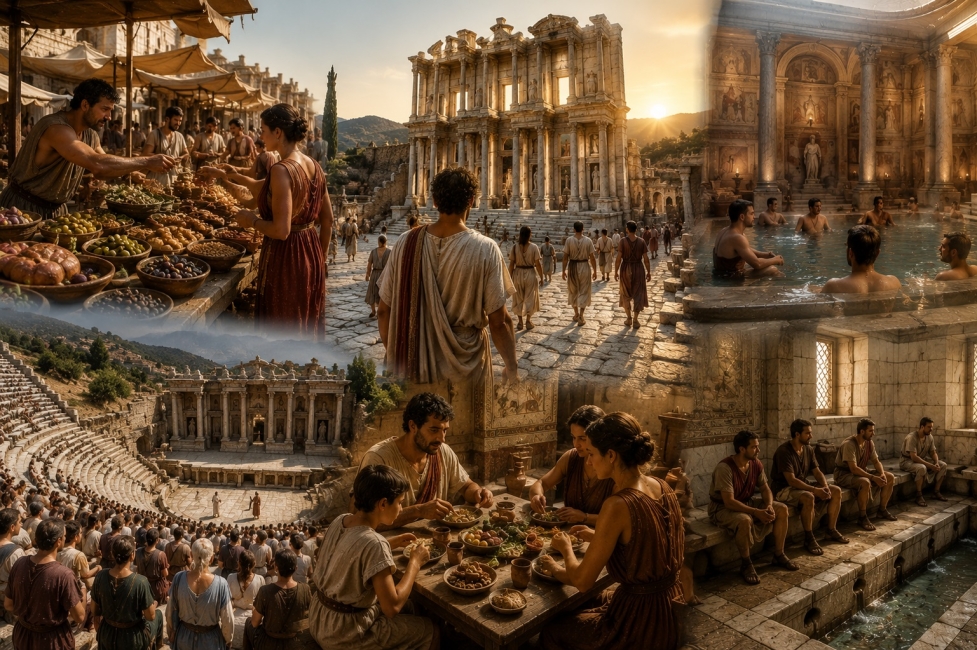
The first rays of sunlight begin to illuminate the marble streets of Ephesus.
Roosters crow in the distance as the city slowly awakens.
Shopkeepers lift their wooden shutters.
The smell of freshly baked bread drifts through the narrow streets.
Water flows gently from public fountains.
Somewhere inside the magnificent Terrace Houses, a wealthy merchant prepares for another busy day.
Nearby, an ordinary craftsman ties his sandals before heading to work.
Although their lives are very different, both are about to experience another typical day in one of the Roman Empire's greatest cities.
Let's travel back nearly 2,000 years and discover what daily life in Ancient Ephesus really looked like.
The city wakes early.
Without electricity, daylight determines almost every activity.
As the sun rises above Mount Pion, citizens open their windows to let in the cool morning air before the heat of the Mediterranean afternoon arrives.
The streets begin filling with servants carrying water, merchants preparing their stalls, and travelers arriving through the city gates.
Public fountains are already flowing, supplying fresh water that has traveled many kilometers through Roman aqueducts.
If you've ever wondered how such a large city received its water, read our guide on How Did Ancient Ephesus Get Fresh Water?.
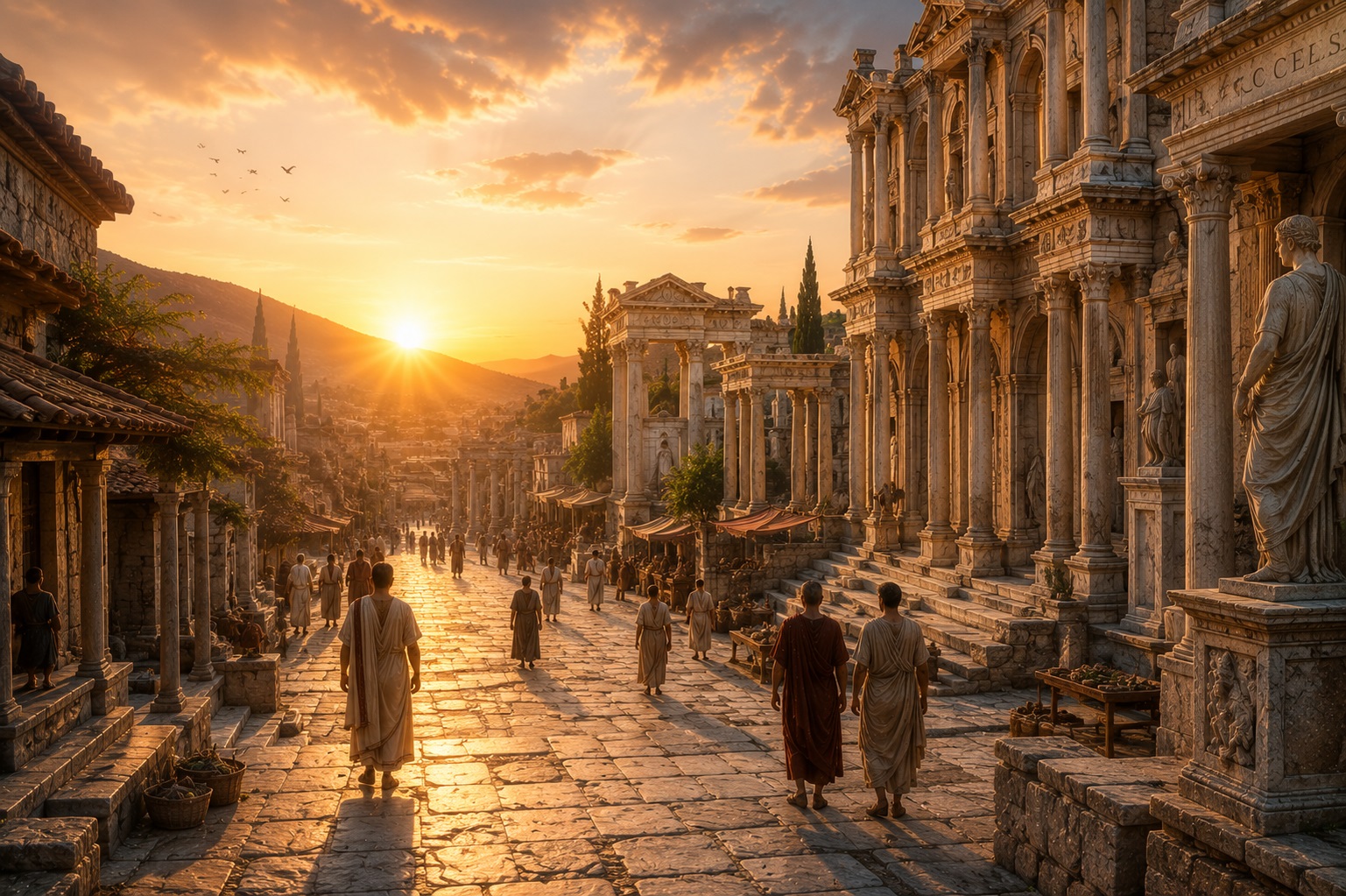
Breakfast is quick and practical.
Most families eat fresh bread dipped in olive oil, accompanied by goat cheese, olives, figs, or a little honey.
Children enjoy fruit while adults may drink watered wine rather than plain water.
For wealthier households, breakfast can include dried fruits, nuts, and eggs.
Many of these ingredients are still found on breakfast tables throughout the Aegean today.
If you'd like to learn more, explore our article What Did Romans Eat in Ancient Ephesus?.
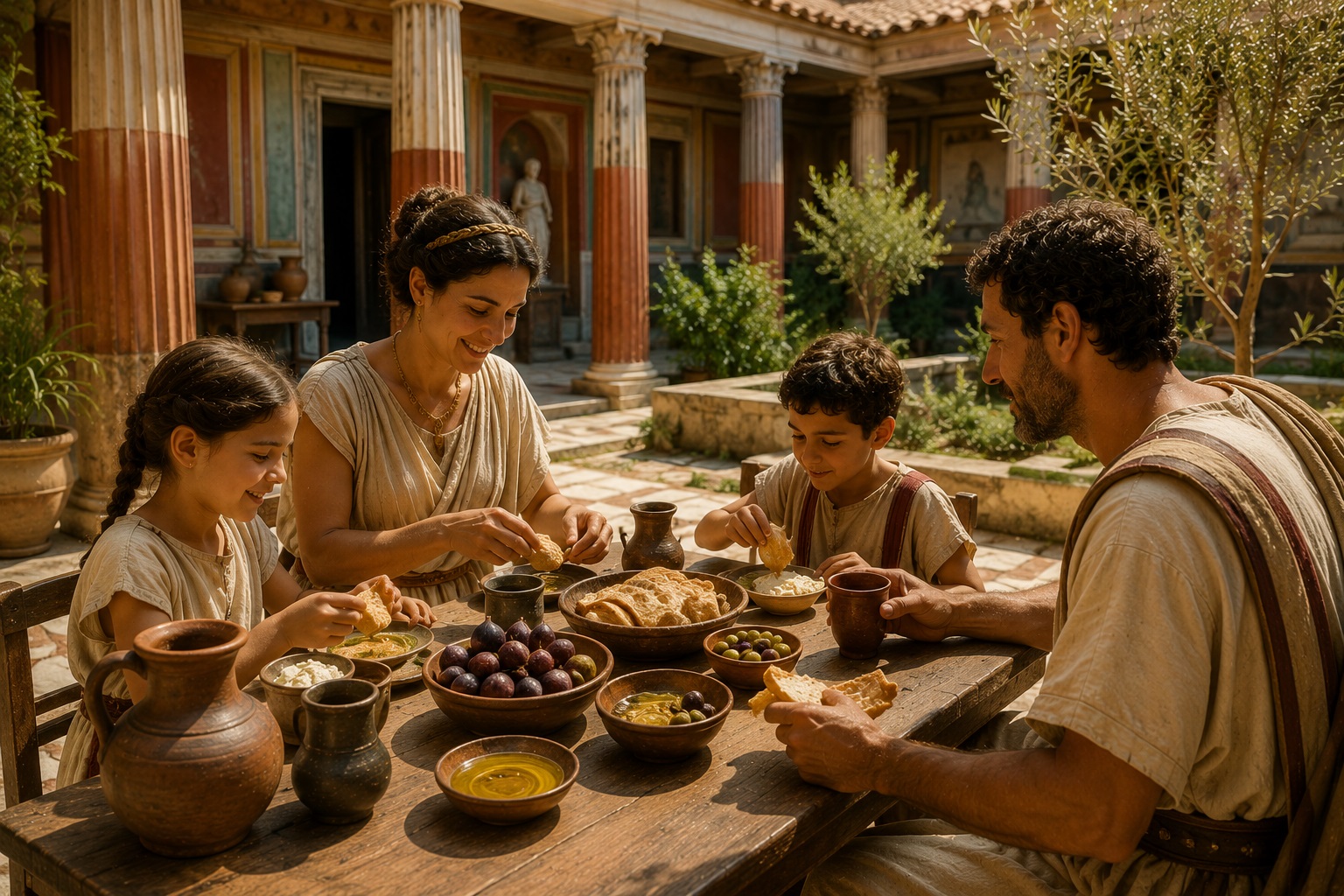
Now the city is fully awake.
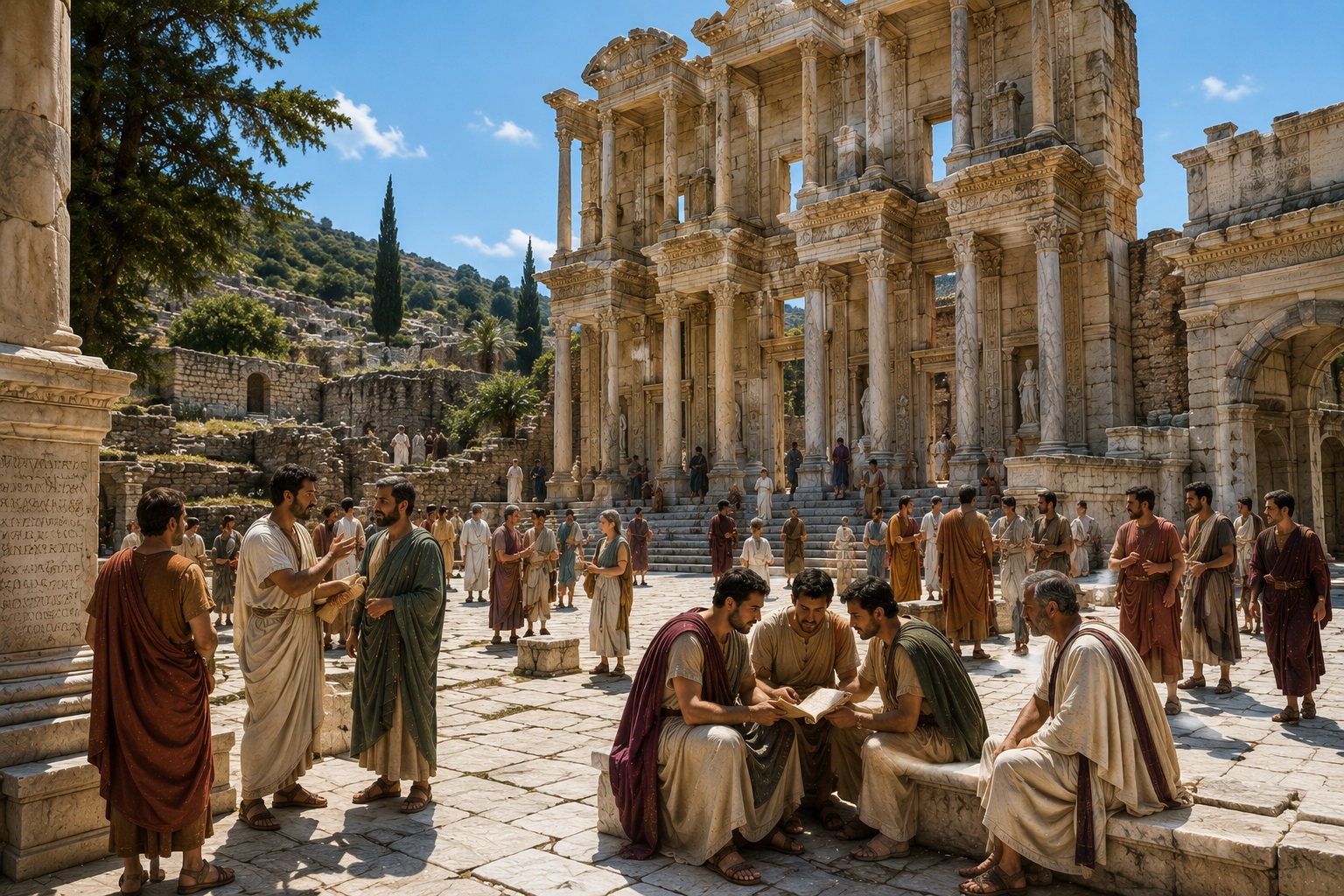
The Commercial Agora becomes the beating heart of Ephesus.
Merchants from across the Mediterranean display spices, perfumes, fine textiles, pottery, jewelry, wine, olive oil, and imported luxury goods.
Shoppers negotiate prices while sailors unload cargo arriving from distant ports.
The sounds of conversation echo beneath the marble colonnades.
Ephesus is not simply a city—it is one of the busiest trading centers in the Roman Empire.
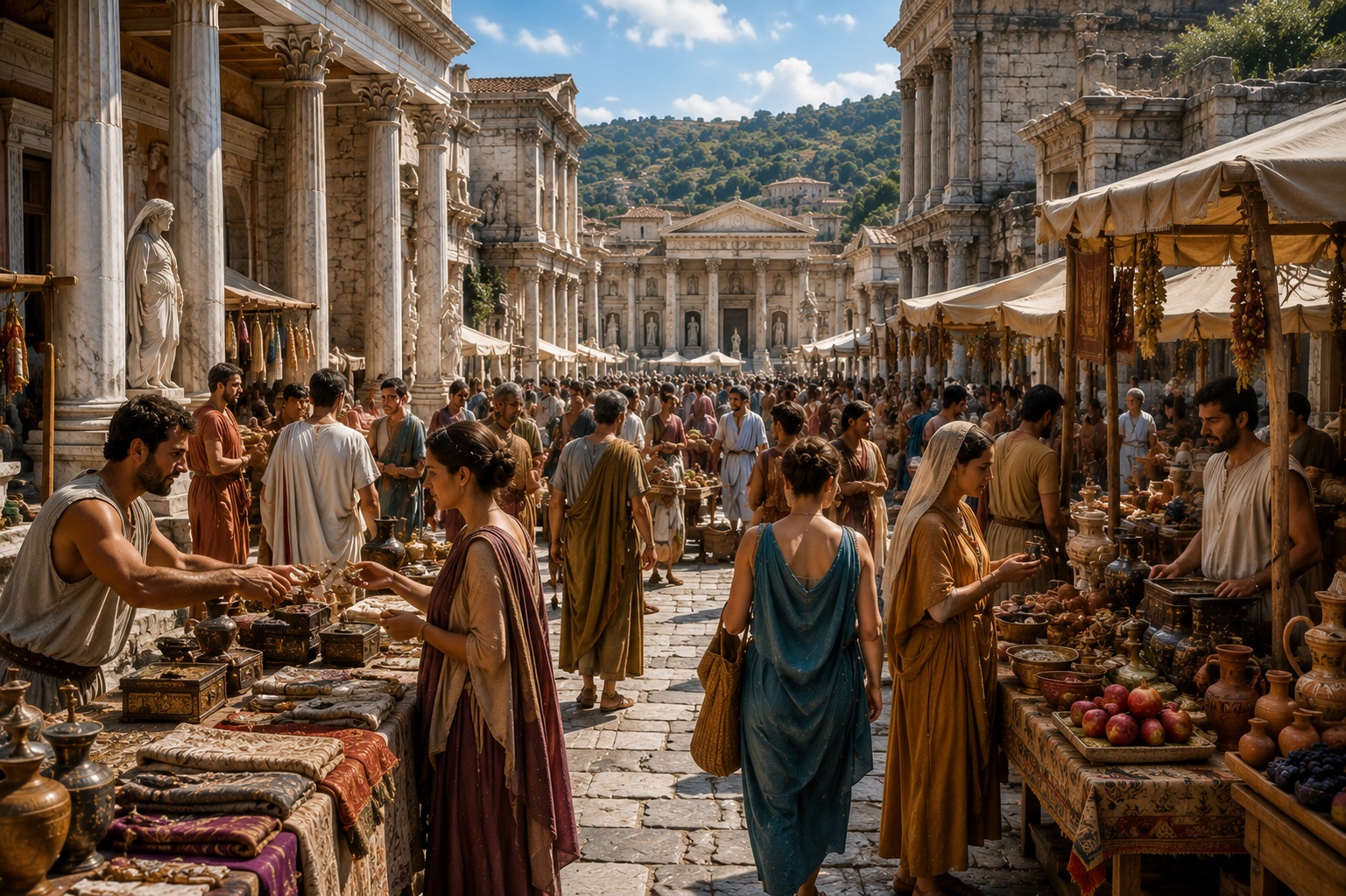
For many citizens, the morning is devoted to work.
Craftsmen shape marble, bronze, and pottery.
Lawyers meet clients.
Officials discuss civic affairs.
Philosophers debate ideas beneath shaded porticoes.
The magnificent Library of Celsus serves not only as a repository of knowledge but also as a popular meeting place for educated citizens.
Nearby, visitors admire temples, public monuments, and beautifully decorated streets that demonstrate the wealth of Ephesus.
As temperatures begin to rise, many Romans head toward the public bathhouses.
Bathing isn't simply about getting clean.
It's a daily social tradition.
Friends meet to talk business.
Politicians discuss important decisions.
Athletes exercise before entering warm and cold bathing rooms.
The magnificent Scholastica Baths are among the city's busiest public spaces.
Fresh water supplied by the Roman aqueduct system flows continuously through pools and fountains.
To discover how these remarkable buildings operated, read Roman Baths of Ephesus: More Than Just a Place to Get Clean.
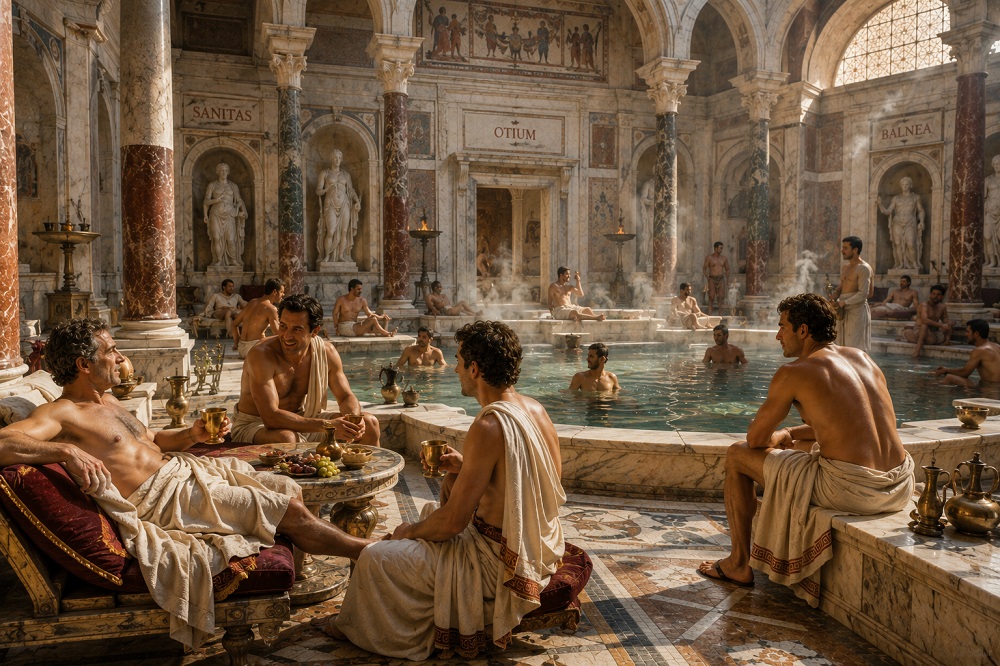
Many Romans spent several hours each afternoon in the public baths. Bathing was considered an essential part of daily life, combining hygiene, exercise, relaxation, and social interaction in one place.
After leaving the baths, our Roman citizen still has plenty of the day ahead.
Next comes lunch, a visit to the famous public toilets, an afternoon at the Great Theatre, shopping in the Agora, dinner with family, and a peaceful evening beneath the glow of olive oil lamps.
Let's continue our journey through a typical day in Ancient Ephesus in the next section.
After spending time at the baths, it's time for lunch.
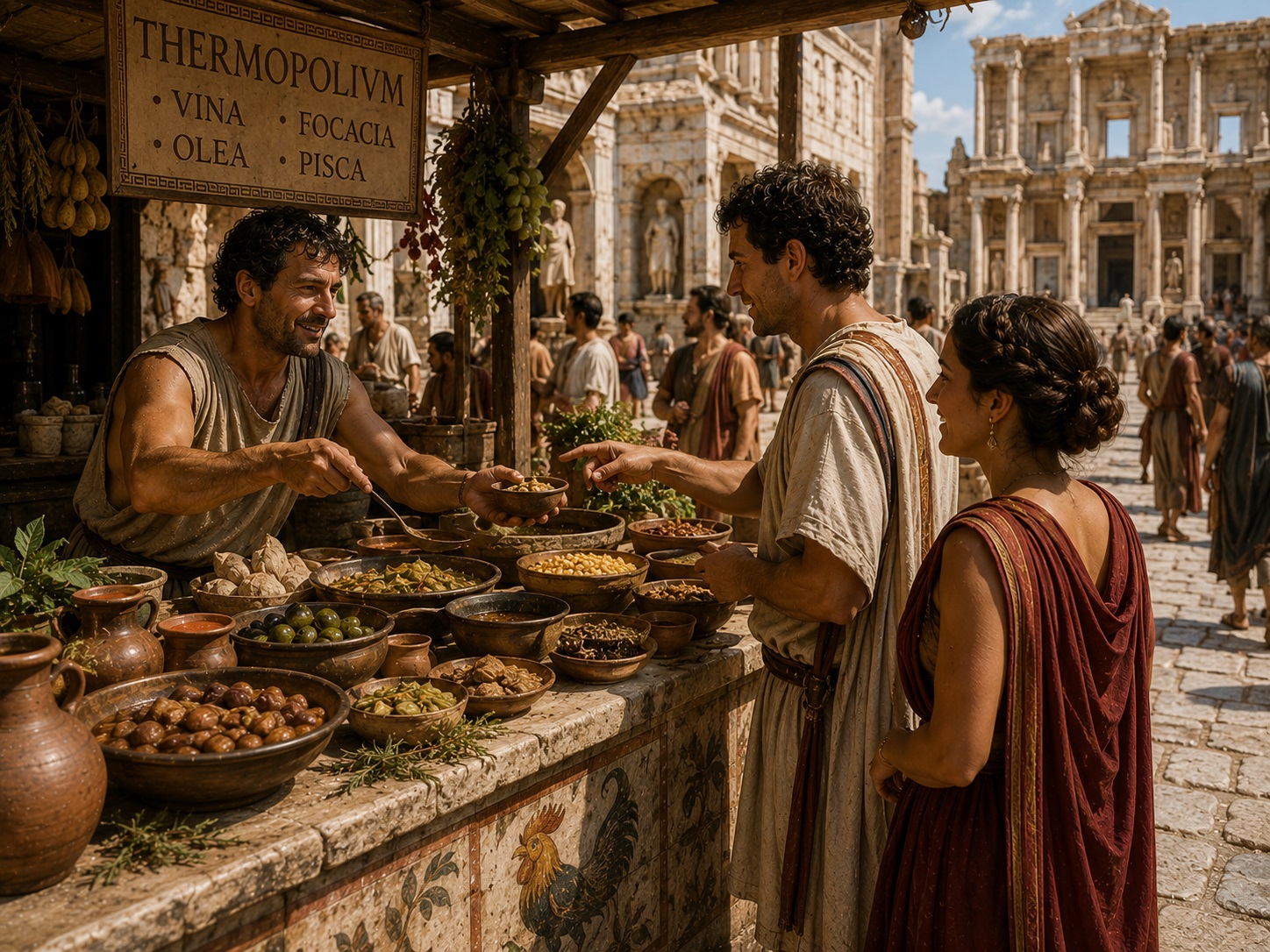
Unlike modern restaurants, many Romans purchased ready-made meals from small food stalls known as thermopolia.
The aromas of roasted meat, fresh bread, herbs, olives, and vegetables filled the streets as cooks served hungry merchants, sailors, and travelers.
A typical meal might include bread dipped in olive oil, grilled fish, lentil stew, goat cheese, figs, and a cup of diluted wine.
Although nearly two thousand years have passed, many of these ingredients remain central to Aegean cuisine today.
If you're curious about Roman cuisine, don't miss our guide What Did Romans Eat in Ancient Ephesus? 15 Foods That Filled Their Tables.
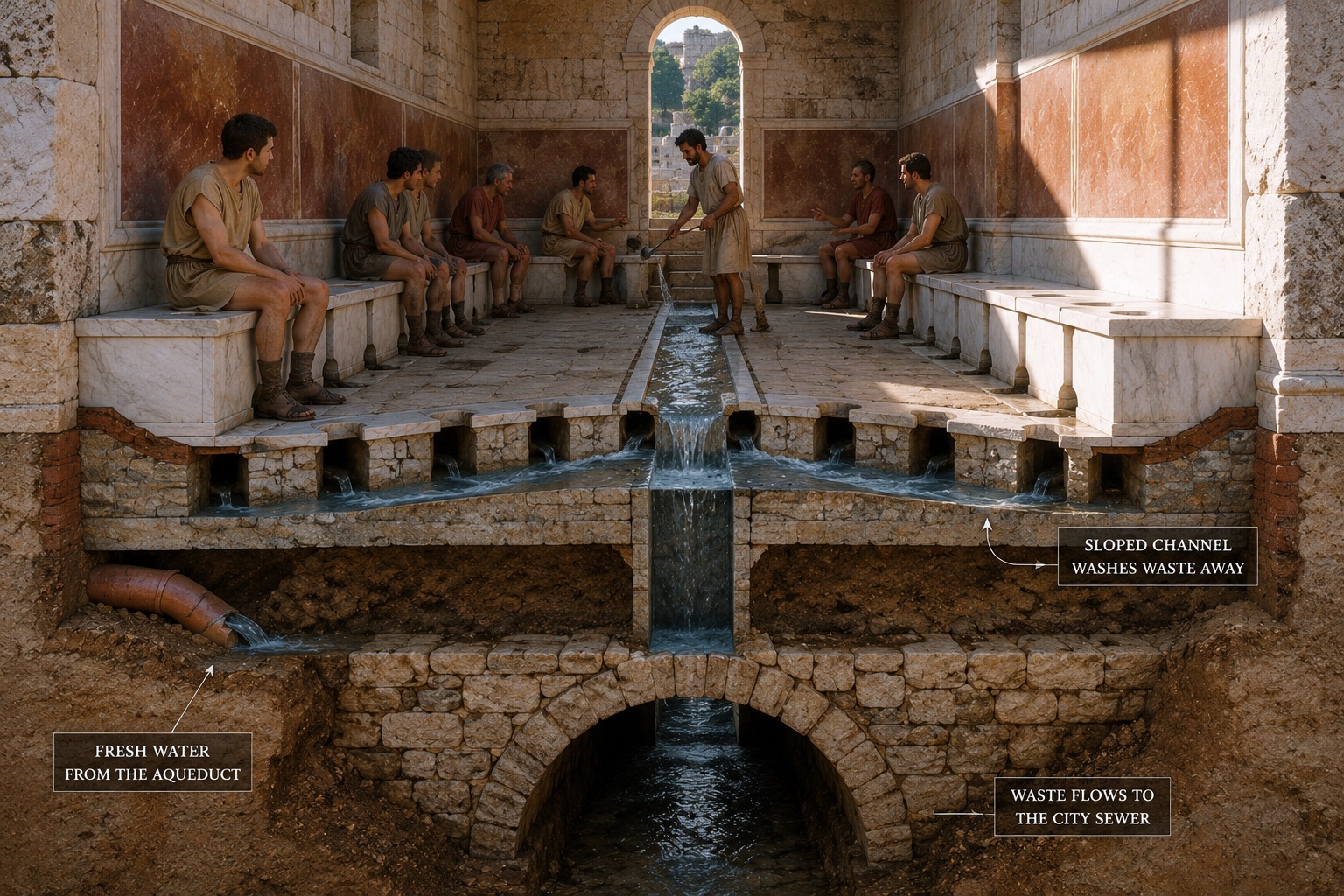
After lunch, many citizens stop at one of the city's public latrines.
To modern visitors, this might sound unusual.
For the Romans, however, public toilets were simply another part of daily life.
Marble seats lined the room.
Fresh water constantly flowed beneath them.
Conversations continued as friends discussed politics, business, and local news.
Thanks to the city's remarkable engineering, waste was continuously carried away through underground sewers.
It was one of the most advanced sanitation systems of the ancient world.
Learn more in our article How Romans Went to the Toilet: The Surprisingly Advanced Public Toilets of Ephesus.
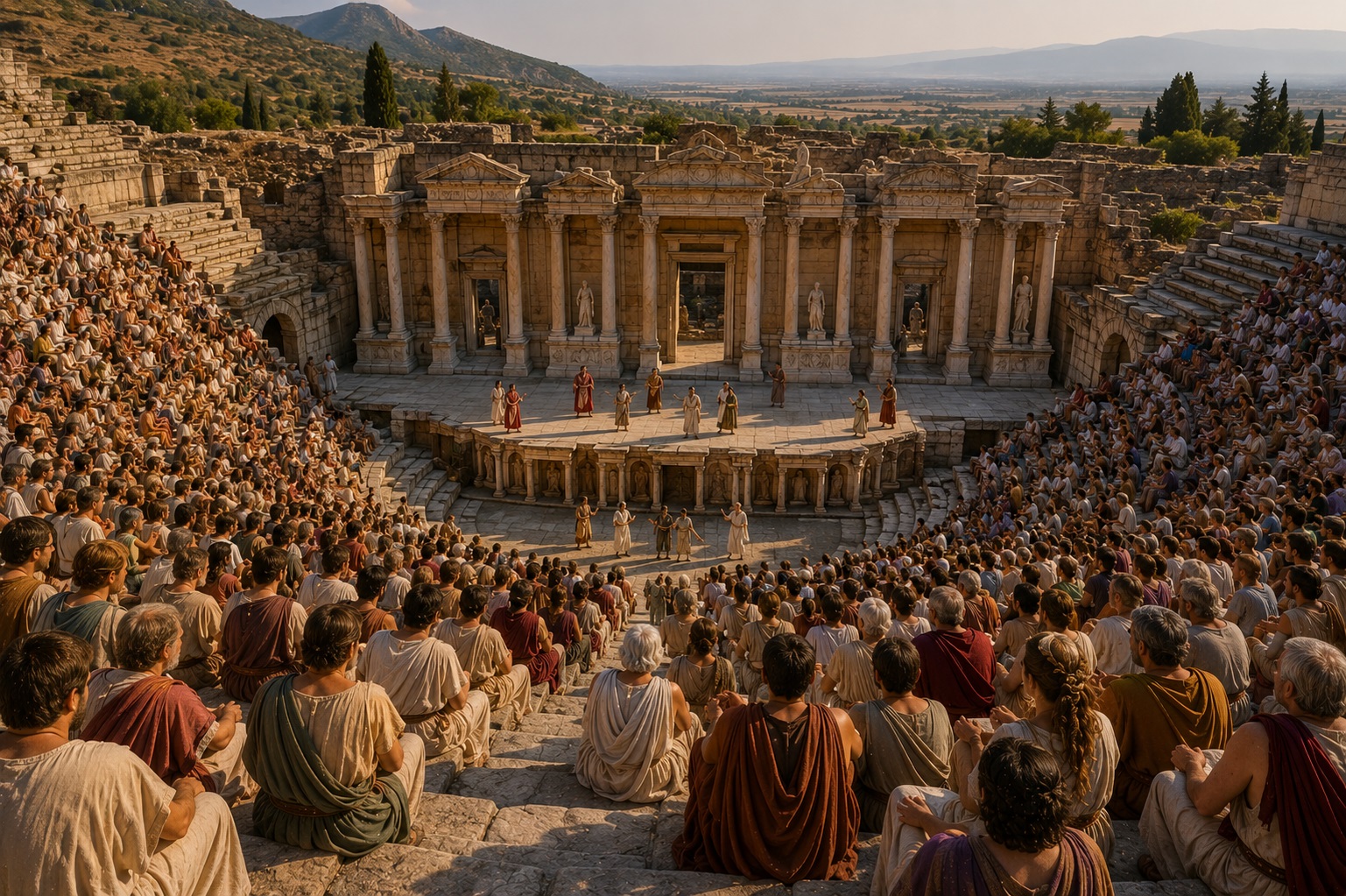
As the afternoon continues, many residents make their way toward one of the largest buildings in the city.
The Great Theatre.
Capable of seating around 25,000 spectators, it hosted dramatic performances, musical concerts, public speeches, and political gatherings.
Important announcements were made here, while famous actors performed Greek tragedies and Roman comedies before enormous crowds.
The theatre wasn't merely entertainment—it was the social heart of Ephesus.
As temperatures begin to cool, merchants close their shops.
Families gather once again.
Children return from the streets.
Dinner is the largest meal of the day.
Wealthy families dine in beautifully decorated rooms inside the Terrace Houses, surrounded by colorful frescoes and intricate mosaics.
Ordinary citizens enjoy simpler meals, but the atmosphere is much the same.
Food.
Conversation.
Family.
Without electric lights, the city gradually becomes quiet after sunset.
Olive oil lamps illuminate homes, while the streets grow peaceful.
Only the occasional traveler, night watchman, or late-arriving merchant remains outside.
Tomorrow, the same rhythm will begin again.
Fresh water will flow through the fountains.
Bakers will prepare bread before sunrise.
The Agora will fill with merchants.
Children will laugh in the streets.
Life in Ephesus will continue as it has for generations.
Historians estimate that Ancient Ephesus was home to nearly 200,000 people during its peak, making it one of the largest and most cosmopolitan cities in the Roman Empire.
Although nearly two millennia have passed, many of the places that shaped a Roman citizen's daily life still stand remarkably well preserved.
Walking through Ephesus today is more than visiting an archaeological site—it's stepping into the daily life of one of history's greatest cities.
Most Romans rose shortly after sunrise, as daily life followed natural daylight rather than artificial lighting.
Meals usually included bread, olive oil, olives, cheese, vegetables, fish, figs, and wine. Wealthier citizens also enjoyed roasted meat and imported delicacies.
Many citizens did. Public baths served as places for hygiene, exercise, relaxation, and socializing.
Popular activities included visiting the theatre, shopping in the Agora, attending religious festivals, exercising, bathing, and spending time with friends and family.
Yes. Many of the buildings that shaped daily Roman life—including the baths, theatre, public toilets, fountains, and Terrace Houses—can still be visited inside the archaeological site of Ephesus.
Reading about daily life in Ancient Ephesus is fascinating—but nothing compares to standing where it all happened.
Walk the same marble streets once used by merchants, philosophers, and emperors. Visit the Great Theatre, admire the Library of Celsus, explore the Roman Baths, discover the ingenious public toilets, and imagine the bustling Agora at the height of the Roman Empire.
If you're planning a visit, explore our guided Ephesus Tours. Our expert local guides bring the city's daily life to life with captivating stories that transform ancient ruins into a vivid journey through time.
History isn't only about emperors, wars, or magnificent monuments.
It's also about ordinary people.
The baker who rose before dawn.
The merchant opening his shop in the Agora.
The children playing beneath marble columns.
The friends meeting in the baths.
The family gathering for dinner beneath the soft glow of an olive oil lamp.
By imagining a single day in Ancient Ephesus, the ruins become something far more meaningful.
They become a living city once again.

I graduated from Istanbul University with a degree in Radio, Television, and Cinema. During my academic journey, I focused on storytelling, visual communication, and cultural content creation, while my personal interests led me toward exploration and discovery.
Traveling, discovering new places, and experiencing different cultures are at the heart of my life. My strong interest in mythology allows me to see destinations not only as physical locations but as narratives shaped by history and meaning. My passion for reading continuously enriches and deepens this perspective.
I truly enjoy meeting new people and learning about diverse ways of life. With this mindset, I aim to share my experiences in a sincere, clear, and engaging way.
I love following the traces of stories wherever I go.
Disclosure Notice
By filling out this form, you agree that the personal data you provide to us will be processed in accordance with the Personal Data Protection Law No. 6698 and related legislation.
Your personal data will be processed solely for responding to your application, evaluating your requests, and fulfilling legal obligations; it will not be shared with third parties.
For detailed information, you can review our Privacy Policy.
By submitting the form, you acknowledge and consent to the processing of your personal data for the purposes specified above.

