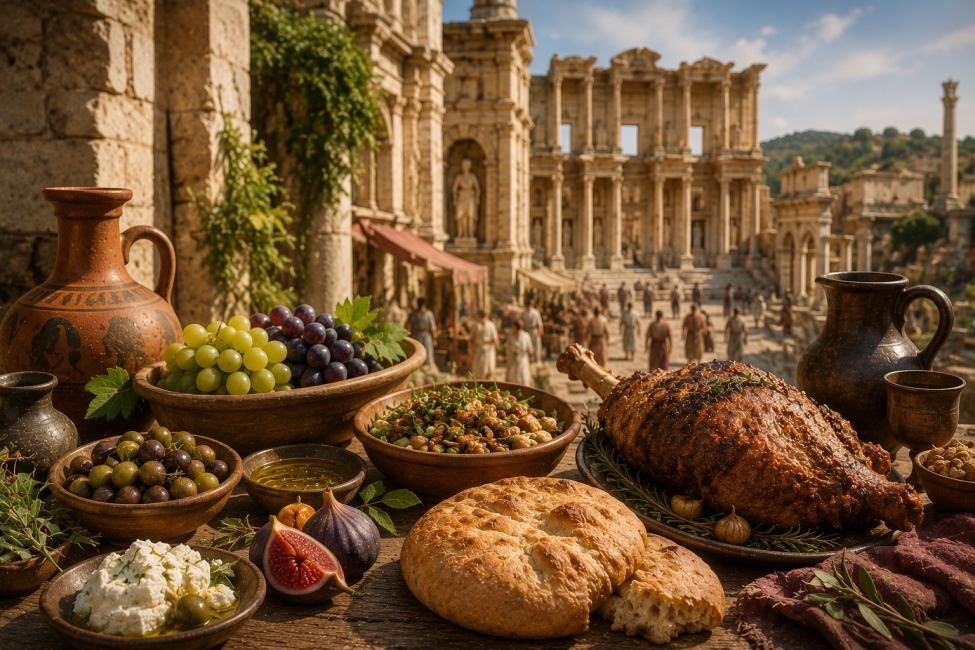
Imagine sitting down for dinner in Ephesus nearly 2,000 years ago.
The marble streets outside are still warm from the Mediterranean sun.
Merchants are closing their shops in the Agora.
The scent of freshly baked bread drifts through the air.
Nearby, olive oil lamps flicker as families gather around wooden tables.
But don't expect pizza, tomatoes, potatoes, or coffee.
None of those foods had yet reached the Roman world.
Instead, the people of Ephesus enjoyed a diet built around fresh local ingredients, olive oil, seafood, grains, herbs, fruits, and wine.
Many of these foods are still staples of Turkish cuisine today.
Let's discover what daily life tasted like in one of the greatest cities of the Roman Empire.
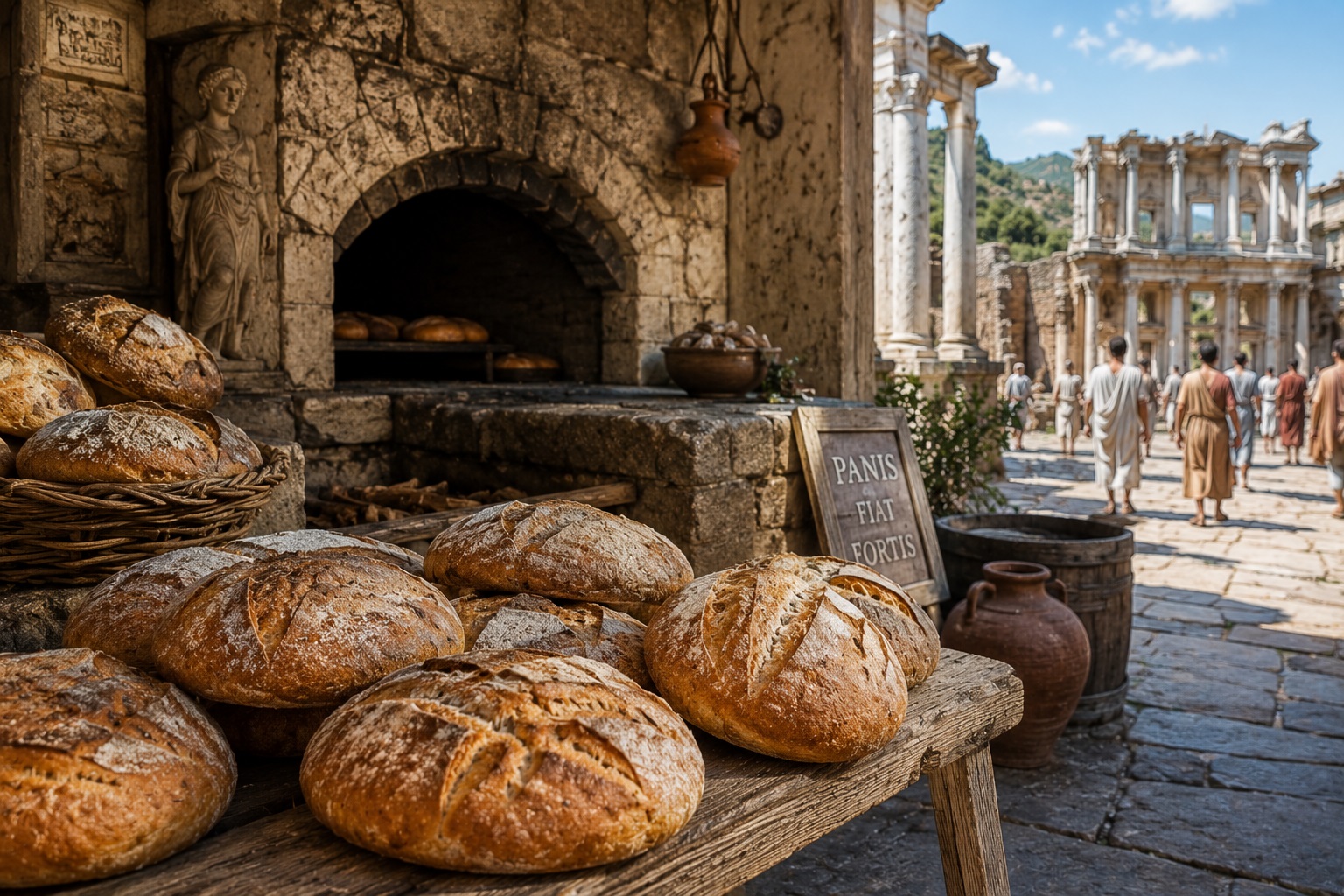
If there was one food every Roman ate every day, it was bread.
Rich or poor, bread appeared on nearly every table.
Bakers in Ephesus produced different varieties using wheat and barley, baking them in stone ovens throughout the city.
Fresh bread was commonly dipped in olive oil, served with cheese, or eaten alongside vegetables and fish.
Many historians estimate that bread provided the majority of daily calories for ordinary citizens.
Forget butter.
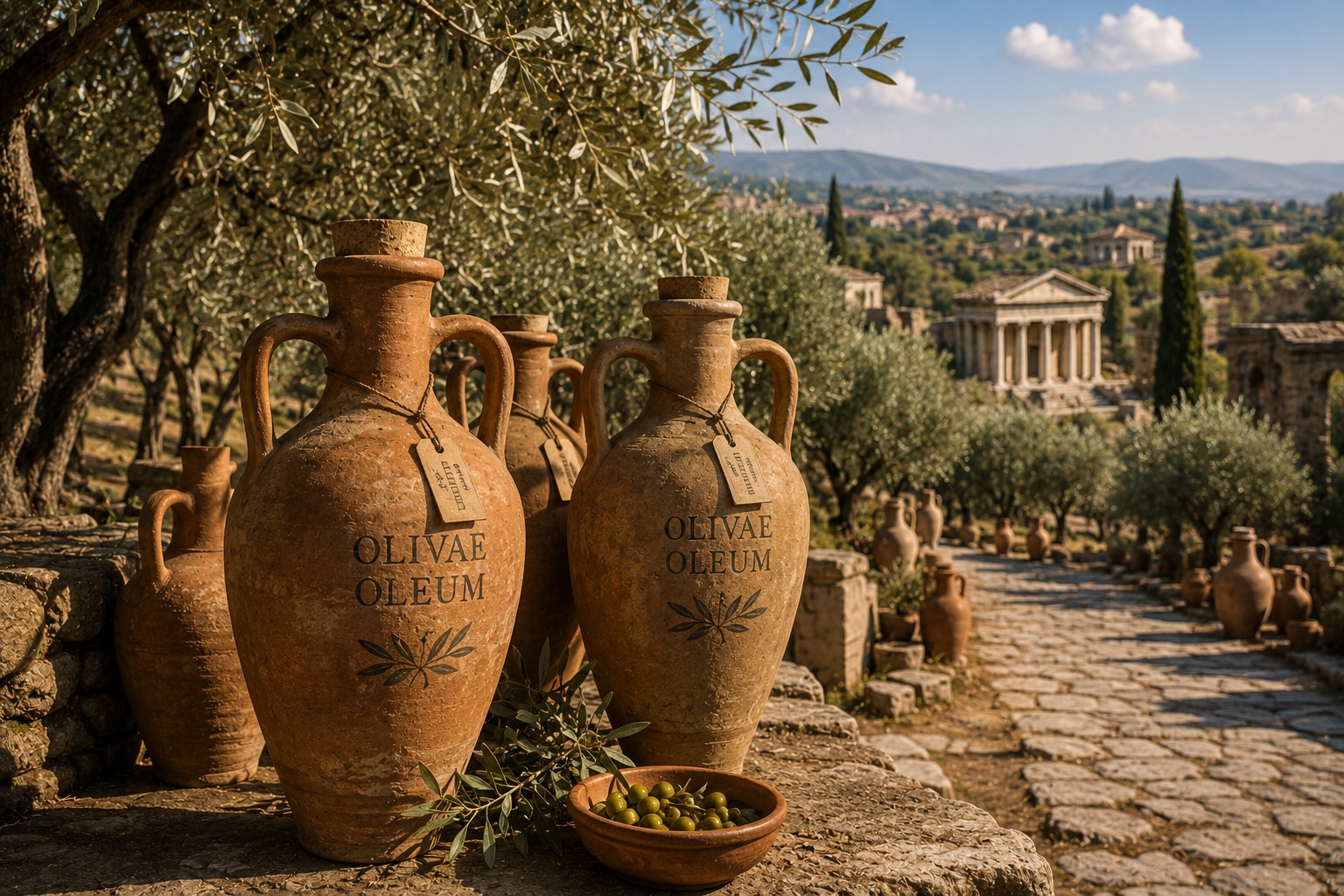
In Roman Ephesus, olive oil was the king of the kitchen.
It was used for cooking, preserving food, seasoning vegetables, baking bread, and even lighting homes.
The fertile lands surrounding Ephesus produced excellent olives, making olive oil one of the city's most valuable products.
It was so important that amphorae filled with olive oil were traded throughout the Mediterranean.
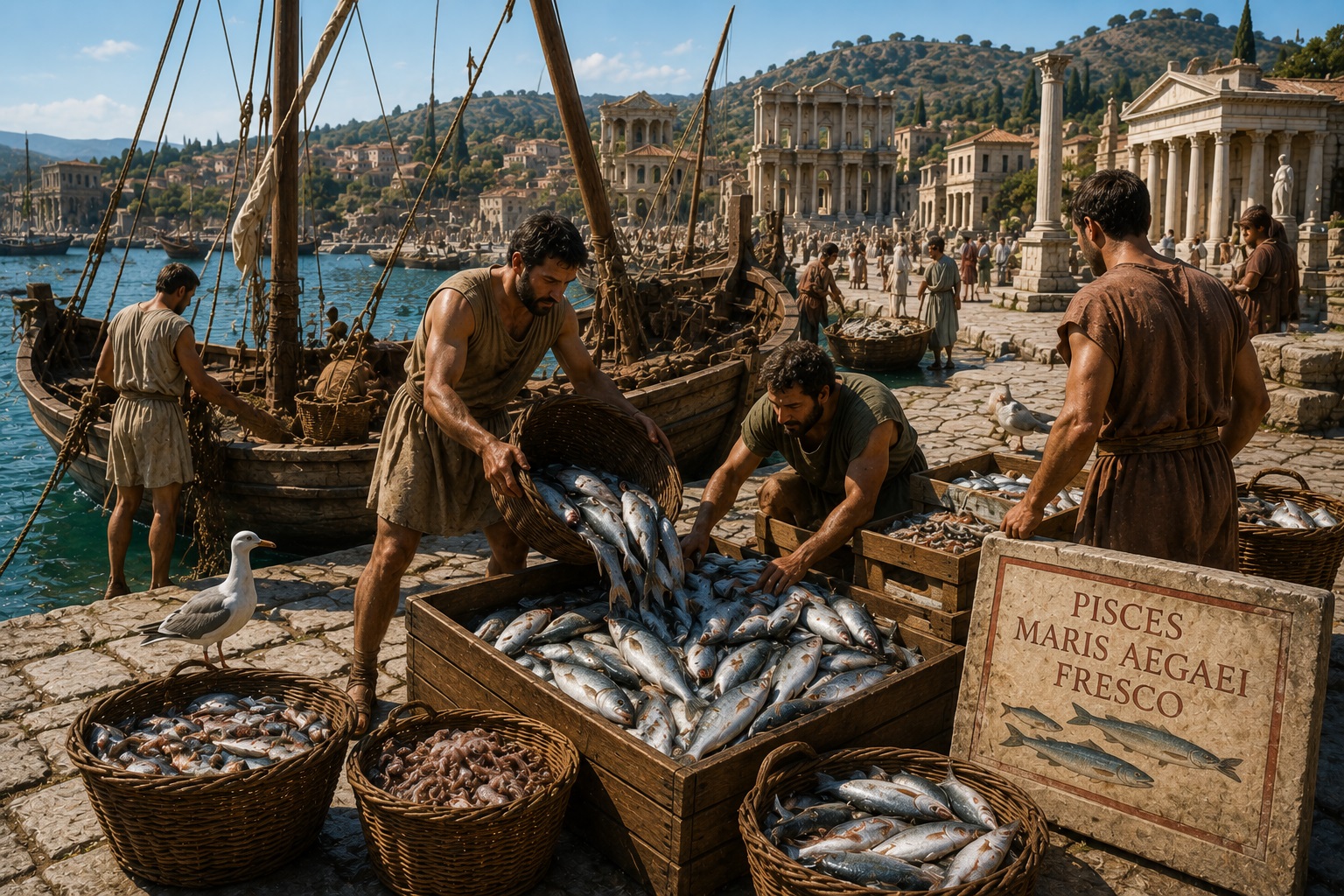
Although today's coastline lies several kilometers away, ancient Ephesus was once a thriving harbor city.
Fishing boats arrived daily with fresh catches from the Aegean Sea.
Popular seafood included:
Fish could be grilled, roasted, salted, or preserved for later use.
It was one of the healthiest and most common sources of protein in the Roman diet.
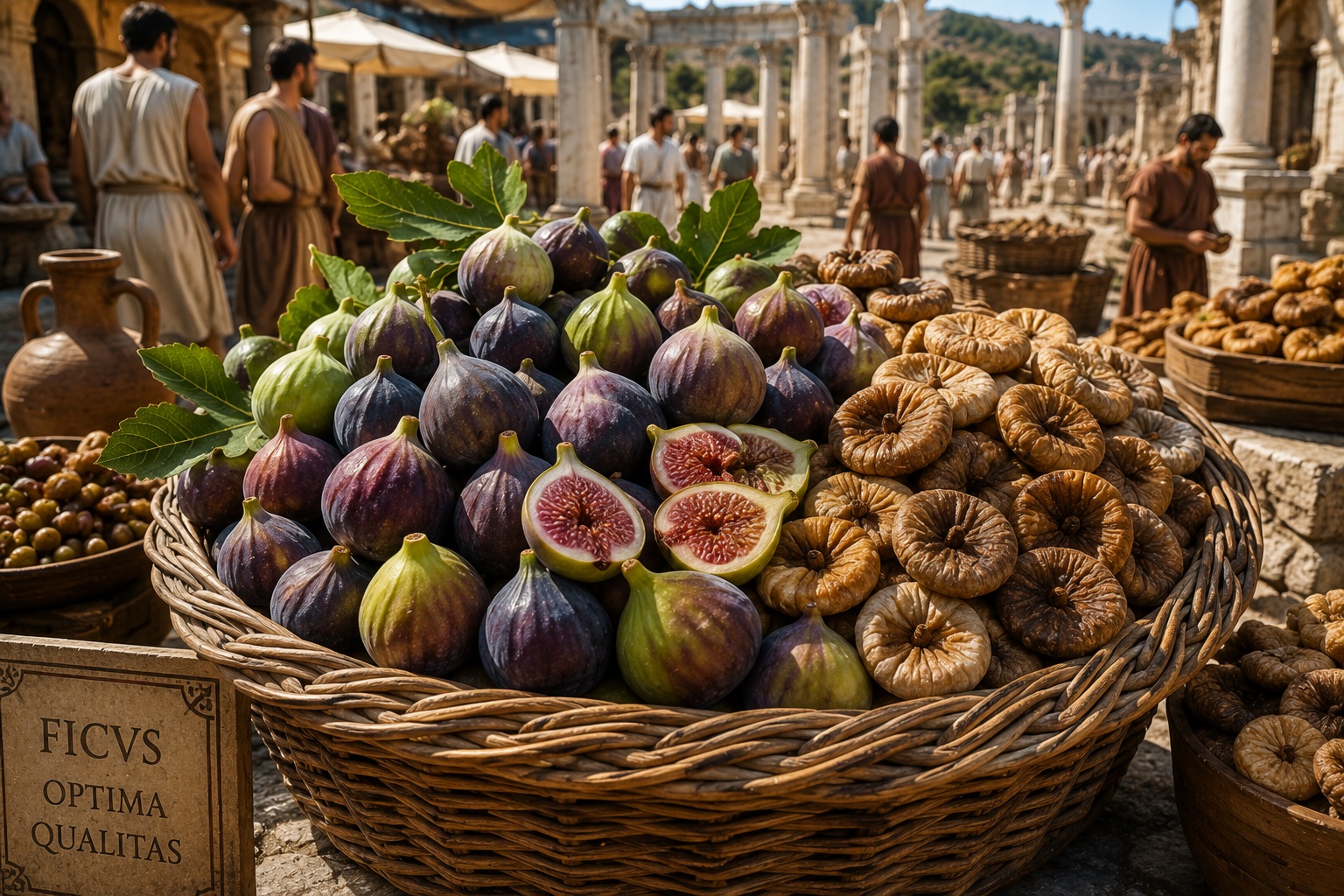
Long before chocolate existed, figs satisfied every sweet tooth.
The region around Ephesus has produced exceptional figs for thousands of years, and they were just as popular during Roman times.
People enjoyed them fresh during harvest season or dried throughout the year.
They were often served with cheese, nuts, and honey.
Today, Türkiye remains one of the world's largest producers of figs, continuing a tradition that stretches back to antiquity.
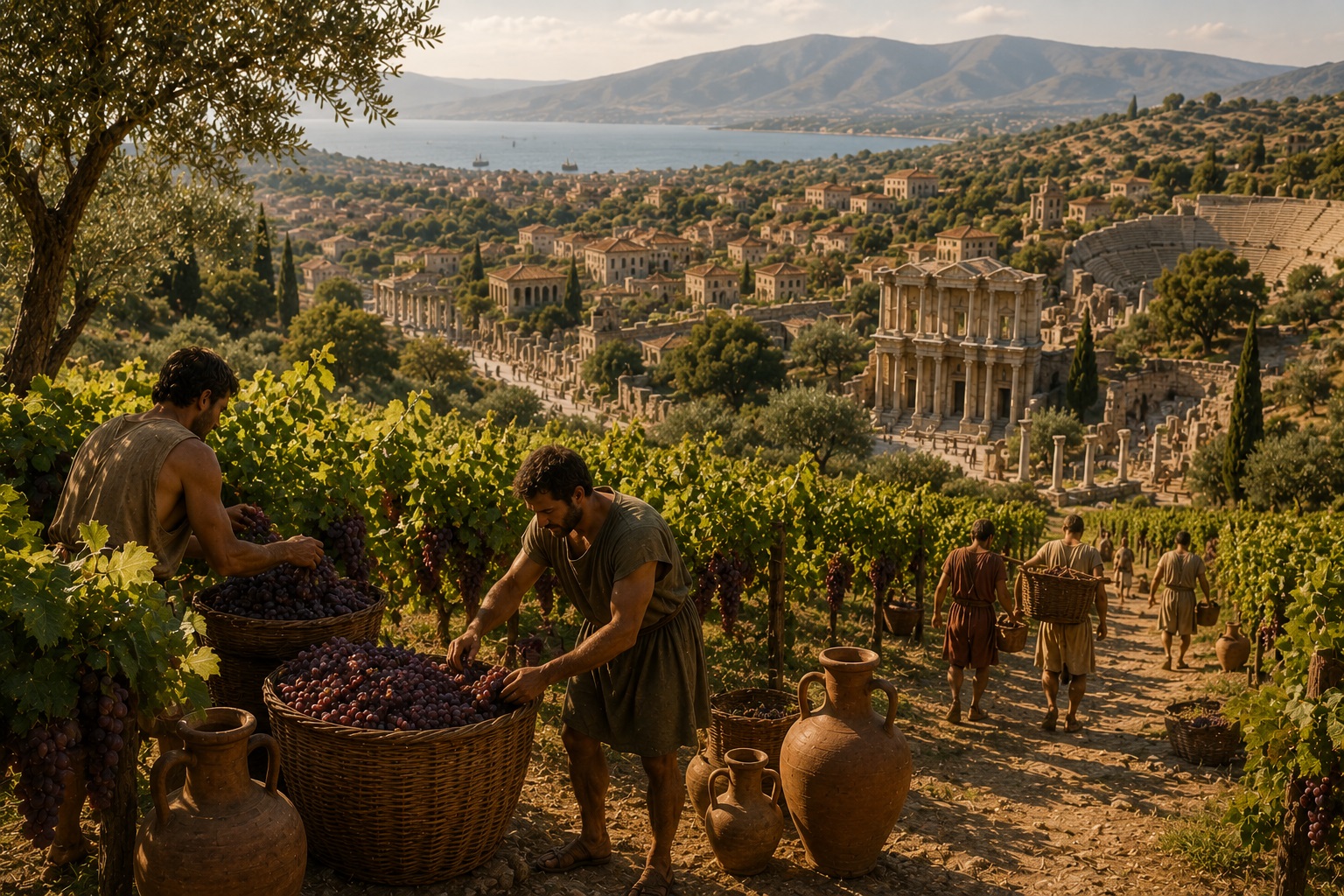
Wine wasn't reserved for celebrations.
It was part of everyday life.
Adults commonly drank diluted wine with meals because it was often safer than untreated water.
The hills surrounding Ephesus supported extensive vineyards, producing wines traded across the Roman Empire.
Different herbs and spices were sometimes added to create unique flavors.
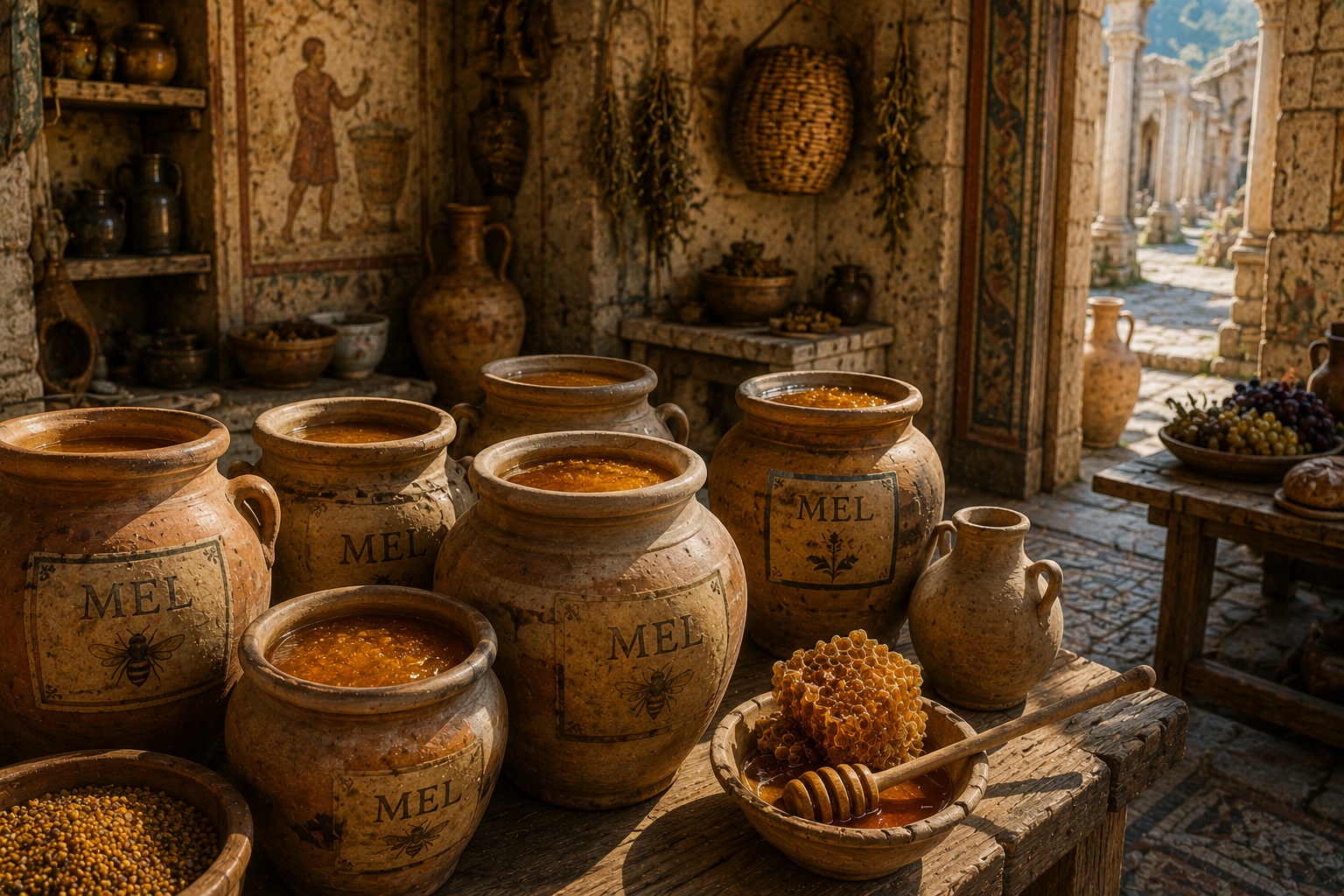
The Romans had no refined sugar.
Whenever they wanted to sweeten food or drinks, they turned to honey.
Honey flavored cakes, pastries, fruit dishes, sauces, and even certain meat recipes.
It was also valued for its medicinal properties and was commonly used in home remedies.
Tomatoes, potatoes, corn, peppers, chocolate, and coffee were completely unknown in Roman Ephesus. These foods only reached Europe many centuries later after the discovery of the Americas.
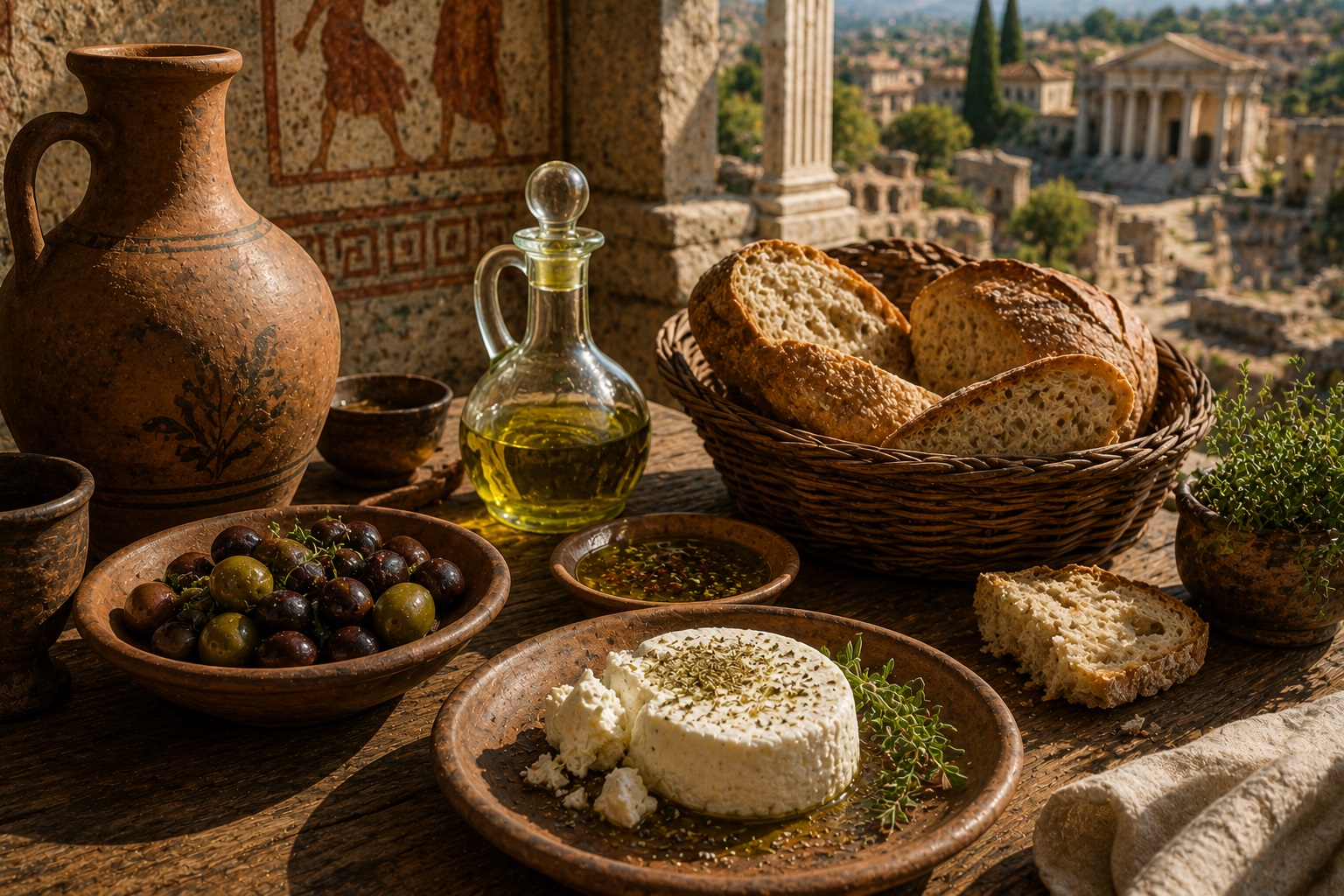
Goat and sheep cheese were among the most common dairy products in Ephesus.
Fresh cheeses accompanied bread at breakfast, while aged cheeses appeared alongside olives, fruit, and wine during evening meals.
Simple, nutritious, and easy to preserve, cheese was enjoyed by every social class.
Not every Roman could afford meat every day.
Fortunately, legumes provided an inexpensive and nutritious alternative.
Lentils, chickpeas, and broad beans were cooked into hearty stews flavored with onions, garlic, herbs, and olive oil.
These humble dishes helped feed thousands of families throughout Ephesus.
Even today, lentil soup remains one of Türkiye's most beloved traditional foods.
In the next section, we'll discover what kinds of meat Romans enjoyed, explore the mysterious fish sauce called garum, learn what street food looked like in ancient Ephesus, and compare Roman cuisine with modern Turkish dishes that visitors can still taste today.
Unlike bread or vegetables, meat wasn't an everyday food for the average Roman family.
Wealthier households could afford lamb, goat, pork, and occasionally beef, while ordinary citizens enjoyed meat mainly during festivals, religious celebrations, or special occasions.
Roasted lamb seasoned with herbs, pork cooked slowly over charcoal, and grilled game birds were considered delicacies.
For many families, meat represented prosperity rather than necessity.
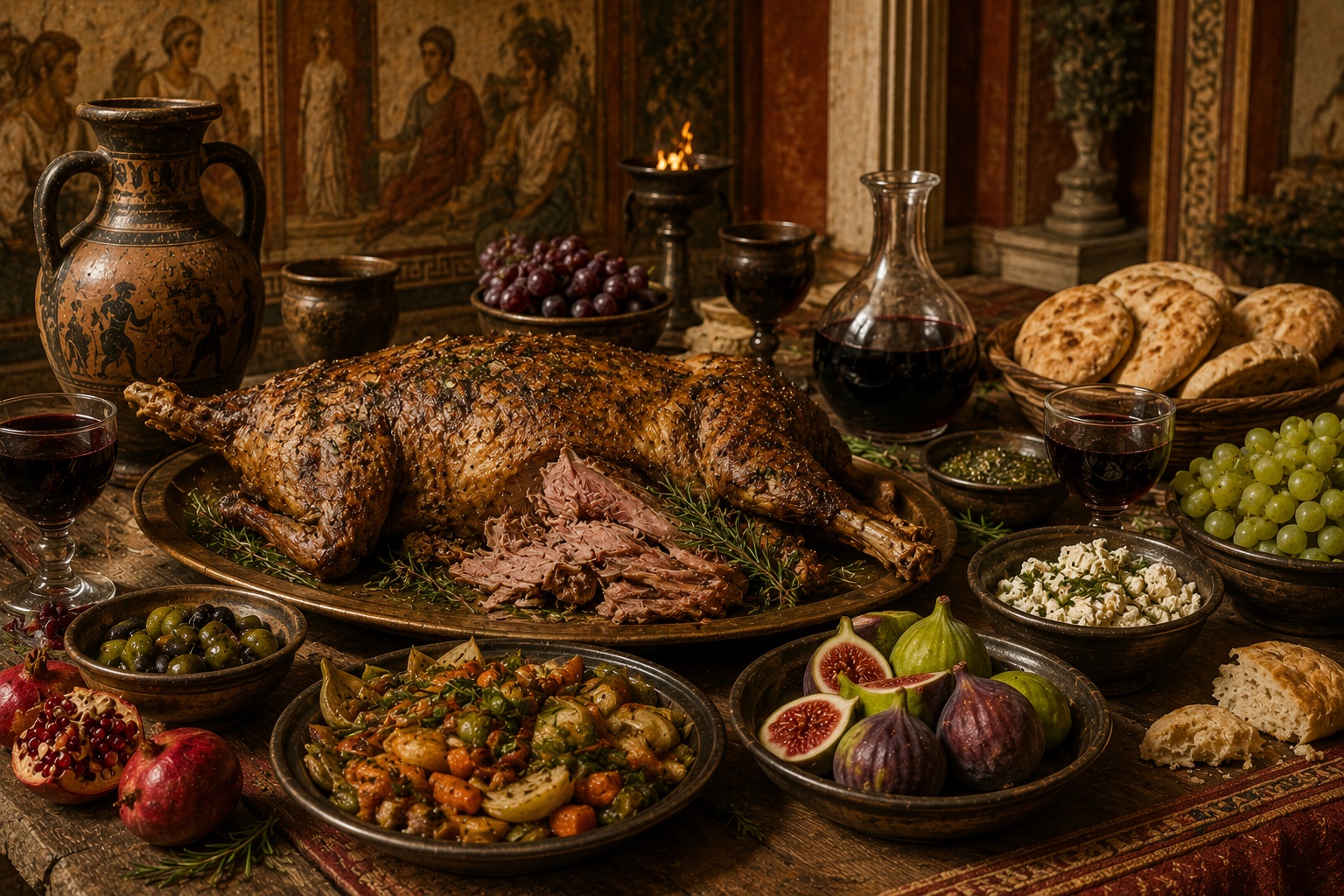
If ketchup defines many modern meals, garum defined Roman cuisine.
Garum was a fermented fish sauce made by layering small fish, salt, and herbs in large clay jars before leaving the mixture to ferment for weeks.
The resulting liquid had a rich, salty, umami flavor and was poured over vegetables, meat, seafood, eggs, and even fruit.
Although the production process would seem unusual today, garum was one of the most valuable food products traded throughout the Roman Empire.
Many historians compare its role to modern soy sauce or fish sauce used in Asian cuisine.
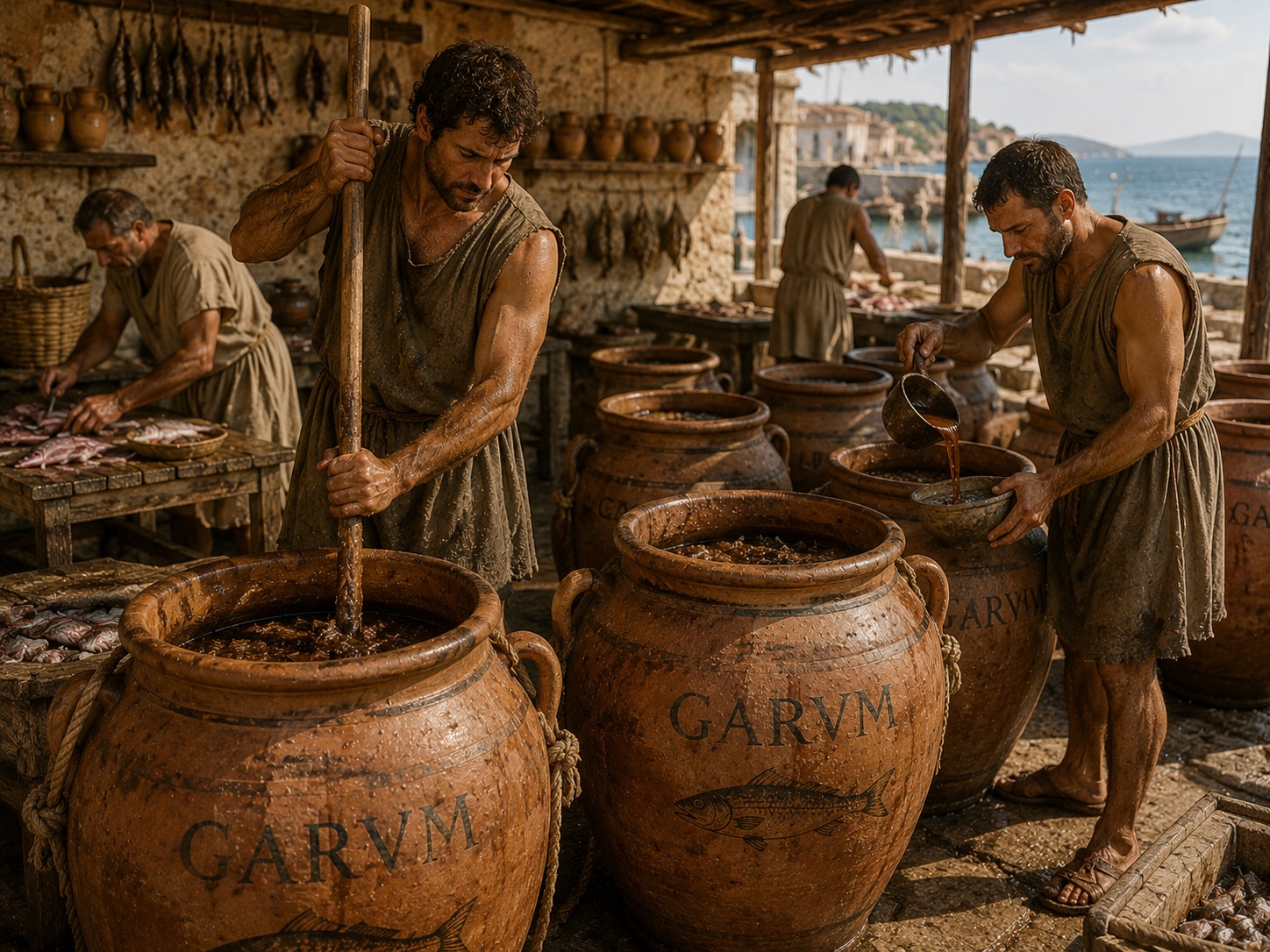
The fertile lands around Ephesus produced an abundance of fresh fruit.
Depending on the season, Roman tables featured:
Fruit was often eaten fresh but could also be dried for winter, preserved in honey, or served at the end of a meal.
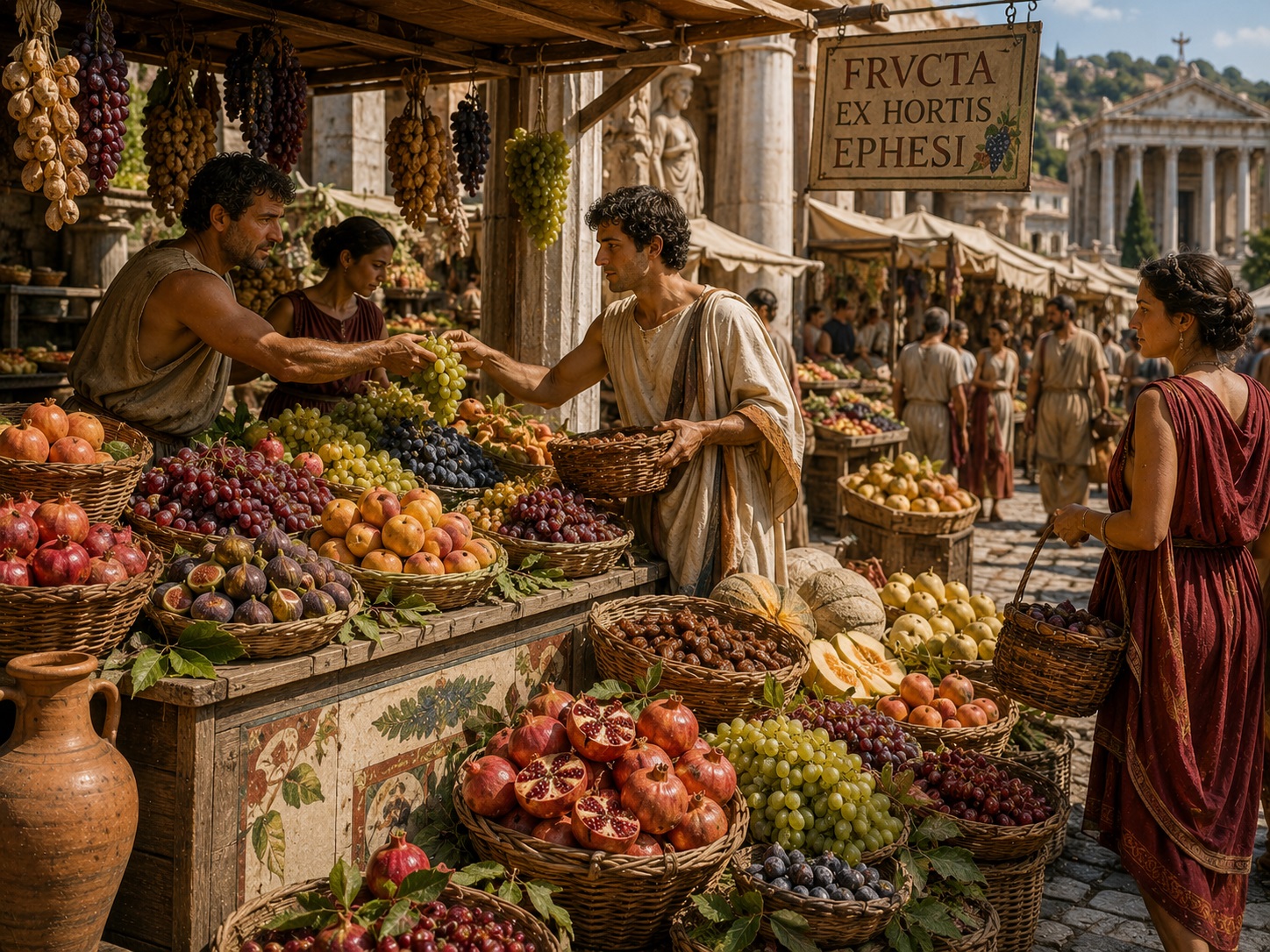
Almonds, walnuts, hazelnuts, and pistachios were all enjoyed throughout Roman Asia Minor.
They were nutritious, easy to transport, and frequently paired with dried figs, cheese, and wine.
Wealthy hosts also offered bowls of roasted nuts during banquets as guests relaxed and discussed politics, business, or philosophy.
Roman food wasn't bland.
Far from it.
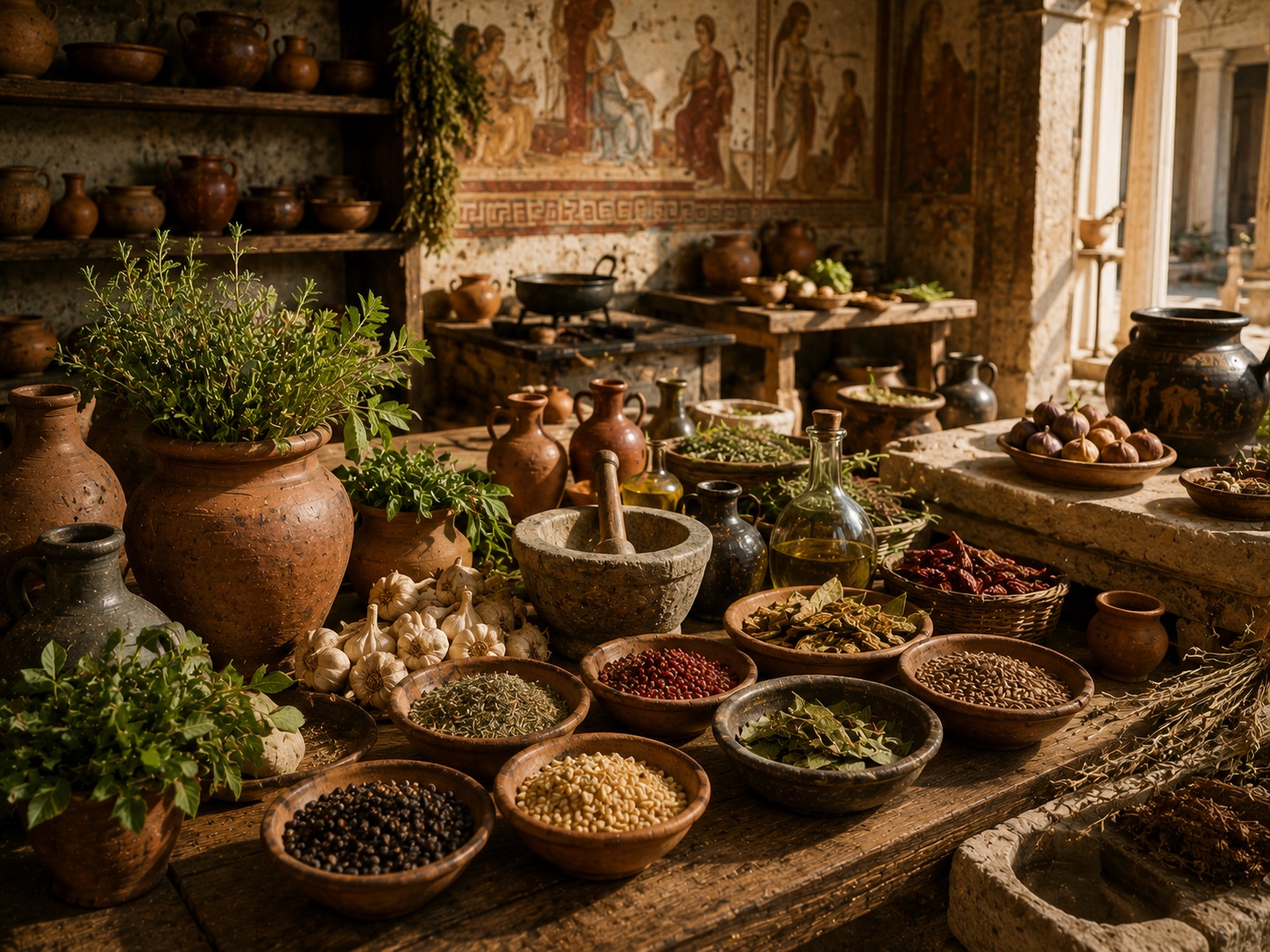
Cooks flavored dishes with fresh herbs and imported spices, including:
The spice trade connected Ephesus with distant regions of the Roman Empire, bringing exotic flavors from across the Mediterranean and beyond.
Not everyone cooked at home.
Busy workers, sailors, merchants, and travelers often bought inexpensive meals from small food stalls lining the streets of Ephesus.
These ancient takeaway shops sold:
In many ways, they functioned much like today's cafés and casual restaurants.
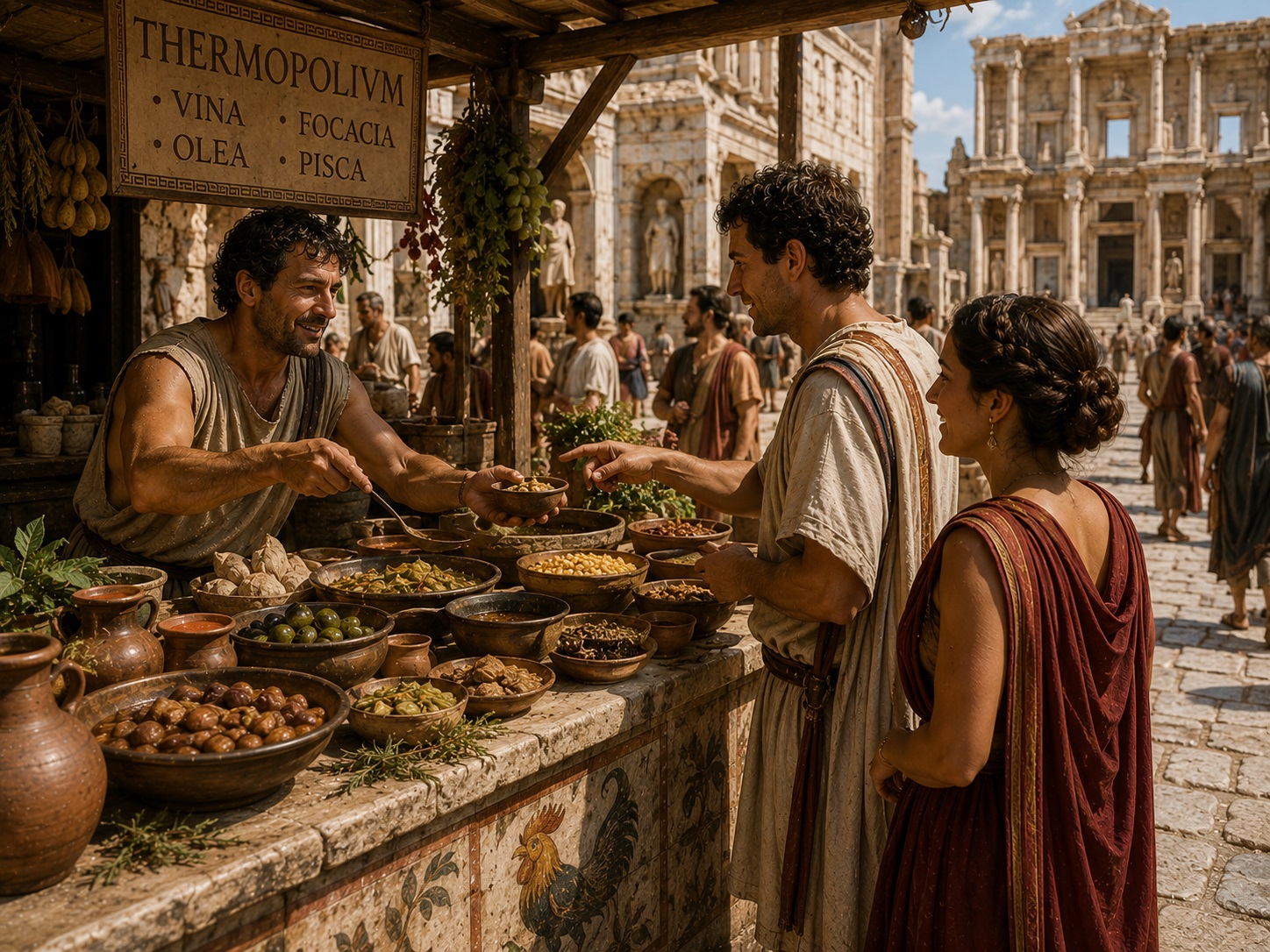
Perhaps the most fascinating surprise is how much of the Roman diet survives in modern Türkiye.
| Ancient Ephesus | Modern Türkiye |
|---|---|
| Fresh bread | Traditional village bread |
| Olive oil | Extra virgin Aegean olive oil |
| Goat cheese | Ezine & local cheeses |
| Figs | Aydın figs |
| Grapes | Aegean vineyards |
| Herbs | Mediterranean cuisine |
| Fish | Fresh Aegean seafood |
Many flavors enjoyed by Roman families nearly two thousand years ago remain an essential part of the Aegean culinary tradition today.
Archaeologists have discovered carbonized bread, olive pits, grape seeds, cooking pots, and amphorae around Ephesus, providing direct evidence of the foods that once filled Roman kitchens.
Although Roman recipes have changed over the centuries, the landscapes surrounding Ephesus still produce many of the same ingredients that sustained the ancient city.
Olive groves, vineyards, fig orchards, local cheeses, freshly baked bread, and seafood continue to define the cuisine of western Türkiye.
Exploring Ephesus isn't only about magnificent monuments like the Library of Celsus or the Great Theatre.
It's also about understanding the daily lives of the people who lived here—including what they ate.
If you're planning a visit, browse our guided Ephesus Tours. Our expert local guides bring the ancient city to life through fascinating stories about Roman engineering, daily life, architecture, and cuisine, helping you experience Ephesus far beyond its famous ruins.
Bread was the staple food eaten daily by nearly everyone, usually accompanied by olive oil, cheese, olives, vegetables, or fish.
No. Meat was relatively expensive and was enjoyed mainly by wealthier families or during festivals and special occasions.
Yes. Wine was consumed every day, although it was commonly diluted with water before drinking.
No. Tomatoes, potatoes, corn, peppers, and chocolate all arrived in Europe centuries after the Roman Empire.
Absolutely. The Aegean region still produces world-famous olive oil, figs, grapes, cheeses, seafood, herbs, and freshly baked bread, making modern local cuisine surprisingly similar to the flavors enjoyed in ancient Ephesus.
Food is one of the simplest ways to connect with the past.
While the marble temples and grand monuments of Ephesus reveal the city's architectural brilliance, its kitchens tell a far more personal story.
Families gathered around fresh bread and olive oil.
Merchants shared wine after long days in the Agora.
Children snacked on figs and honey.
Fishermen returned from the harbor with the day's catch.
Nearly two thousand years later, many of those same flavors still define the Aegean coast.
If you're ready to discover not only the history but also the culture and traditions that continue to shape this remarkable region, join one of our guided Ephesus Tours and experience the ancient city through stories that go far beyond the ruins.

I graduated from Istanbul University with a degree in Radio, Television, and Cinema. During my academic journey, I focused on storytelling, visual communication, and cultural content creation, while my personal interests led me toward exploration and discovery.
Traveling, discovering new places, and experiencing different cultures are at the heart of my life. My strong interest in mythology allows me to see destinations not only as physical locations but as narratives shaped by history and meaning. My passion for reading continuously enriches and deepens this perspective.
I truly enjoy meeting new people and learning about diverse ways of life. With this mindset, I aim to share my experiences in a sincere, clear, and engaging way.
I love following the traces of stories wherever I go.
Disclosure Notice
By filling out this form, you agree that the personal data you provide to us will be processed in accordance with the Personal Data Protection Law No. 6698 and related legislation.
Your personal data will be processed solely for responding to your application, evaluating your requests, and fulfilling legal obligations; it will not be shared with third parties.
For detailed information, you can review our Privacy Policy.
By submitting the form, you acknowledge and consent to the processing of your personal data for the purposes specified above.

