Among the many ancient cities of Turkey, Pergamon stands out as one of the most historically significant. Yet many travelers and history enthusiasts still ask a simple question: what is Pergamon? Once a powerful Hellenistic kingdom, Pergamon was a center of culture, learning, architecture, and political influence in the ancient Mediterranean world.
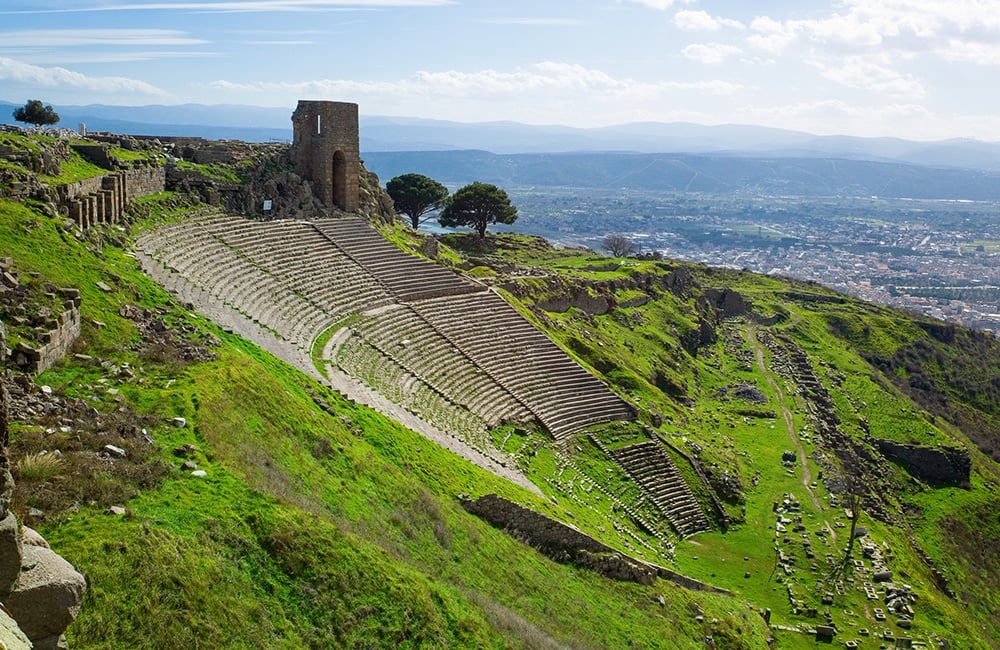
Today the ruins of Pergamon ancient city lie near the modern Turkish town of Bergama in western Turkey. The site includes dramatic hilltop ruins, monumental temples, and one of the steepest ancient theaters ever built. Understanding the story of Pergamon helps visitors appreciate why it became one of the most influential cities of antiquity.
If you would like to explore this remarkable archaeological site in more detail, visit our Pergamon destination guide to learn about travel options and historical highlights before planning your visit.
To understand what is Pergamon, we need to look at its role in the ancient world. Pergamon was both a powerful city and the capital of the Kingdom of Pergamon during the Hellenistic period.
Pergamon was built on a steep hill overlooking the Caicus River valley in what is now western Turkey. Its elevated position gave the city strong natural defenses and stunning views of the surrounding landscape.
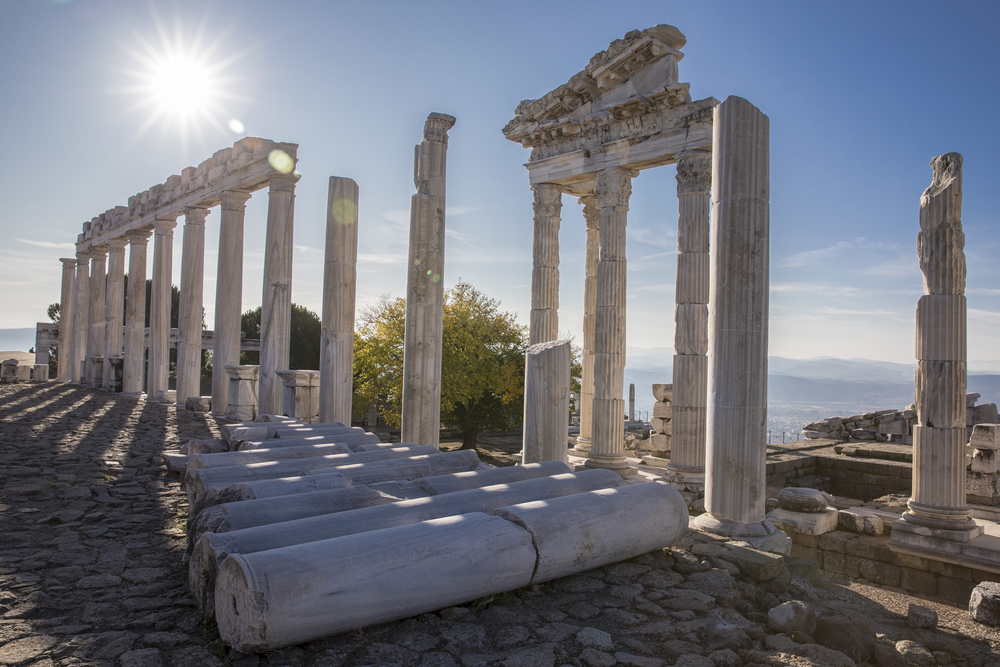
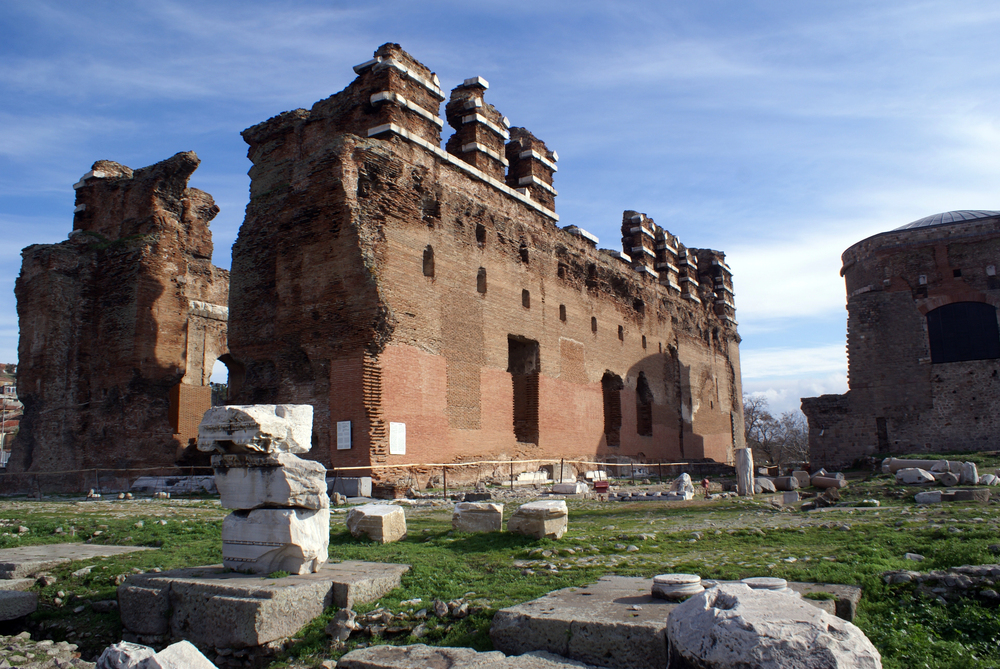
The ancient city is located near modern-day Bergama in İzmir Province. Visitors can still explore impressive ruins such as the Acropolis, temples, theaters, and ancient streets.
Pergamon was recognized as a UNESCO World Heritage Site due to its outstanding archaeological value and its importance in the development of Hellenistic culture.
Another common question is what does Pergamon mean. The name Pergamon originates from the Greek word Pergamos, which generally refers to a citadel, fortress, or elevated settlement.
Because Pergamon was built on a high hill, the name likely referred to its fortified acropolis. The elevated location symbolized power, protection, and political authority.
Ancient writers often described Pergamon as a city of knowledge and influence, reflecting its role as a cultural and intellectual center.
Over time, the name Pergamon became associated not just with geography, but also with scholarship and artistic achievement.
Pergamon reached its peak during the Hellenistic period, particularly under the rule of the Attalid dynasty.
Following the death of Alexander the Great, several powerful kingdoms emerged across the eastern Mediterranean. Pergamon became one of the most prominent among them.
Under rulers such as Attalus I and Eumenes II, Pergamon expanded its territory and influence across western Anatolia.
During its golden age, Pergamon developed impressive architecture, artistic traditions, and scholarly institutions.
The city was carefully designed with terraces climbing the hillside, creating a dramatic and organized urban layout.
For visitors interested in exploring these remarkable ruins, our Pergamon destination guide provides further insight into the site and its history.
One of the most remarkable achievements of Pergamon was its famous library, which rivaled the legendary Library of Alexandria.
The Library of Pergamon reportedly held more than 200,000 scrolls and served as a major intellectual center of the ancient world.
According to historical tradition, the invention of parchment writing material was developed in Pergamon when access to papyrus became limited.
The library attracted scholars, philosophers, and writers from across the Mediterranean.
Perhaps the most famous monument of Pergamon was the monumental Altar of Zeus.
The altar featured dramatic sculptural friezes depicting the battle between gods and giants, known as the Gigantomachy.
This massive structure symbolized the power and religious devotion of the Pergamon kingdom.
Large portions of the altar were transported to Berlin during the 19th century and are now displayed in the Pergamon Museum.
The Pergamon Acropolis sits high above the modern town and remains the most dramatic part of the archaeological site.
The acropolis was the political and religious heart of the city.
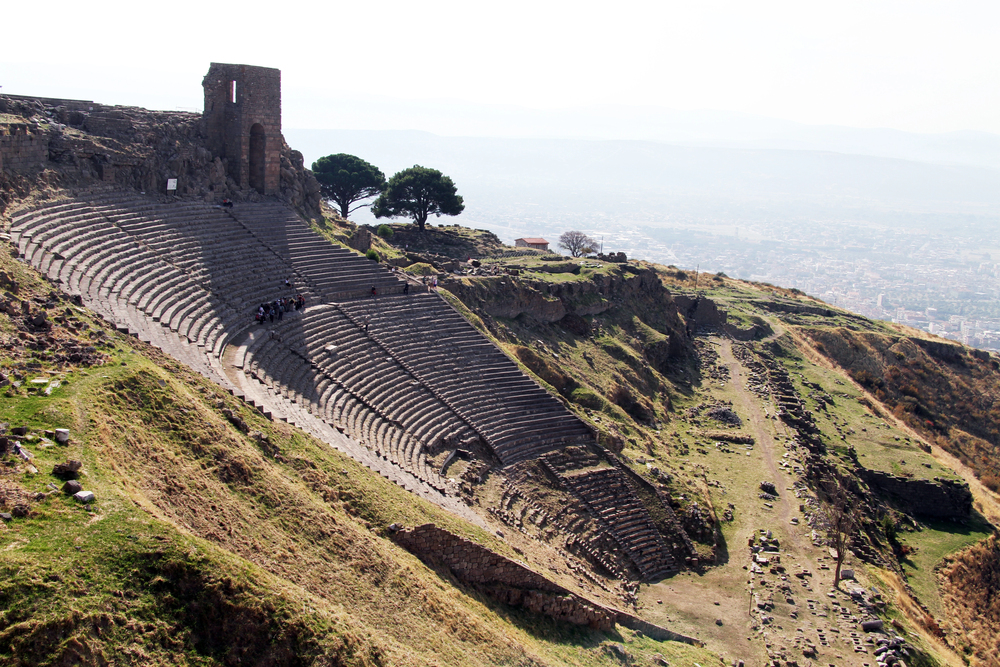
Pergamon’s theater is one of the steepest theaters from antiquity, offering breathtaking views of the valley below.
Today, Pergamon remains one of Turkey’s most fascinating archaeological destinations.
Visitors reach Pergamon through the town of Bergama, which preserves traditional Turkish culture alongside ancient ruins.
Pergamon offers a powerful glimpse into the Hellenistic world and the intellectual life of ancient civilizations.
So, what is Pergamon? Pergamon was one of the most influential cities of the ancient world—a center of political power, scholarship, and artistic achievement during the Hellenistic era.
From the famous Library of Pergamon to the monumental Altar of Zeus and the dramatic Acropolis overlooking the valley, the city played a key role in shaping the cultural history of the Mediterranean.
To discover more about this extraordinary archaeological site and plan your visit, explore our Pergamon destination guide and experience one of Turkey’s most fascinating ancient cities.

I hold a degree in International Finance and Trade and completed my Master’s degree in Tourism Management at Adnan Menderes University. Since 2013, I have been actively involved in the tourism industry, working across various areas of travel operations, tour planning, and destination-focused services.
Throughout my career, I have combined my academic background with hands-on industry experience, contributing to tour development, customer experience, and content creation for travel-oriented platforms. My work focuses on presenting destinations in a clear, trustworthy, and engaging way for international travelers.
I see travel as more than just movement from one place to another—it is a powerful way to understand cultures, history, and people through direct experience. With this perspective, I aim to share authentic insights and practical knowledge in a sincere and accessible tone.
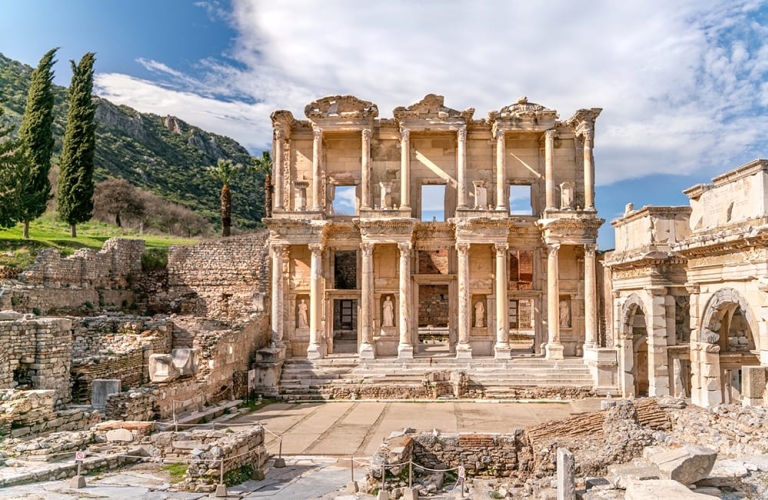
Join this unforgettable ephesus tour from Istanbul. Visit Virgin Mary House, Ephesus, Artemis Temple and Sirince village with flights included.
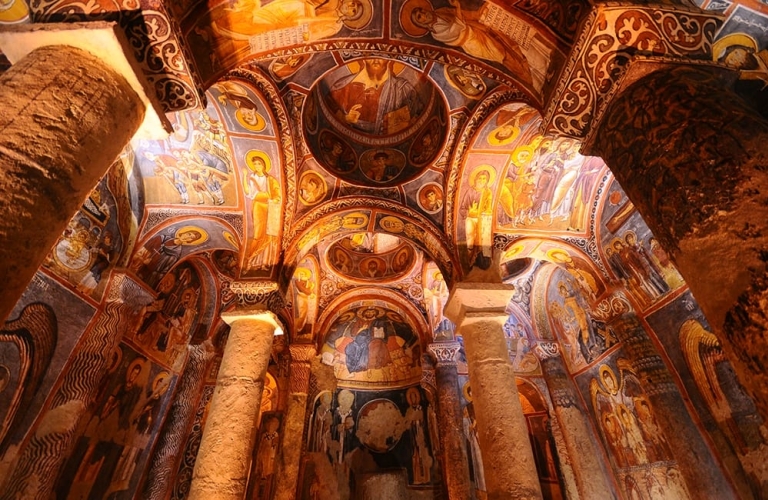
Discover Ephesus and Cappadocia on a 3 day Turkey tour.

Discover Cappadocia on a day trip from Istanbul, featuring unique landscapes and history.
Disclosure Notice
By filling out this form, you agree that the personal data you provide to us will be processed in accordance with the Personal Data Protection Law No. 6698 and related legislation.
Your personal data will be processed solely for responding to your application, evaluating your requests, and fulfilling legal obligations; it will not be shared with third parties.
For detailed information, you can review our Privacy Policy.
By submitting the form, you acknowledge and consent to the processing of your personal data for the purposes specified above.

