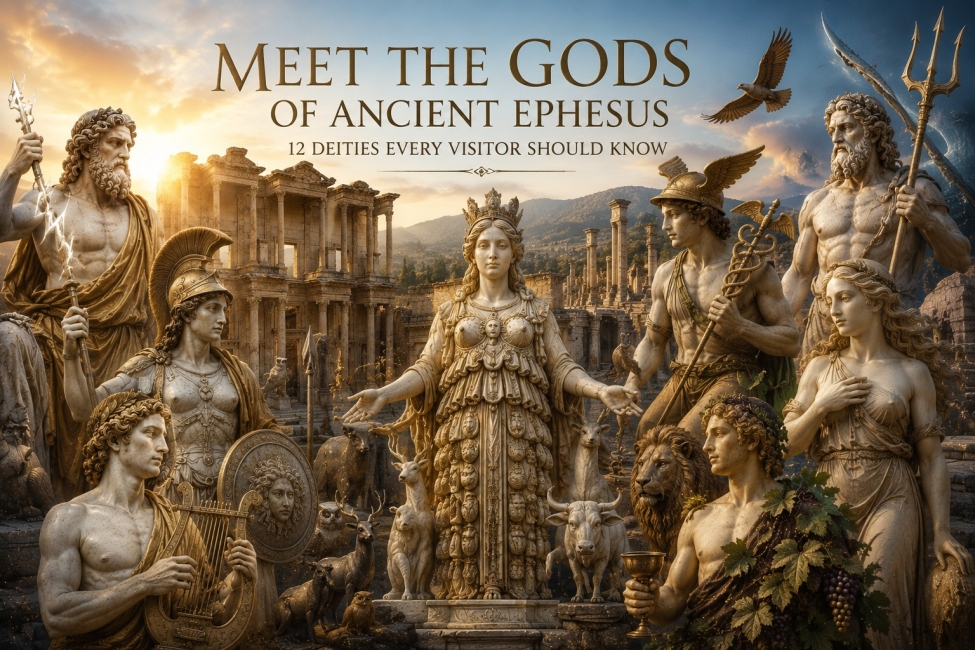
When people visit Ephesus today, they usually admire its marble streets, magnificent Library of Celsus, and impressive Great Theatre.
But nearly two thousand years ago, the city was much more than a political and commercial center.
It was one of the most important religious cities in the ancient world.
People came from across the Mediterranean to worship powerful gods and goddesses, seek divine protection, and celebrate spectacular festivals.
Every temple, monument, and sacred square told a story.
Some honored Olympian gods familiar from Greek mythology.
Others celebrated Roman emperors as divine figures.
And one goddess stood above them all.
Artemis.
Let's meet the twelve deities that shaped daily life in Ancient Ephesus—and discover where you can still find traces of them today.
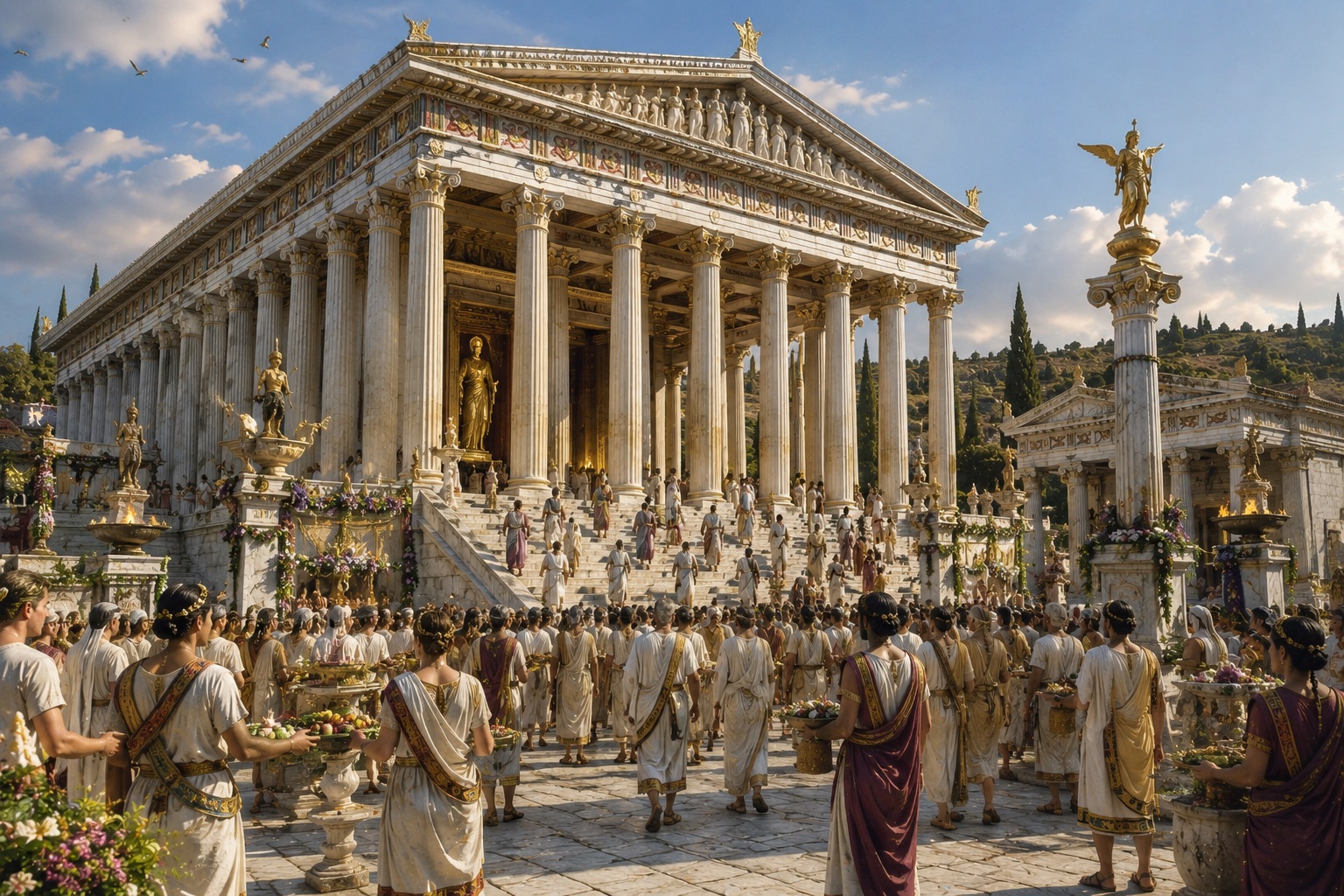
No deity was more important to Ephesus than Artemis.
Her enormous temple, the Temple of Artemis, was one of the Seven Wonders of the Ancient World and attracted pilgrims from across the Roman Empire.
However, the Artemis worshipped in Ephesus looked very different from the young huntress most people know from Greek mythology.
The Ephesian Artemis symbolized fertility, abundance, prosperity, and protection.
Her distinctive statue, decorated with rows of symbolic ornaments and sacred animals, reflected local Anatolian traditions that blended with Greek religion.
If you'd like to learn more about her legendary sanctuary, read our guide Why Was the Temple of Artemis Destroyed? The Rise and Fall of a Wonder.
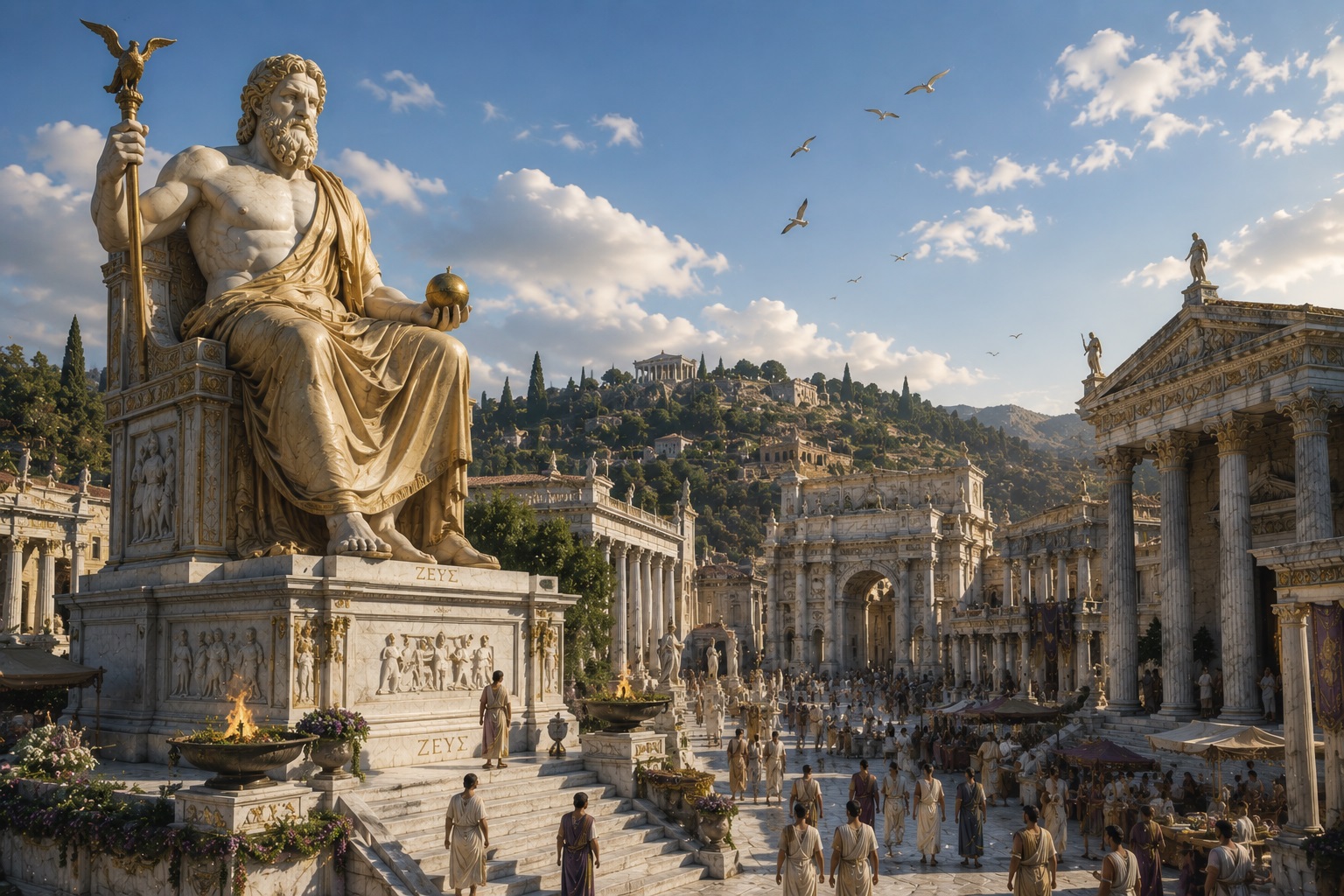
Although Artemis protected the city, Zeus remained the supreme ruler of the Greek pantheon.
As the god of thunder, law, justice, and kingship, he was respected throughout the Roman Empire.
Merchants, travelers, soldiers, and public officials frequently offered prayers asking for his protection before important journeys or political decisions.
His image appeared on statues, coins, and public monuments throughout Asia Minor.
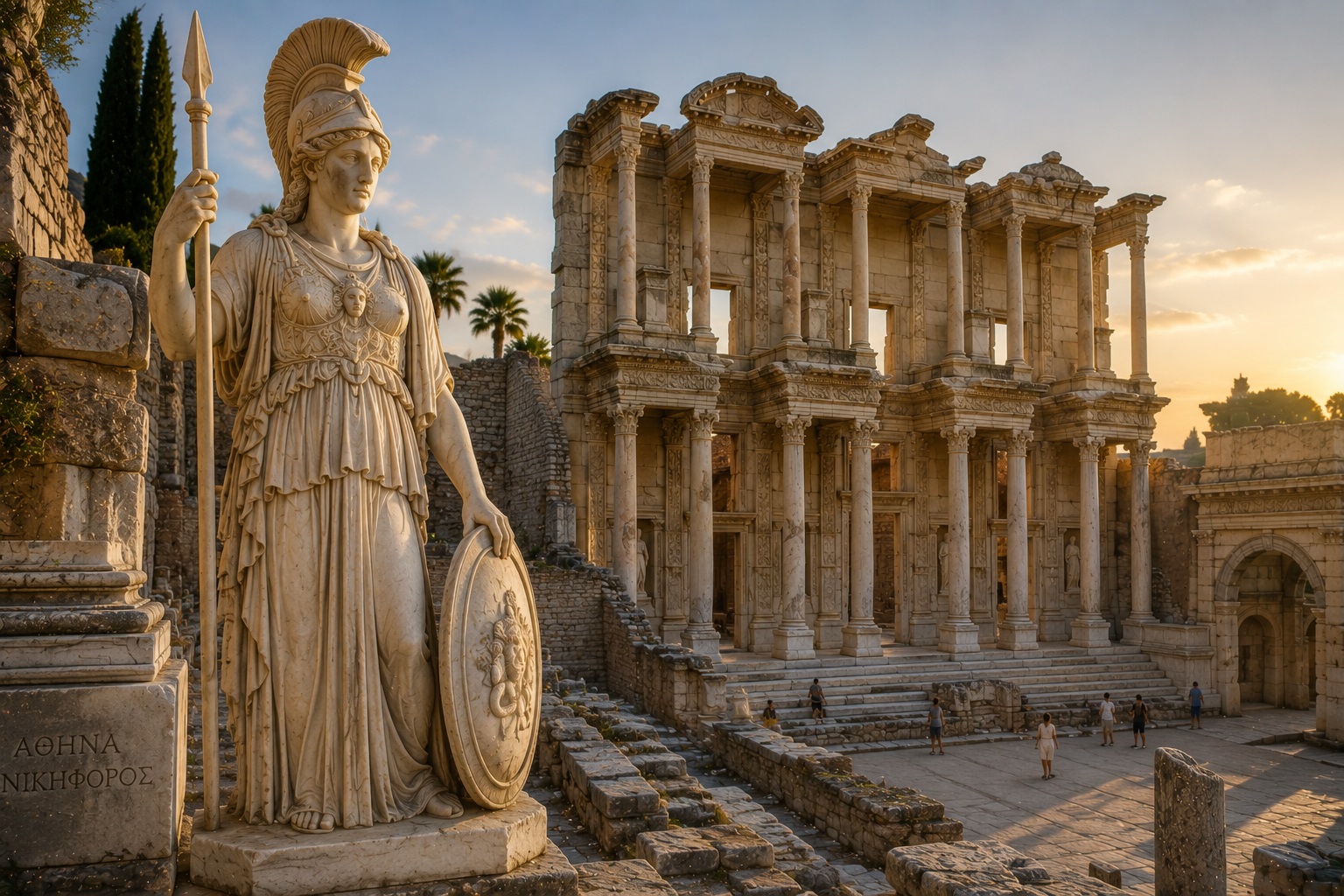
Wisdom, strategy, learning, and craftsmanship all belonged to Athena.
Although she wasn't the city's principal deity, educated citizens admired her deeply.
It's easy to imagine philosophers, scholars, and students gathering near the Library of Celsus while invoking Athena's blessing before studying rhetoric, mathematics, or philosophy.
Her owl became one of the ancient world's most recognizable symbols of wisdom.
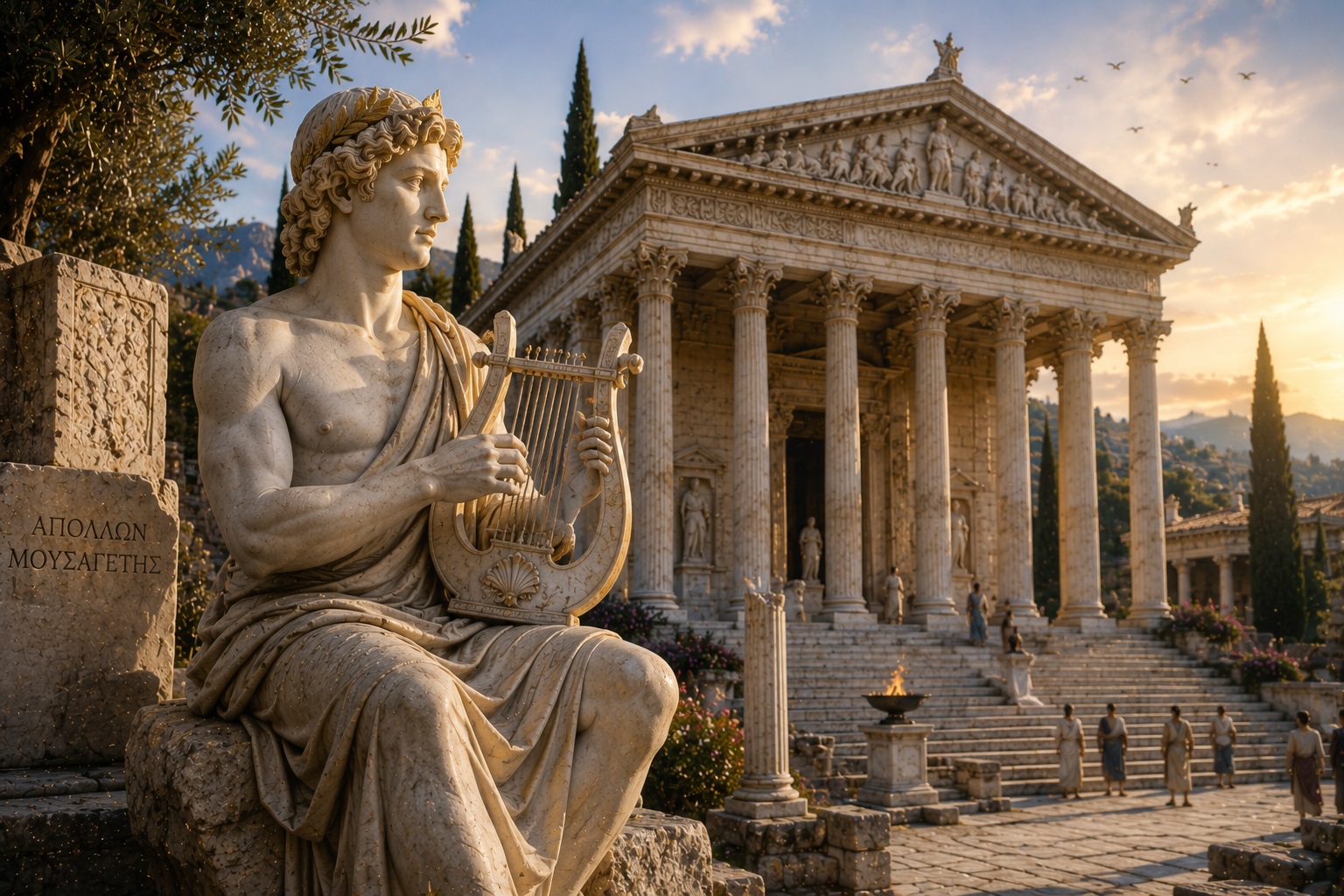
Apollo, the twin brother of Artemis, represented music, healing, prophecy, and the arts.
Musicians, poets, physicians, and travelers all sought his favor.
His connection with harmony and knowledge made him especially respected in a sophisticated city like Ephesus, where education and culture flourished.
Many festivals featured music and performances dedicated to Apollo.
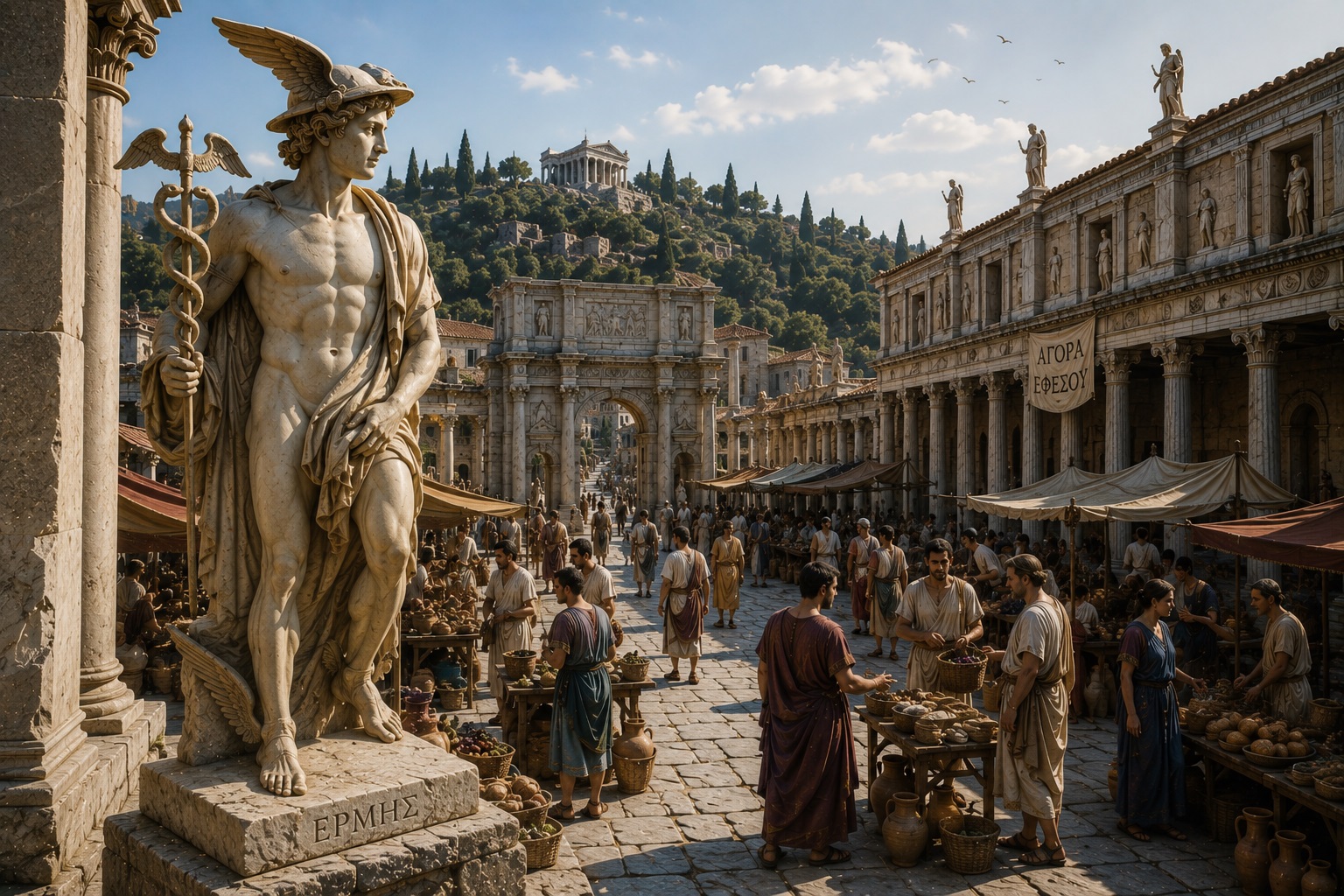
No god was busier in Ephesus than Hermes.
As the protector of merchants, travelers, messengers, and commerce, he watched over one of the busiest trading cities in the Mediterranean.
Every day, countless merchants passed through the Commercial Agora carrying textiles, spices, olive oil, wine, and precious goods.
Many undoubtedly prayed to Hermes for profitable business and safe journeys.
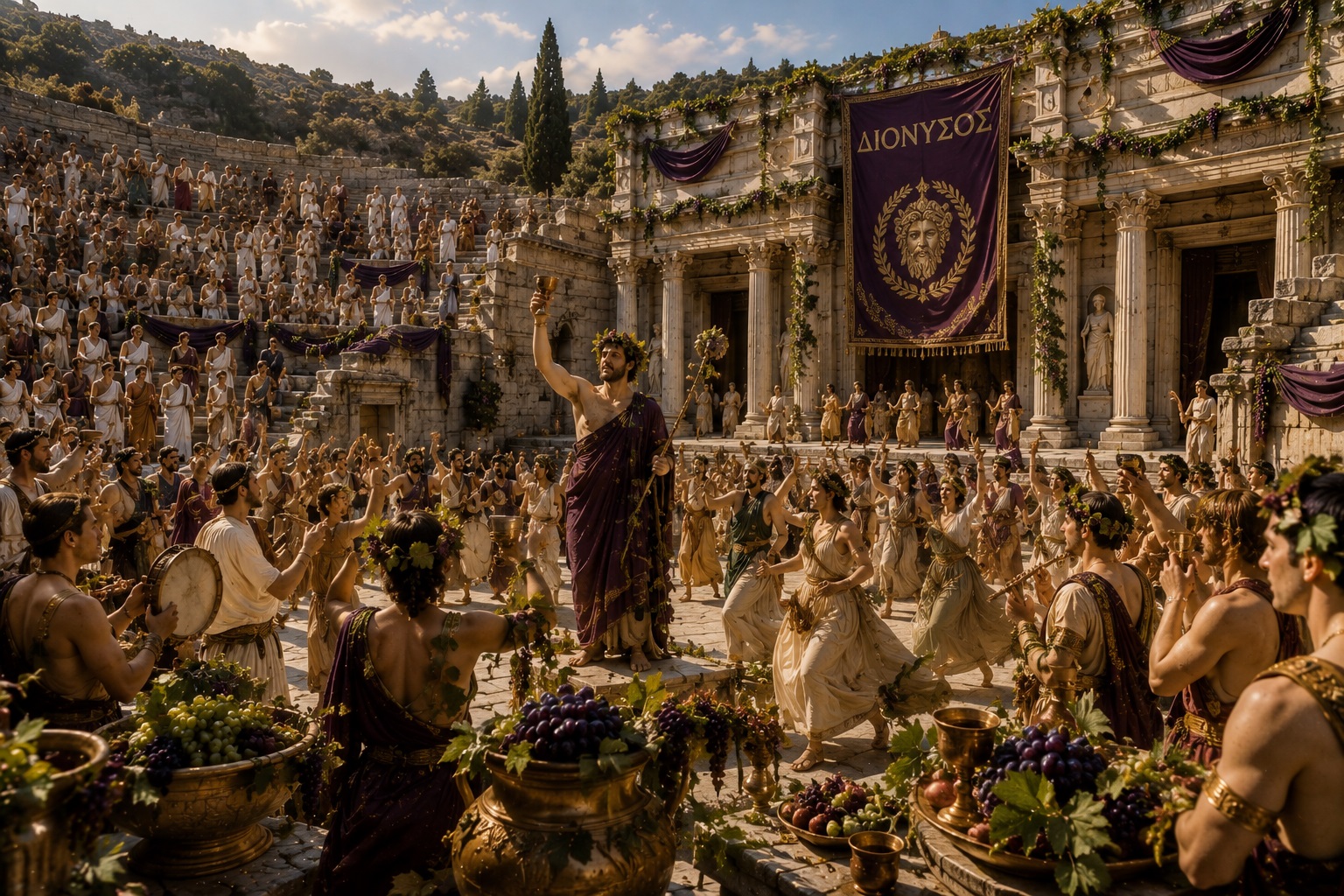
Where there was theatre, there was Dionysus.
The Great Theatre of Ephesus hosted dramatic performances, music festivals, and public celebrations inspired by traditions originally dedicated to this joyful god.
Dionysus represented wine, happiness, creativity, and the freedom to celebrate life.
His festivals brought together citizens from every social class.
Standing inside the Great Theatre today, it's easy to imagine actors performing beneath his symbolic protection.
Ancient Ephesus wasn't devoted to a single religion. Greek gods, Roman deities, emperor worship, local Anatolian traditions, Judaism, and eventually Christianity all coexisted here, making Ephesus one of the most religiously diverse cities of the ancient world.
We've only met half of the divine residents of Ancient Ephesus.
Next we'll discover Aphrodite, Poseidon, Ares, Demeter, Hestia, and the Roman versions of the Olympian gods—and explore how Christianity gradually transformed one of the ancient world's greatest sacred cities.
In a prosperous and cosmopolitan city like Ephesus, Aphrodite also had an important place in everyday life.
As the goddess of love, beauty, desire, and fertility, she was admired throughout the Greek world.
Travelers, newly married couples, and young lovers often offered prayers seeking her blessing.
Her influence extended beyond romance, symbolizing harmony, elegance, and the pleasures of life.
The famous Terrace Houses, decorated with colorful frescoes and luxurious mosaics, reflected the refined lifestyle often associated with Aphrodite.
Today, Ephesus lies several kilometers inland.
Two thousand years ago, however, it was one of the busiest harbor cities in the Mediterranean.
For sailors and merchants, Poseidon was one of the most important gods.
Every voyage depended on calm seas and favorable winds.
Before leaving the harbor, many captains made offerings asking Poseidon for protection during dangerous sea journeys.
The city's prosperity depended on maritime trade, making the sea god an essential figure in Ephesian life.
Although Ephesus was famous for commerce rather than conquest, soldiers stationed in the region honored Ares before military campaigns.
He represented courage, strength, and victory in battle.
Roman soldiers passing through Asia Minor often carried small amulets or made sacrifices in hopes of returning safely from war.
The fertile plains surrounding Ephesus produced wheat, olives, grapes, figs, and countless other crops.
Demeter, goddess of agriculture and harvest, was believed to ensure abundant fields and successful harvests.
Without fertile land, one of the Roman Empire's richest cities could never have flourished.
Farmers honored her every year as planting and harvest seasons began.
Not every god was worshipped in magnificent temples.
Hestia, goddess of the hearth and home, protected ordinary families.
Small household shrines often contained lamps or simple offerings dedicated to her.
Every shared meal, every family gathering, and every welcoming fire reflected her quiet but essential presence.
She reminded the people of Ephesus that home was just as sacred as any temple.
When Ephesus became part of the Roman Empire, Greek mythology blended with Roman religion.
Zeus became Jupiter.
Aphrodite became Venus.
Hermes became Mercury.
Athena became Minerva.
Many temples honored not only the traditional gods but also Roman emperors, who were celebrated as divine protectors of the empire.
The impressive Temple of Domitian reminds visitors that religion and politics were closely connected in Roman Ephesus.
By the 1st century AD, Ephesus had become one of the most important cities in early Christianity.
Saint Paul preached here, and according to Christian tradition, Saint John spent his final years in the city.
Over time, magnificent pagan temples gradually lost their importance as Christianity spread throughout the Roman Empire.
Ephesus became one of history's most fascinating places where mythology, Roman religion, and Christianity all intersected.
Absolutely.
Although many temples have disappeared, their stories remain carved into the city's stones.
Once you know what to look for, mythology appears almost everywhere in Ephesus.
Artemis was by far the most important deity. She was the city's patron goddess, and her temple was one of the Seven Wonders of the Ancient World.
Not exactly. While they shared the same name, the Ephesian Artemis developed unique local characteristics associated with fertility, prosperity, and protection.
Yes, although the Romans gave many Greek gods different names. Zeus became Jupiter, Athena became Minerva, Hermes became Mercury, and Aphrodite became Venus.
Yes. Visitors can explore the remains of the Temple of Artemis, the Temple of Hadrian, the Temple of Domitian, and many mythological sculptures throughout Ephesus.
Understanding the gods worshipped in Ephesus helps visitors appreciate the city's temples, sculptures, festivals, architecture, and daily life in a much deeper way.
Every marble column, temple, and sculpture in Ephesus tells a story.
Without understanding the gods who shaped this remarkable city, it's easy to miss the deeper meaning hidden among its ruins.
Join one of our guided Ephesus Tours and discover the myths behind the monuments. Our expert local guides reveal how Greek mythology, Roman religion, and early Christianity came together to create one of the most fascinating cities of the ancient world.
Ancient Ephesus wasn't simply built from marble.
It was built from stories.
Stories of gods who protected sailors.
Goddesses who promised prosperity.
Heroes, emperors, philosophers, merchants, and pilgrims who believed the divine was never far away.
Today, those gods may no longer receive offerings, but their presence still lingers in the temples, statues, and sacred spaces scattered throughout the city.
As you walk the marble streets of Ephesus, you're not just exploring an archaeological site.
You're stepping into a world where mythology once shaped everyday life.

I graduated from Istanbul University with a degree in Radio, Television, and Cinema. During my academic journey, I focused on storytelling, visual communication, and cultural content creation, while my personal interests led me toward exploration and discovery.
Traveling, discovering new places, and experiencing different cultures are at the heart of my life. My strong interest in mythology allows me to see destinations not only as physical locations but as narratives shaped by history and meaning. My passion for reading continuously enriches and deepens this perspective.
I truly enjoy meeting new people and learning about diverse ways of life. With this mindset, I aim to share my experiences in a sincere, clear, and engaging way.
I love following the traces of stories wherever I go.
Disclosure Notice
By filling out this form, you agree that the personal data you provide to us will be processed in accordance with the Personal Data Protection Law No. 6698 and related legislation.
Your personal data will be processed solely for responding to your application, evaluating your requests, and fulfilling legal obligations; it will not be shared with third parties.
For detailed information, you can review our Privacy Policy.
By submitting the form, you acknowledge and consent to the processing of your personal data for the purposes specified above.

