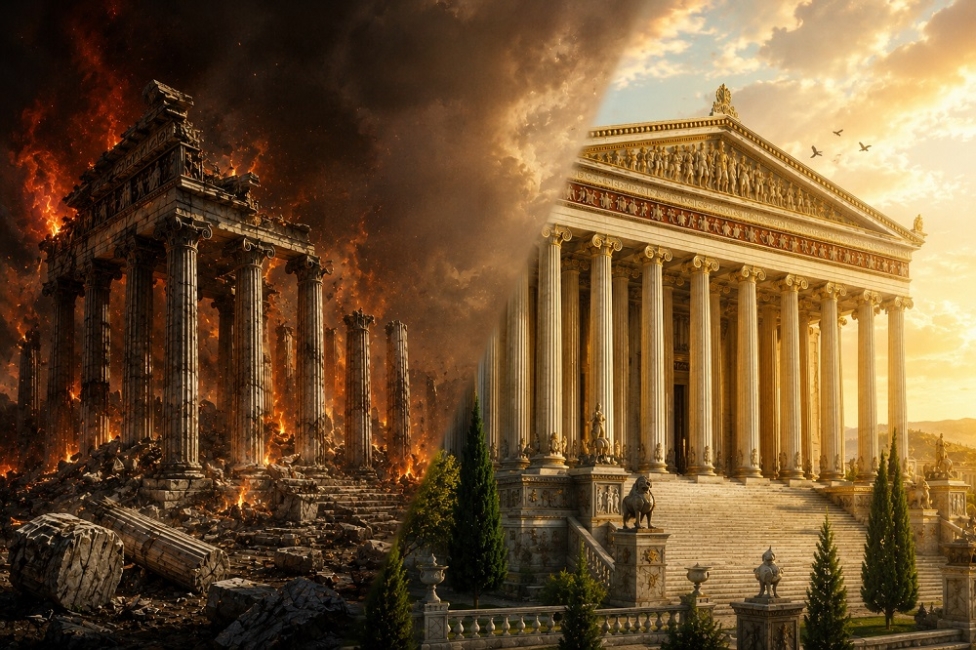
Imagine standing before a building so magnificent that travelers crossed continents just to see it.
More than one hundred towering marble columns shimmer beneath the Anatolian sun. The scent of incense fills the air as thousands of pilgrims gather to honor the goddess Artemis. Merchants from Egypt, Greece, Persia, and Rome crowd the surrounding streets, selling silk, spices, jewelry, and rare treasures.
This was not merely a temple.
It was one of the greatest achievements of human civilization.
Known as the Temple of Artemis, it stood proudly outside the ancient city of Ephesus and earned its place among the Seven Wonders of the Ancient World.
Yet today, almost nothing remains.
Visitors arriving at the site often ask the same question:
What happened to one of the greatest buildings ever constructed?
The answer is far more fascinating than most people realize.
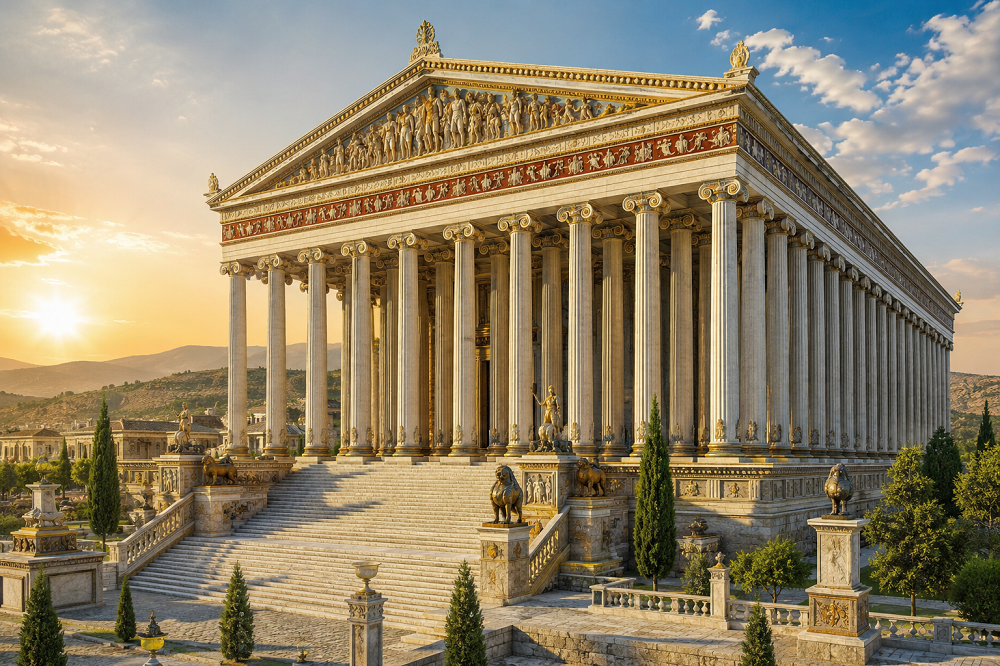
The Temple of Artemis was unlike anything the ancient world had ever seen.
Construction began around the 6th century BC under the rule of King Croesus of Lydia, one of the richest rulers of his time.
The project required decades of planning, engineering, and craftsmanship.
Built almost entirely from gleaming white marble, the temple measured approximately 115 meters long and 55 meters wide, making it one of the largest religious buildings ever constructed in antiquity.
Its most remarkable feature was its forest of towering Ionic columns.
There were 127 marble columns, each standing nearly 18 meters (60 feet) tall.
Many were decorated with elaborate carvings created by the finest sculptors of the Greek world.
Visitors described the temple as so magnificent that it appeared almost impossible for human hands to have built it.
To understand why the temple mattered so much, we first need to understand Artemis herself.
In Greek mythology, Artemis was the goddess of hunting, wildlife, and the moon.
However, the Artemis worshipped in Ephesus was unique.
Rather than depicting a young huntress carrying a bow, the Ephesian Artemis symbolized fertility, prosperity, and the abundance of nature.
Her famous statue, covered with rows of rounded ornaments, remains one of the most recognizable religious images from the ancient world.
For centuries, people traveled from across the Mediterranean to worship her, bringing gifts and offerings to the magnificent sanctuary.
The temple became not only a religious center but also a symbol of wealth and international prestige.
Modern visitors often imagine temples as places reserved only for prayer.
The Temple of Artemis was much more.
It served as:
Thousands of visitors arrived every year, creating an economy that helped transform Ephesus into one of the richest cities in the ancient world.
Hotels, marketplaces, workshops, and restaurants flourished around the sanctuary.
Long before modern tourism existed, the Temple of Artemis was already attracting travelers from across the known world.
Then came one of history's most shocking acts of destruction.
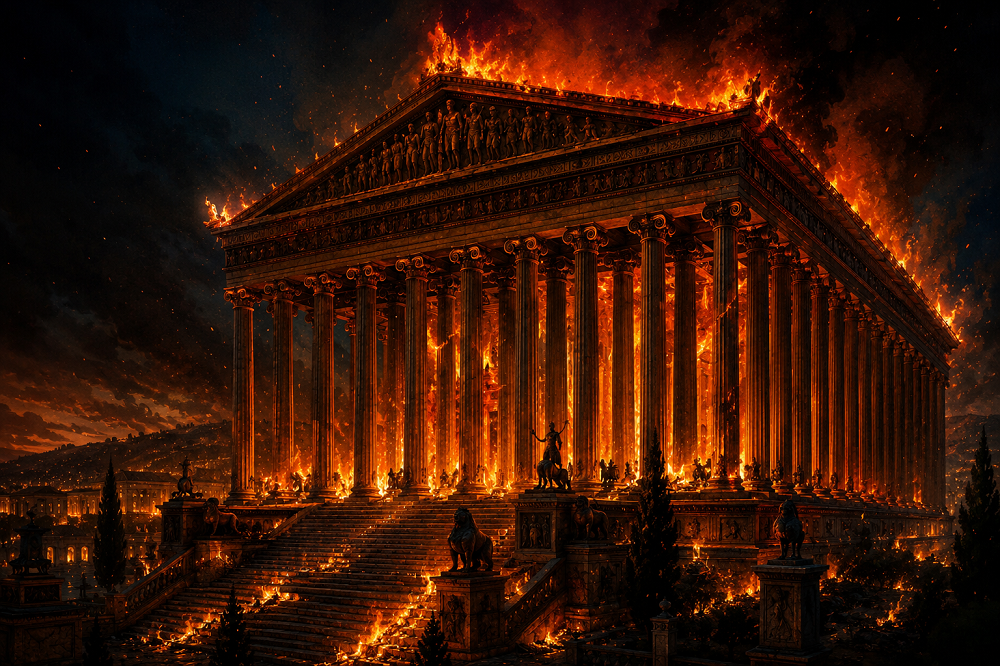
On the night of July 21, 356 BC, flames suddenly erupted inside the temple.
The magnificent wooden roof quickly caught fire.
The enormous cedar beams collapsed.
Decorations that had taken generations to create disappeared in a matter of hours.
By sunrise, one of humanity's greatest architectural masterpieces lay in ruins.
The man responsible was quickly arrested.
His name was Herostratus.
Unlike famous conquerors or powerful kings, Herostratus was an ordinary man.
He possessed neither wealth nor political influence.
But he wanted something else.
He wanted to be remembered forever.
According to ancient historians, Herostratus deliberately set fire to the temple for one reason alone:
To achieve eternal fame.
The authorities were horrified.
After his execution, they introduced one of history's earliest examples of a media blackout.
His name was officially forbidden from being spoken or recorded.
Ironically, the ban had the opposite effect.
Greek historians eventually documented the story, ensuring that Herostratus achieved exactly what he had wanted.
Even today, the term "Herostratic fame" describes someone who commits a terrible act simply to become famous.
The destruction of the Temple of Artemis is linked to one of history's most remarkable coincidences.
Ancient writers claimed that on the very night the temple burned, a child was born hundreds of kilometers away in Macedonia.
His name was Alexander the Great.
According to legend, the goddess Artemis was so busy assisting with Alexander's birth that she was unable to protect her own temple.
Whether true or not, the story became one of antiquity's most famous legends.
Years later, after conquering much of the known world, Alexander offered to pay for rebuilding the temple.
The people of Ephesus politely declined.
As one famous reply reportedly stated:
"It is not fitting for one god to build a temple for another."
Remarkably, the destruction did not mark the end of the Temple of Artemis.
The citizens of Ephesus immediately began rebuilding.
The new temple was even larger, even richer, and even more magnificent than its predecessor.
For centuries afterward, travelers continued to rank it among the greatest sights anywhere in the ancient world.
Many believed the rebuilt Temple of Artemis surpassed even the original.
For nearly six centuries after its reconstruction, the Temple of Artemis continued to amaze travelers from across the ancient world.
But history had other plans.
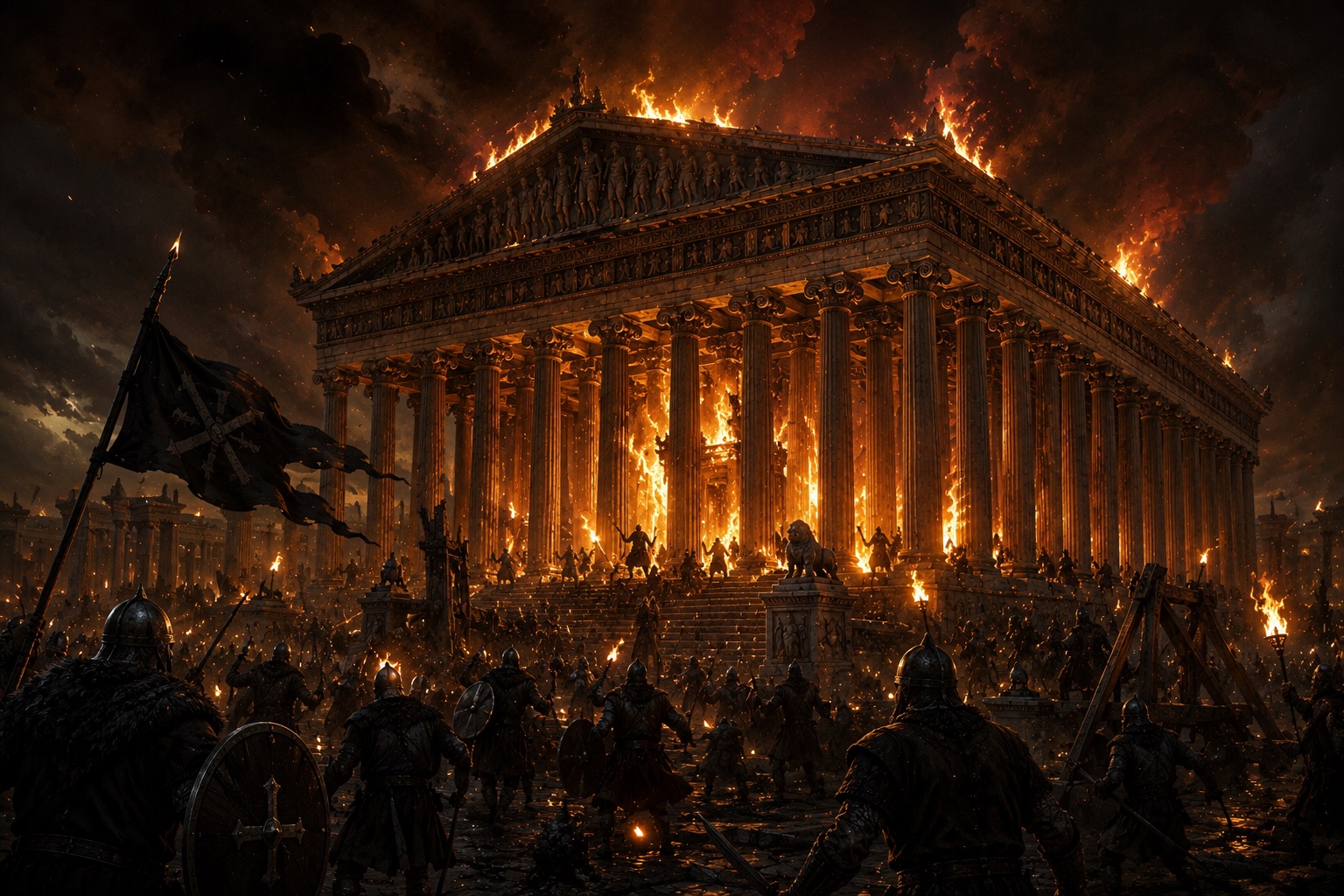
In AD 262, a Germanic tribe known as the Goths launched a series of devastating raids across Asia Minor.
Ephesus was among their targets.
The Temple of Artemis suffered extensive damage during these attacks.
Although parts of the sanctuary survived, it never fully recovered its former glory.
Unlike the fire started by Herostratus centuries earlier, this destruction came during a period when the Roman Empire itself was beginning to weaken.
The resources, wealth, and political stability needed to rebuild another architectural masterpiece simply no longer existed.
Many visitors assume the temple disappeared immediately after the Gothic invasion.
In reality, its decline was much slower.
Over the following centuries, the Roman Empire gradually embraced Christianity.
Ancient pagan temples lost their religious importance.
Without pilgrims bringing offerings and rulers funding repairs, maintaining such an enormous marble structure became impossible.
By the late fourth century, the Temple of Artemis was no longer the spiritual heart of Ephesus.
Instead, Christianity had become the dominant religion, and churches replaced many of the city's ancient sanctuaries.
One question surprises almost every visitor.
If the Temple of Artemis was one of the largest buildings ever constructed, where did all the marble disappear?
The answer is surprisingly practical.
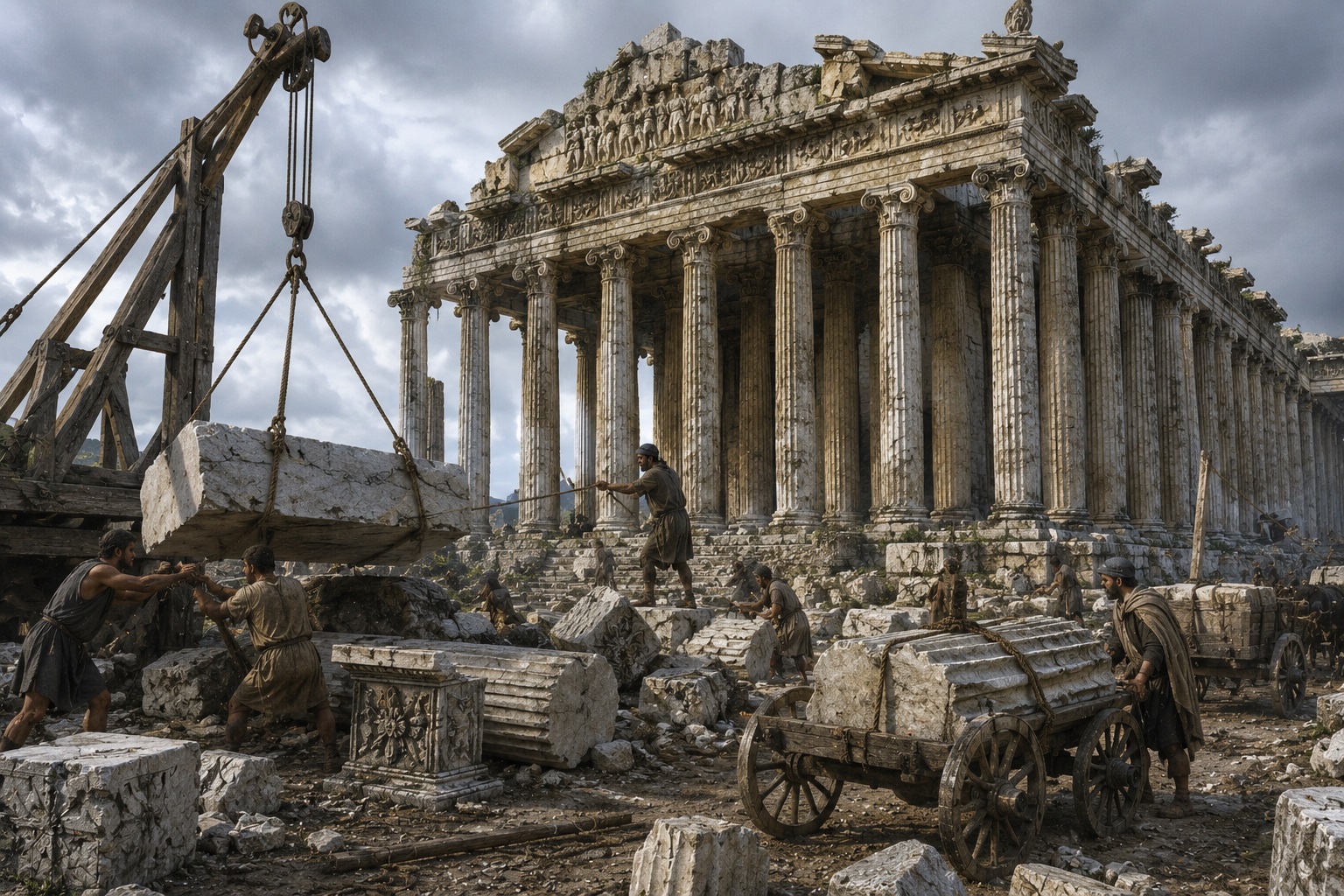
Throughout Late Antiquity and the Byzantine period, builders treated the abandoned temple as a giant quarry.
Its marble blocks, columns, and decorative stones were carefully removed and reused in other buildings throughout the region.
Some stones found new life in churches.
Others became part of fortifications.
Many disappeared into houses and public buildings that still stand today.
Rather than being destroyed all at once, the Temple of Artemis was slowly dismantled—piece by piece—for hundreds of years.
Today, visitors arriving at the archaeological site are often surprised.
Instead of finding one of the Seven Wonders of the Ancient World, they discover a peaceful marshland with a single reconstructed column rising toward the sky.
That solitary column has become a powerful symbol.
It reminds us that even the greatest achievements of humanity are not immune to time.
Yet despite its modest appearance, this is one of the most historically significant places on Earth.
Standing here, you are looking at the exact location where one of history's greatest architectural masterpieces once stood.
Absolutely.
The Temple of Artemis archaeological site is located just a few minutes from the ancient city of Ephesus and is included in many guided itineraries.
Although only limited remains survive, visiting the site becomes far more meaningful once you understand the extraordinary story behind it.
Many travelers combine the Temple of Artemis with:
Together, these sites tell the complete story of one of the world's greatest ancient cities.
Although the Temple of Artemis no longer dominates the skyline, its legacy lives on throughout Ephesus.
Every marble street, every carved column, and every monument tells part of the story of a city that once stood at the center of religion, commerce, and culture.
If you're planning to visit Türkiye's Aegean coast, exploring Ephesus with a knowledgeable guide is the best way to understand how the Temple of Artemis shaped the city's extraordinary history.
Browse our collection of Ephesus Tours and discover one of the greatest archaeological destinations in the world.
The temple was first deliberately burned by Herostratus in 356 BC. After being rebuilt, it later suffered major damage during the Gothic invasion in AD 262 and gradually fell into ruin over the following centuries.
A man named Herostratus admitted that he burned the temple to achieve everlasting fame.
No. Alexander offered to finance its reconstruction, but the people of Ephesus respectfully declined his offer.
Yes. Although only a few remains survive, the archaeological site is open to visitors and is located only a short distance from Ephesus.
Because of its enormous size, extraordinary marble architecture, artistic beauty, and religious importance in the ancient world.
The Temple of Artemis was never destroyed by a single event.
Its story is one of ambition, destruction, resilience, and slow transformation.
It survived fire.
It rose again even more magnificent.
It endured invasions.
It witnessed the rise and fall of empires.
And eventually, time itself claimed what armies could not.
Today, only one lonely column remains.
But if you know its story, that single column becomes one of the most powerful monuments in the ancient world.
Because sometimes, history isn't measured by what survives.
It's measured by what people never forget.

I graduated from Istanbul University with a degree in Radio, Television, and Cinema. During my academic journey, I focused on storytelling, visual communication, and cultural content creation, while my personal interests led me toward exploration and discovery.
Traveling, discovering new places, and experiencing different cultures are at the heart of my life. My strong interest in mythology allows me to see destinations not only as physical locations but as narratives shaped by history and meaning. My passion for reading continuously enriches and deepens this perspective.
I truly enjoy meeting new people and learning about diverse ways of life. With this mindset, I aim to share my experiences in a sincere, clear, and engaging way.
I love following the traces of stories wherever I go.
Disclosure Notice
By filling out this form, you agree that the personal data you provide to us will be processed in accordance with the Personal Data Protection Law No. 6698 and related legislation.
Your personal data will be processed solely for responding to your application, evaluating your requests, and fulfilling legal obligations; it will not be shared with third parties.
For detailed information, you can review our Privacy Policy.
By submitting the form, you acknowledge and consent to the processing of your personal data for the purposes specified above.

