Imagine walking through Ephesus on a hot summer afternoon.
The Mediterranean sun beats down on the marble streets.
The temperature climbs above 35°C (95°F).
There are no electric fans.
No air conditioners.
No refrigerators.
Yet nearly 2,000 years ago, more than 200,000 people lived comfortably in one of the hottest regions of the Roman Empire.
How?
The Romans were master engineers, brilliant architects, and surprisingly clever when it came to staying cool during the scorching summers of western Anatolia.
Many of their ideas are still used in modern sustainable architecture today.
Let's discover the ingenious ways people survived the summer heat in Ancient Ephesus.
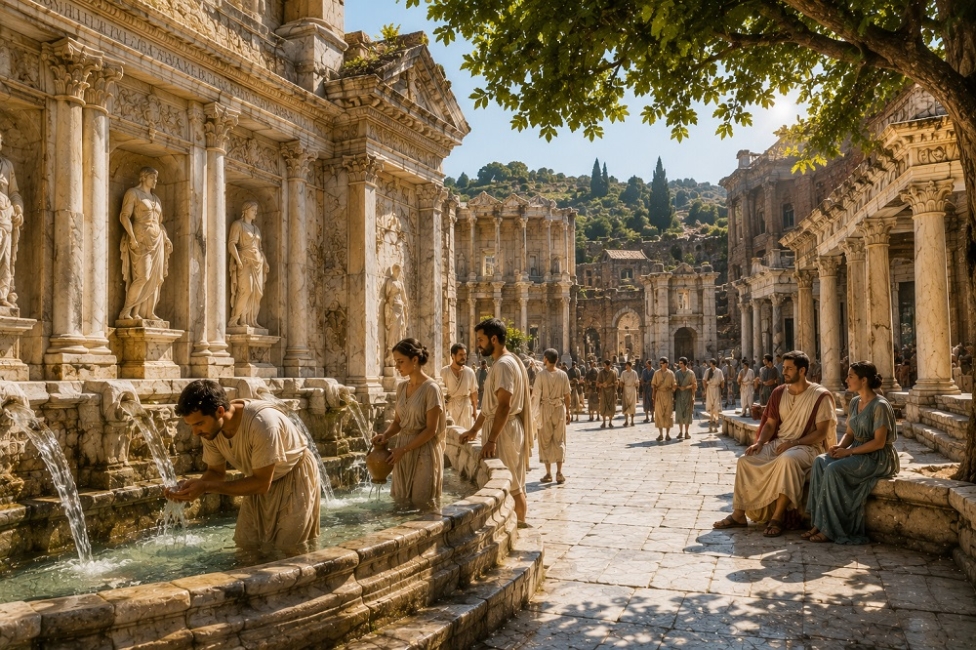
The first secret was water.
Fresh water constantly flowed through monumental fountains across the city.
Structures such as the magnificent Fountain of Trajan and the Pollio Fountain weren't built only for decoration.
The moving water cooled the surrounding air while providing fresh drinking water for citizens and travelers.
Standing beside one of these fountains on a hot afternoon would have been one of the most refreshing places in the city.
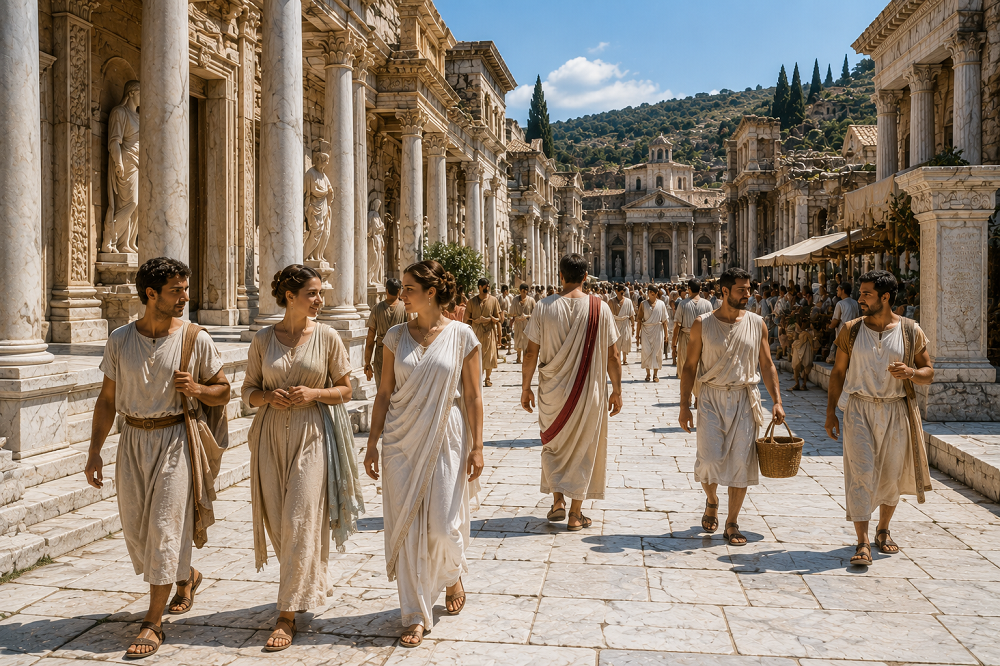
The Romans understood something we still follow today—what you wear makes a huge difference.
Instead of heavy fabrics, people living in Ephesus preferred lightweight linen and fine wool garments suitable for the Mediterranean climate.
Loose-fitting tunics allowed air to circulate around the body, while light-colored fabrics reflected sunlight instead of absorbing it.
Even wealthy citizens dressed surprisingly simply during the hottest months of the year.
Romans didn't try to fight the hottest hours of the day.
Instead, they adapted their schedule.
Markets opened shortly after sunrise.
Craftsmen began working early in the morning.
By midday, when temperatures peaked, many people sought shade, visited the baths, or returned home for lunch and rest.
This natural rhythm helped them avoid prolonged exposure to the intense afternoon sun.
In many Mediterranean countries today, similar routines still exist during the hottest summer months.
One of the biggest surprises for modern visitors is the extensive use of marble throughout Ephesus.
Marble wasn't chosen only because it looked impressive.
It also helped create a more comfortable urban environment.
Unlike dark stone or asphalt, light-colored marble reflects much of the sun's heat.
Although it becomes warm during the day, it absorbs less heat than darker materials and cools down much faster after sunset.
Combined with the shade cast by colonnaded streets and public buildings, the marble surfaces made walking through Ephesus considerably more comfortable.
Hydration was essential.
Fresh water from public fountains was readily available throughout the city.
Adults also commonly drank diluted wine, while fruit, grapes, figs, and seasonal produce helped replace fluids during hot weather.
The Romans understood that eating fresh foods with high water content was one of the simplest ways to stay comfortable during summer.
If you'd like to learn more about the Roman diet, read our guide What Did Romans Eat in Ancient Ephesus? 15 Foods That Filled Their Tables.
As the intense summer heat faded, Ephesus came alive once again.
Families gathered in courtyards.
Friends met in public spaces.
Theatres hosted performances.
The cooler evening air made outdoor life enjoyable once more.
Today, visitors can experience something remarkably similar during the special evening openings of Ephesus.
As the sun sets, the marble streets cool, dramatic lighting transforms the ancient monuments, and the atmosphere becomes truly magical.
If you're visiting during the summer, our Ephesus Night Tour offers one of the most comfortable and unforgettable ways to explore the ancient city.
Many of the cooling techniques used in Ancient Ephesus—courtyard houses, natural ventilation, flowing water, shaded streets, and reflective building materials—are still incorporated into sustainable architecture around the world today.
Summer temperatures in the Ephesus region frequently exceed 35°C (95°F), and heatwaves can push temperatures even higher.
No. Instead, Romans relied on clever architectural design, flowing water, shaded streets, courtyard homes, and natural ventilation to stay cool.
Courtyards improved airflow, created shaded outdoor spaces, and helped lower indoor temperatures naturally throughout the day.
Yes. Public bath complexes included cold-water pools (frigidaria), where visitors could cool down after exercise or time spent in hot rooms.
During the summer months, many visitors find evening visits far more comfortable thanks to cooler temperatures and the spectacular illumination of the ancient city.
Life in Ancient Ephesus wasn't easy during the height of summer.
Yet the Romans didn't need electricity to stay comfortable.
Instead, they relied on intelligent engineering, thoughtful architecture, clever daily routines, and a deep understanding of the Mediterranean climate.
Two thousand years later, many of those same ideas continue to inspire architects designing energy-efficient buildings around the world.
The next time you explore Ephesus, look beyond the magnificent monuments.
Notice the fountains.
The courtyards.
The marble streets.
The shaded colonnades.
You'll discover that the city itself was designed as one giant machine for comfortable living.
And if you'd like to experience Ephesus in the coolest and most atmospheric way possible, join our guided Ephesus Night Tour. Walking through the illuminated ruins after sunset offers a glimpse of the ancient city at its most magical—just as generations of Ephesians once enjoyed it on warm summer evenings.

I graduated from Istanbul University with a degree in Radio, Television, and Cinema. During my academic journey, I focused on storytelling, visual communication, and cultural content creation, while my personal interests led me toward exploration and discovery.
Traveling, discovering new places, and experiencing different cultures are at the heart of my life. My strong interest in mythology allows me to see destinations not only as physical locations but as narratives shaped by history and meaning. My passion for reading continuously enriches and deepens this perspective.
I truly enjoy meeting new people and learning about diverse ways of life. With this mindset, I aim to share my experiences in a sincere, clear, and engaging way.
I love following the traces of stories wherever I go.
Disclosure Notice
By filling out this form, you agree that the personal data you provide to us will be processed in accordance with the Personal Data Protection Law No. 6698 and related legislation.
Your personal data will be processed solely for responding to your application, evaluating your requests, and fulfilling legal obligations; it will not be shared with third parties.
For detailed information, you can review our Privacy Policy.
By submitting the form, you acknowledge and consent to the processing of your personal data for the purposes specified above.

