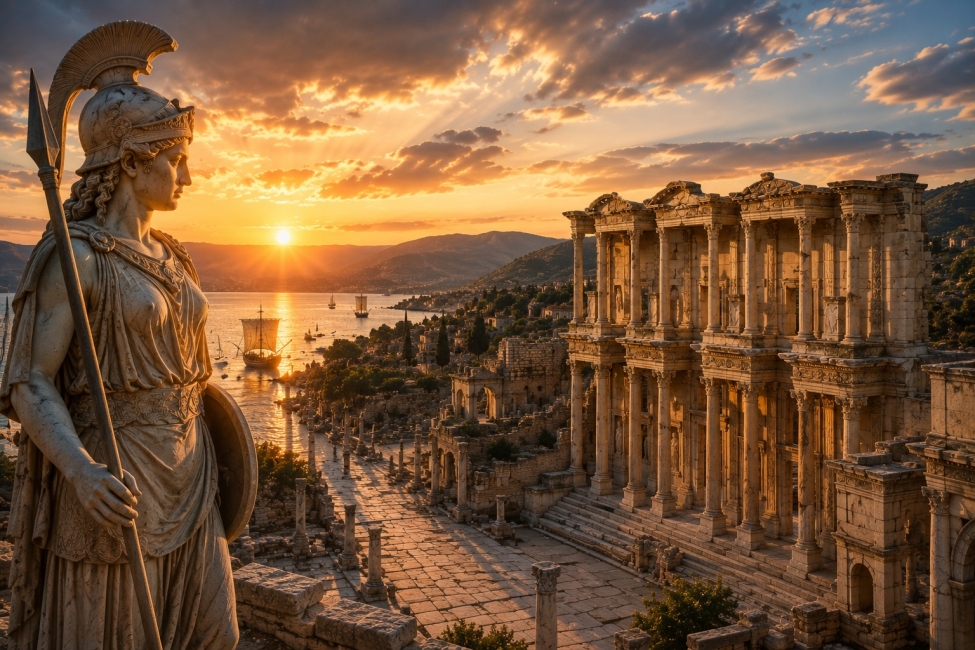
With Christopher Nolan's adaptation of The Odyssey bringing renewed global attention to Homer's legendary epic, many history lovers and travelers are asking an intriguing question:
Did Odysseus ever visit Ancient Ephesus?
While Homer's masterpiece never explicitly places Odysseus inside the city of Ephesus, the answer is far more fascinating than a simple yes or no.
Ancient Ephesus stood at the heart of Ionia—a region that shaped Greek culture, inspired generations of storytellers, and formed the backdrop of the world described in Homer's epics.
Whether you're a fan of Greek mythology, fascinated by ancient history, or inspired by the new film, exploring Ephesus offers an opportunity to walk through the same cultural landscape where the legends of gods, heroes, and epic voyages were born.
Let's uncover the remarkable connection between one of literature's greatest heroes and one of the most extraordinary cities of the ancient world.
Among all the Olympian gods, none played a more important role in Odysseus' journey than Athena.
As the goddess of wisdom, strategy, and courage, Athena repeatedly intervened to protect the king of Ithaca throughout his ten-year voyage home.
She disguised him, guided him, advised him, and even persuaded Zeus to assist his return.
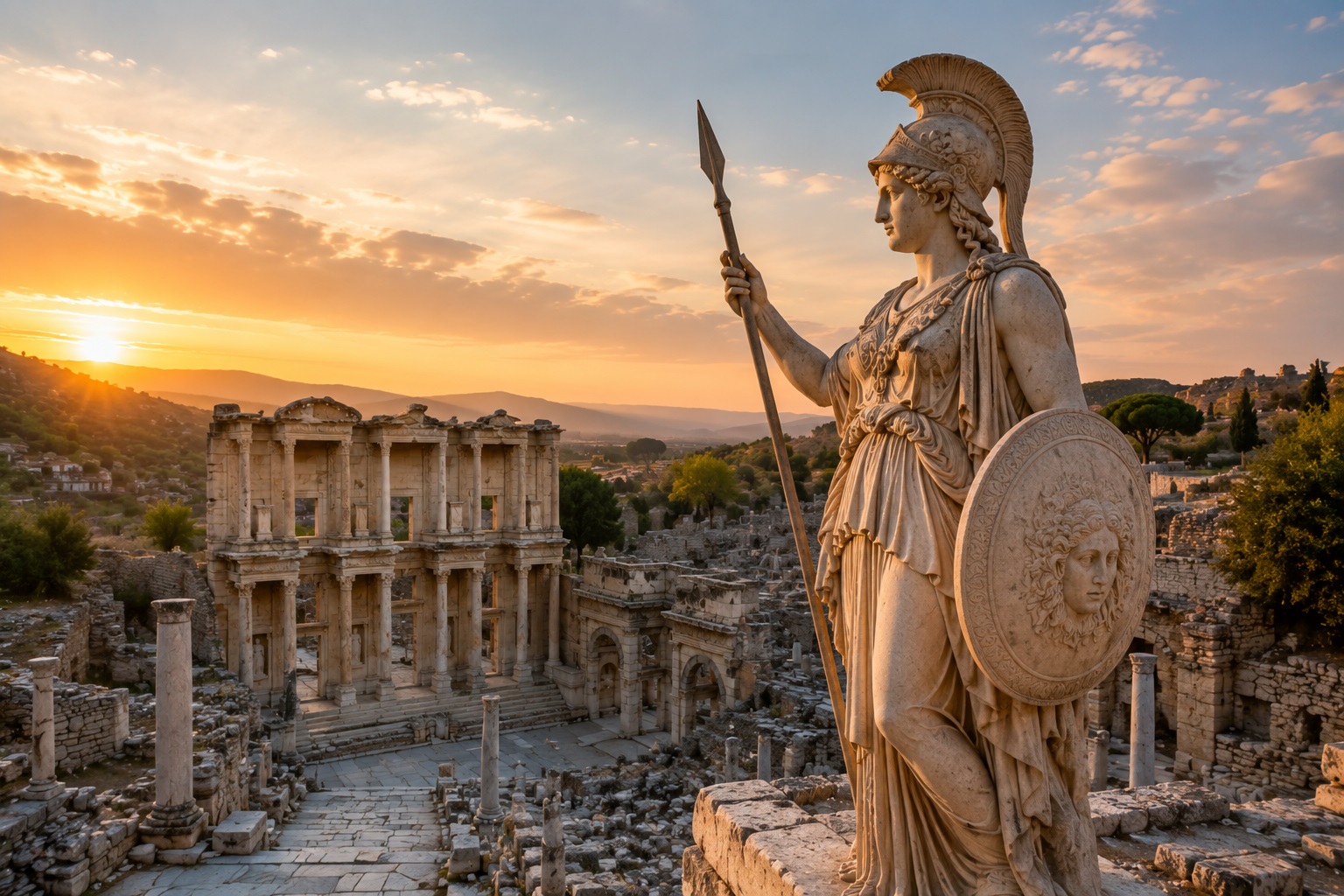
Athena was also one of the most respected deities throughout the Greek world, including the Ionian cities of western Anatolia.
Although Ephesus is best known for the Temple of Artemis, archaeological discoveries show that Athena was honored here as well, reflecting the shared religious traditions of the ancient Aegean.
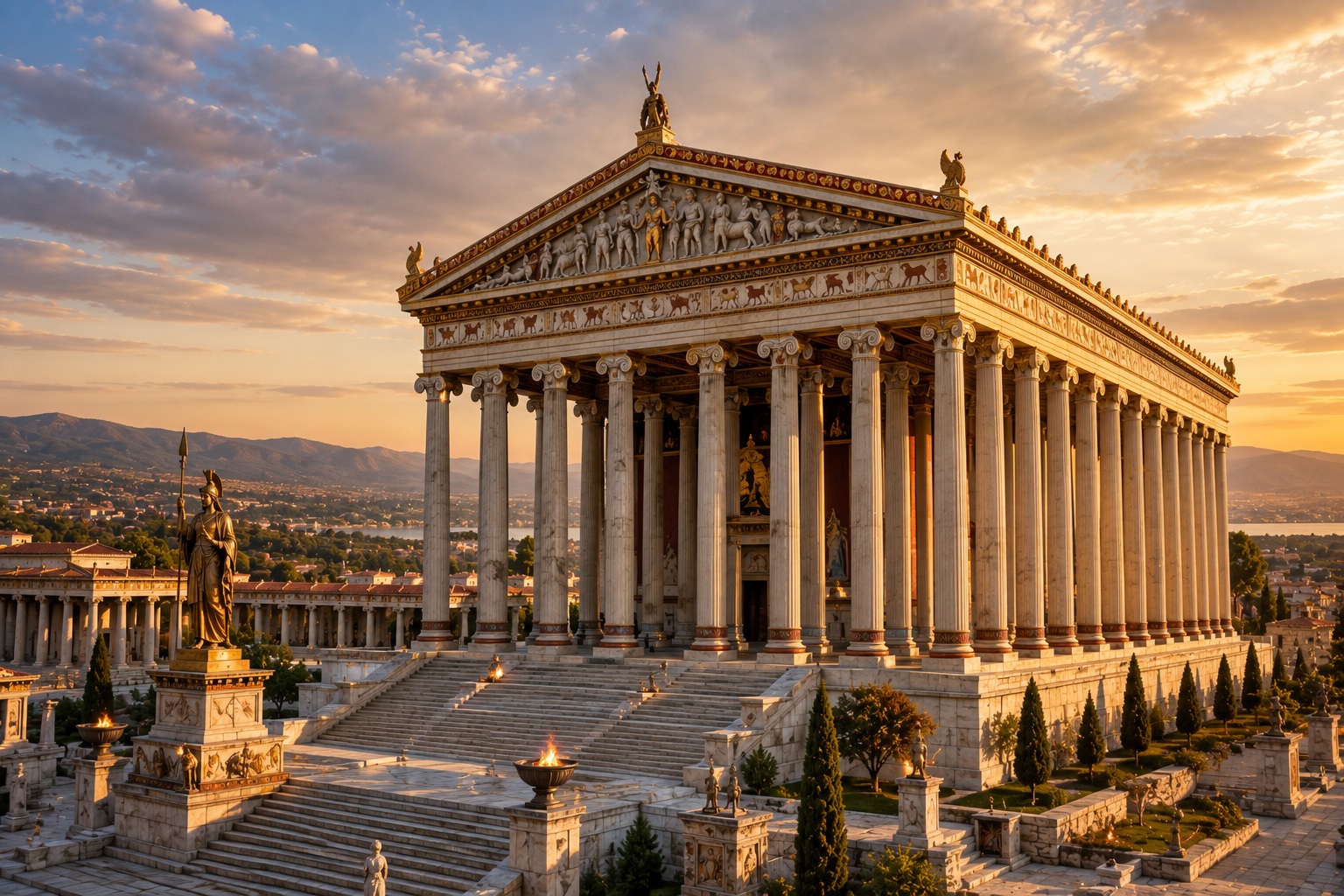
No deity was more closely associated with Ancient Ephesus than Artemis.
Her magnificent temple dominated the city for centuries and became one of the Seven Wonders of the Ancient World.
Interestingly, the Ephesian Artemis differed from the familiar Greek huntress often portrayed in mythology.
In Ephesus, she represented fertility, prosperity, protection, and the city's identity itself.
For travelers fascinated by Homer's world, visiting the Temple of Artemis offers a powerful reminder that mythology was once part of everyday life.
Odysseus' adventures also feature other Olympian gods whose influence extended across the eastern Aegean.
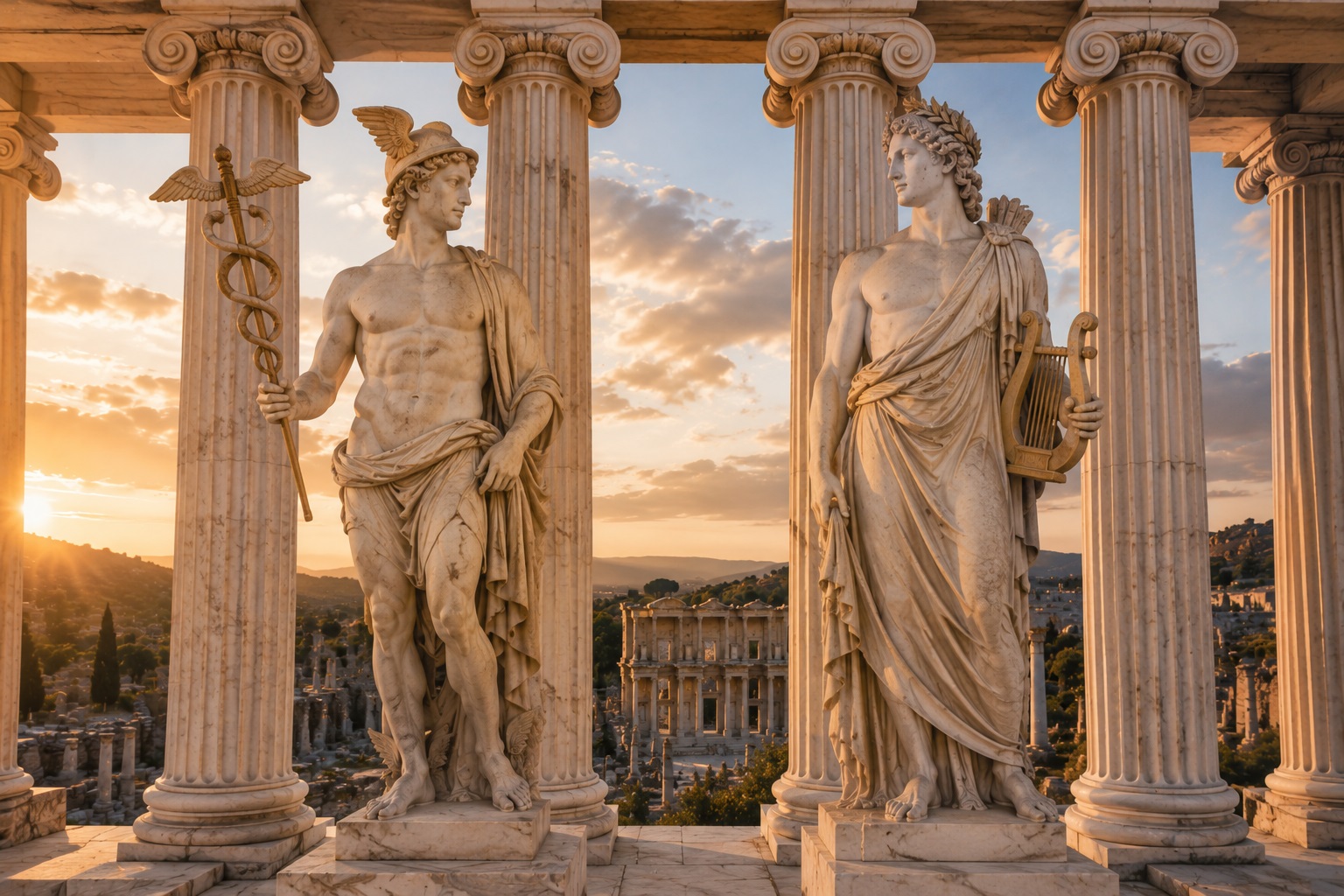
Hermes appears as the divine messenger, delivering Zeus' commands and helping Odysseus escape dangerous situations.
Apollo, associated with music, prophecy, healing, and light, was widely worshipped throughout Ionia and neighboring cities.
These familiar gods connected communities across the ancient Mediterranean, creating a shared mythology that stretched from mainland Greece to the coast of modern Türkiye.
Walking through Ephesus today, it's easy to understand why so many visitors imagine scenes from Homer's epics.
The marble streets, monumental gateways, bustling agora, grand theatre, and once-thriving harbor all evoke the world of ancient sailors, merchants, philosophers, and heroes.
While Odysseus may never have walked these exact streets, the civilization that shaped his legend certainly did.
Every stone tells a story from the same cultural universe that gave birth to Greek mythology.
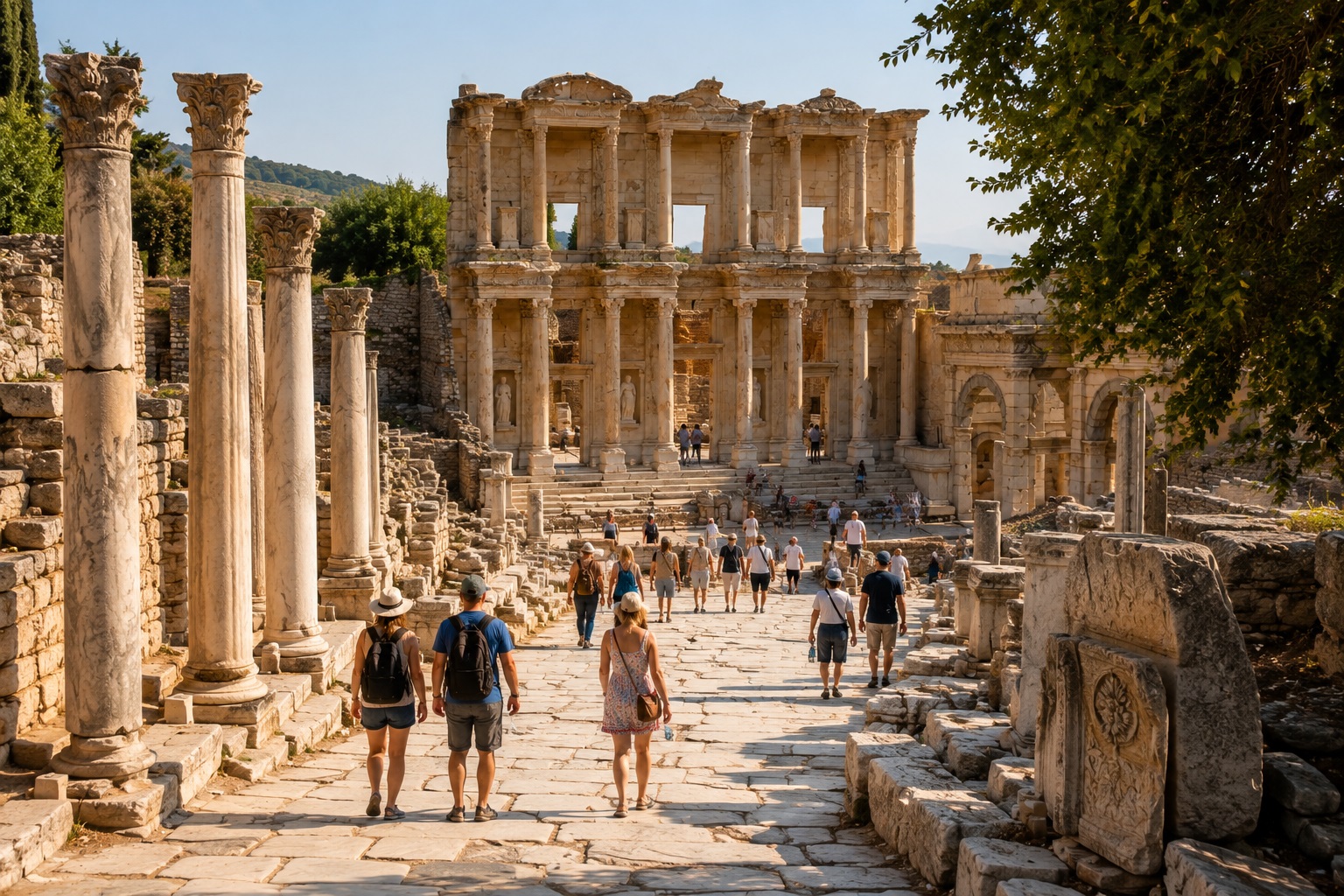
Historians continue to debate where Homer lived, but several ancient traditions connect him to the Ionian cities of western Anatolia.
Smyrna (modern İzmir), Colophon, Chios, and other nearby settlements have all claimed the legendary poet as their own.
Whether or not Homer ever visited Ephesus cannot be proven, but he almost certainly knew of one of the greatest cities in the region.
This geographical connection makes Ephesus one of the most meaningful destinations for readers of the Iliad and the Odyssey.
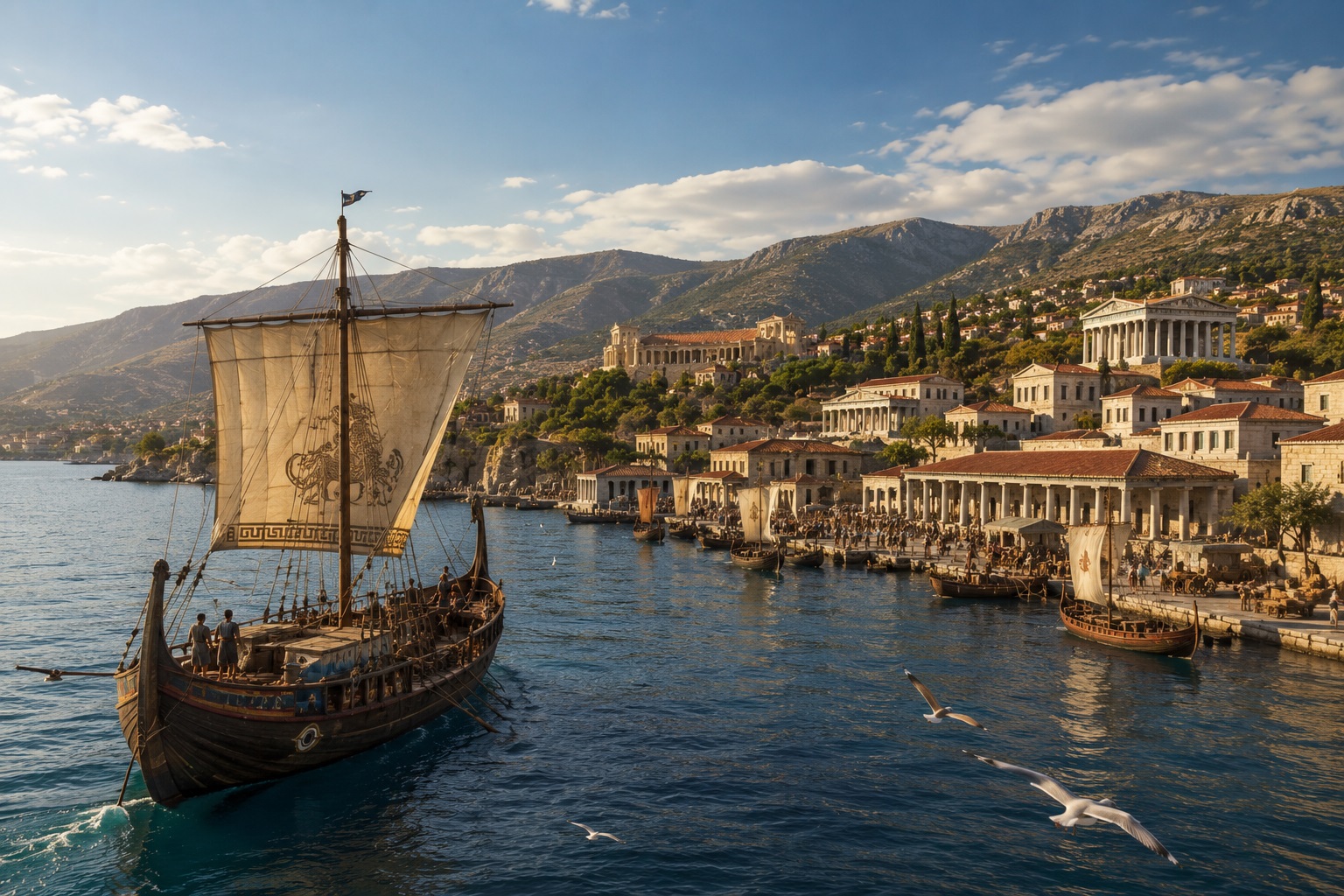
Christopher Nolan's adaptation of The Odyssey has introduced Homer's masterpiece to a new generation of audiences.
While the film brings the story to the screen, a visit to Ephesus allows travelers to experience the real historical landscape that inspired the world behind the legend.
Here, mythology and history exist side by side.
You'll stand beneath Roman columns, walk streets once filled with philosophers and merchants, and discover a city where the gods of Greek mythology were honored for centuries.
It's an experience that transforms a famous story into something wonderfully tangible.
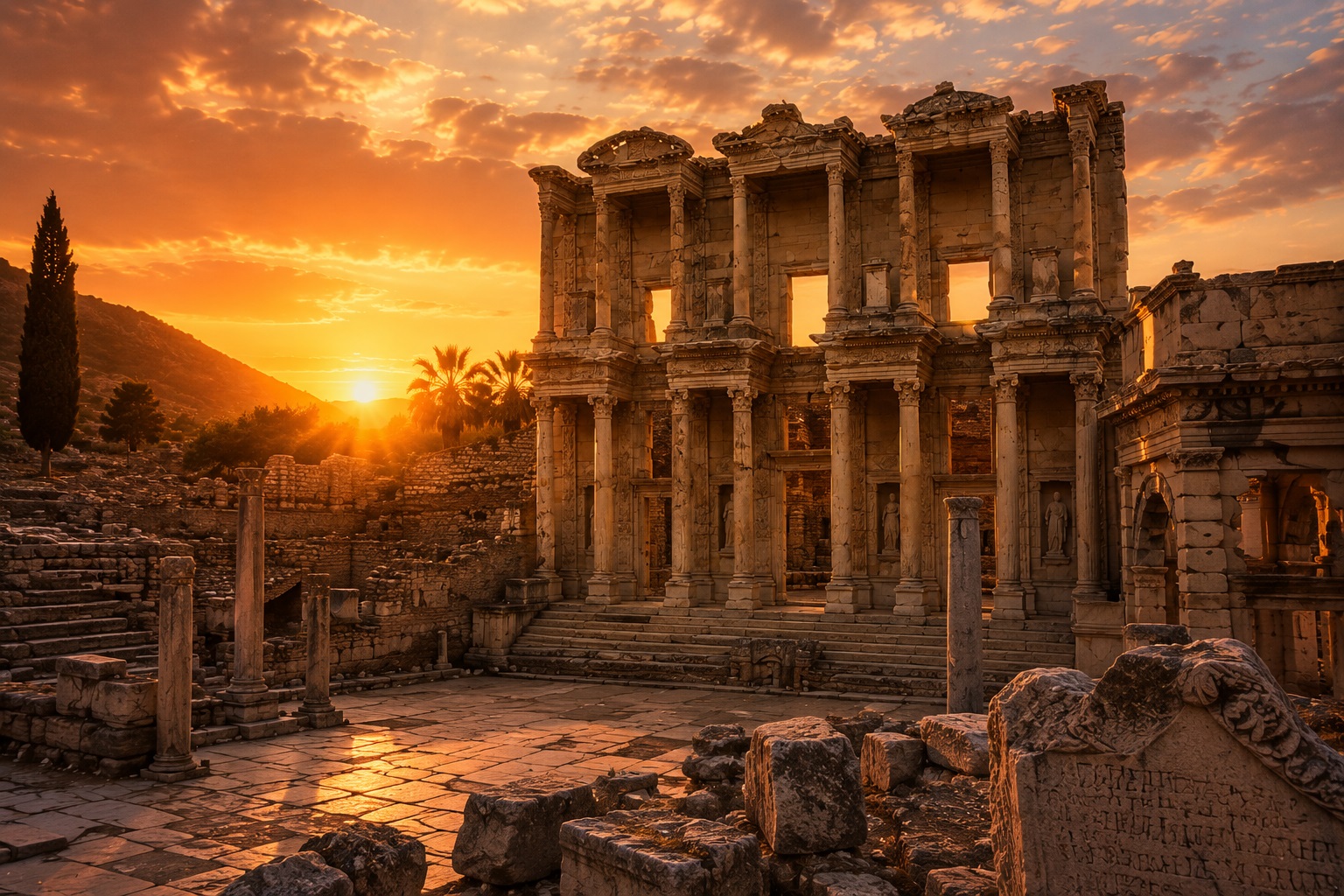
If Greek mythology fascinates you, don't stop at the ruins themselves. Take time to learn about the gods worshipped in Ancient Ephesus before your visit—it adds an entirely new dimension to every temple, monument, and marble street you explore.
There is no historical or literary evidence in Homer's Odyssey that Odysseus visited Ephesus. However, the city was part of the same Ionian cultural world in which Homer's epics developed.
No. Ephesus is not directly mentioned in Homer's Odyssey, but it was one of the most important cities of ancient Ionia, the region closely associated with Homer.
Many ancient traditions associate Homer with Ionian cities such as Smyrna (modern İzmir) and Colophon, although his exact birthplace remains uncertain.
Artemis was the city's principal deity, but Athena, Hermes, Apollo, Dionysus, Zeus, and many other Olympian gods were also honored throughout the city's history.
Absolutely. Ephesus, Troy, Didyma, Pergamon, and other archaeological sites preserve remarkable connections to the myths, legends, and history of the ancient Greek world.
Whether you first discovered Odysseus through Homer's epic poem or Christopher Nolan's film, nothing compares to standing where ancient civilizations once flourished.
Our all-inclusive private Ephesus tour from Kuşadası offers the perfect opportunity to explore one of the greatest cities of the ancient world with an expert local guide who brings history and mythology together.
The question isn't simply whether Odysseus visited Ephesus.
The real fascination lies in understanding that Ephesus belonged to the same extraordinary world that inspired Homer's imagination—a world of heroic voyages, powerful gods, thriving harbors, and cities that connected civilizations across the Aegean.
Today, as you walk beneath the towering columns of the Library of Celsus or stand in the shadow of the Temple of Artemis, it's easy to imagine that the legends of the Odyssey are never truly far away.

I graduated from Istanbul University with a degree in Radio, Television, and Cinema. During my academic journey, I focused on storytelling, visual communication, and cultural content creation, while my personal interests led me toward exploration and discovery.
Traveling, discovering new places, and experiencing different cultures are at the heart of my life. My strong interest in mythology allows me to see destinations not only as physical locations but as narratives shaped by history and meaning. My passion for reading continuously enriches and deepens this perspective.
I truly enjoy meeting new people and learning about diverse ways of life. With this mindset, I aim to share my experiences in a sincere, clear, and engaging way.
I love following the traces of stories wherever I go.
Disclosure Notice
By filling out this form, you agree that the personal data you provide to us will be processed in accordance with the Personal Data Protection Law No. 6698 and related legislation.
Your personal data will be processed solely for responding to your application, evaluating your requests, and fulfilling legal obligations; it will not be shared with third parties.
For detailed information, you can review our Privacy Policy.
By submitting the form, you acknowledge and consent to the processing of your personal data for the purposes specified above.

