
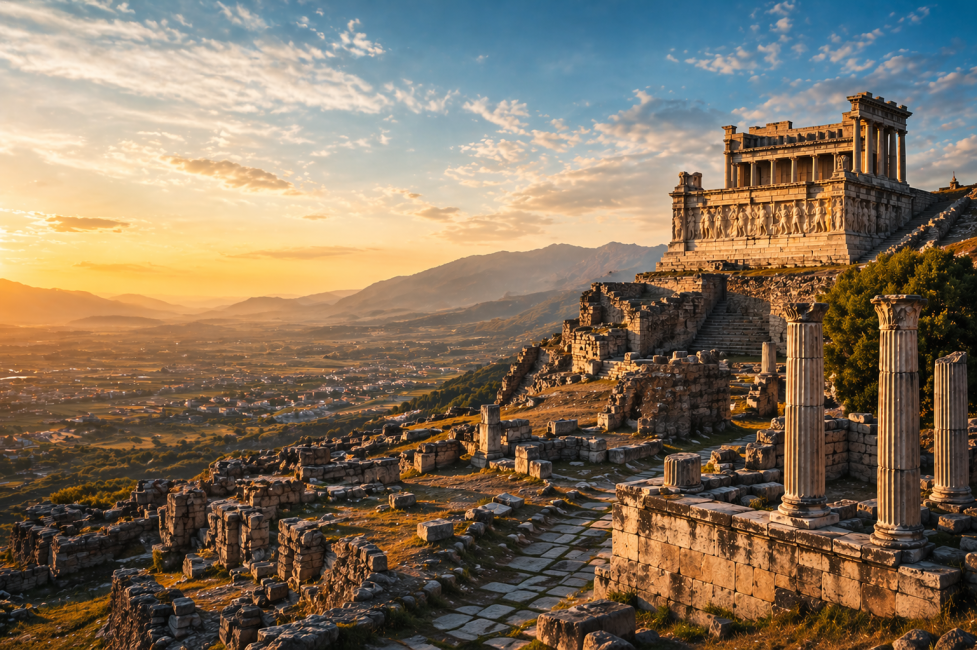
Located in modern-day Türkiye near Bergama, ancient Pergamon was one of the most powerful cities of the Roman world. It was known for politics, religion, scholarship, and monumental architecture. Yet in the Bible, it is remembered for a darker title.
In this guide, we explore pergamon and satan's throne, the city’s role in early Christianity, and what happened to the church there.
Pergamon in the Book of Revelation
Pergamon is one of the Seven Churches of Revelation addressed in the New Testament. In Revelation 2:12–17, the Apostle John records Christ’s message to the believers in Pergamon.
The passage says:
“I know where you dwell, where Satan’s throne is.”
This statement immediately raises questions about pergamon in the bible. Why would one city be singled out with such dramatic language?
At the time Revelation was written, Pergamon was a major Roman administrative center in Asia Minor. It was famous for emperor worship, pagan temples, and political authority. Christians living there faced pressure to compromise their faith or participate in imperial cult rituals.
The believers were praised for holding firm, even after the martyrdom of Antipas, traditionally considered one of the earliest Christian martyrs in the region.
What Is Satan’s Throne?
The phrase Satan’s throne has been interpreted in several ways by scholars.
1. Center of Emperor Worship
Pergamon was one of the first cities in Asia Minor to build a temple dedicated to the Roman emperor Augustus. Since emperor worship demanded loyalty above all else, early Christians saw it as a direct challenge to worshiping God.
For many, this made Pergamon a spiritual center of opposition.
2. Seat of Pagan Religion
Pergamon was filled with temples devoted to Zeus, Athena, Dionysus, and Asclepius. The city was a powerful religious hub where sacrifices and pagan rituals were common.
This environment would have made Christian life difficult, reinforcing the idea of why was pergamon called satan's throne.
3. Symbolic Language for Evil Power
Some theologians believe the phrase symbolized a city where political power, idolatry, and persecution were united. Rather than referring to one object, “Satan’s throne” represented the influence of evil in society.
The Altar of Zeus – The Connection
One of the most popular theories links pergamon and satan's throne to the famous Altar of Zeus.
Built in the 2nd century BC, this massive structure stood prominently on the acropolis of Pergamon. Its grand stairway and throne-like design have led many to believe John may have had it in mind when writing Revelation.
The altar was dedicated to Zeus, king of the Greek gods, and dominated the skyline. To Christians rejecting pagan worship, such a monument could easily symbolize spiritual rebellion.
Although no definitive proof exists, the connection between the Altar of Zeus and Satan’s throne remains one of the most discussed interpretations.
Today, parts of the altar are preserved in Berlin, while the ruins of Pergamon still attract visitors from around the world.
The Church of Pergamon Today
The original church of pergamon no longer exists as an active ancient congregation, but its legacy remains significant.
Pergamon stands as a reminder of the struggles early Christians faced in hostile societies. They lived in a city of wealth, influence, and religious pressure—yet many remained faithful.
Today, travelers can walk through the ancient ruins, including:
- The Acropolis
- Temple foundations
- Roman theater
- Ancient streets
- Early Christian heritage sites nearby
Pergamon is one of the most important stops for those exploring biblical history in Türkiye.
If you want to experience the biblical sites connected to Revelation firsthand, you can join a 7 Churches of Revelation Tour and discover Pergamon together with the other six churches mentioned in Scripture.
Why Pergamon Still Matters Today
So, why was pergamon called satan's throne?
The answer likely combines politics, pagan religion, emperor worship, and persecution. Pergamon represented a place where worldly power opposed Christian faith. Whether referring to the Altar of Zeus, Roman authority, or spiritual symbolism, the phrase captured the intense challenges believers faced there.
For modern readers, Pergamon remains a powerful lesson in faithfulness under pressure—and one of the most fascinating cities in biblical archaeology.
Frequently Asked Questions
Was Pergamon a real city in the Bible?
Yes. Pergamon was a real and influential ancient city in Asia Minor, located in modern-day western Türkiye.
What happened to the church at Pergamon?
Like many early churches, it gradually disappeared over centuries due to political change, invasions, and the decline of ancient urban centers.
Is Satan’s throne the Altar of Zeus?
Some scholars think so, but others believe the phrase symbolized emperor worship or the city’s spiritual climate rather than one structure.
Can you visit Pergamon today?
Yes. Pergamon is an important archaeological site near Bergama, Türkiye, visited by travelers interested in biblical and classical history.

