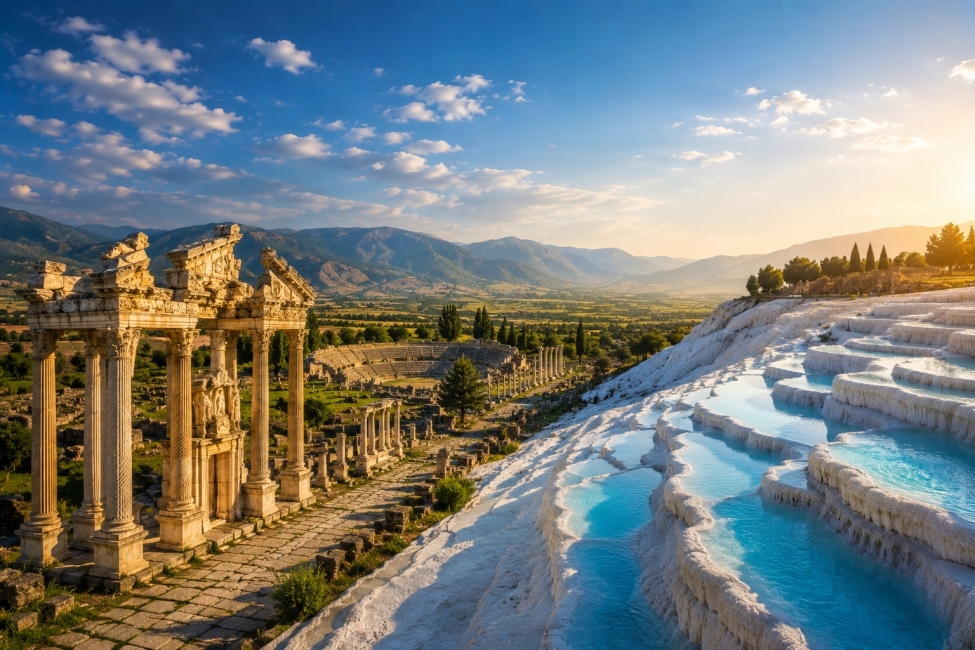
Turkey is home to some of the world's most extraordinary archaeological and natural wonders.
Among them, two UNESCO World Heritage Sites stand out for their beauty, history, and unforgettable experiences: Aphrodisias and Pamukkale.
Although each destination deserves a visit on its own, combining them into a single day trip creates one of the most rewarding journeys in western Turkey.
Imagine walking through one of the best-preserved Roman cities in the world before relaxing among the dazzling white travertine terraces of Pamukkale.
History, mythology, architecture, and nature all come together in one incredible adventure.
If you're staying in Kusadasi, Selçuk, İzmir, or the surrounding Aegean region, this is one of the most memorable day trips you can experience.
Many visitors travel to Pamukkale solely for its famous white terraces.
However, only a short drive away lies Aphrodisias—one of Turkey's most overlooked archaeological treasures.
Together, these two destinations offer the perfect balance between natural beauty and ancient civilization.
✔ Two UNESCO World Heritage Sites
✔ Ancient Roman architecture
✔ Incredible marble sculptures
✔ Natural thermal springs
✔ Beautiful countryside scenery
✔ Perfect for photography lovers
It's a full-day experience that showcases two completely different sides of Turkey's rich heritage.
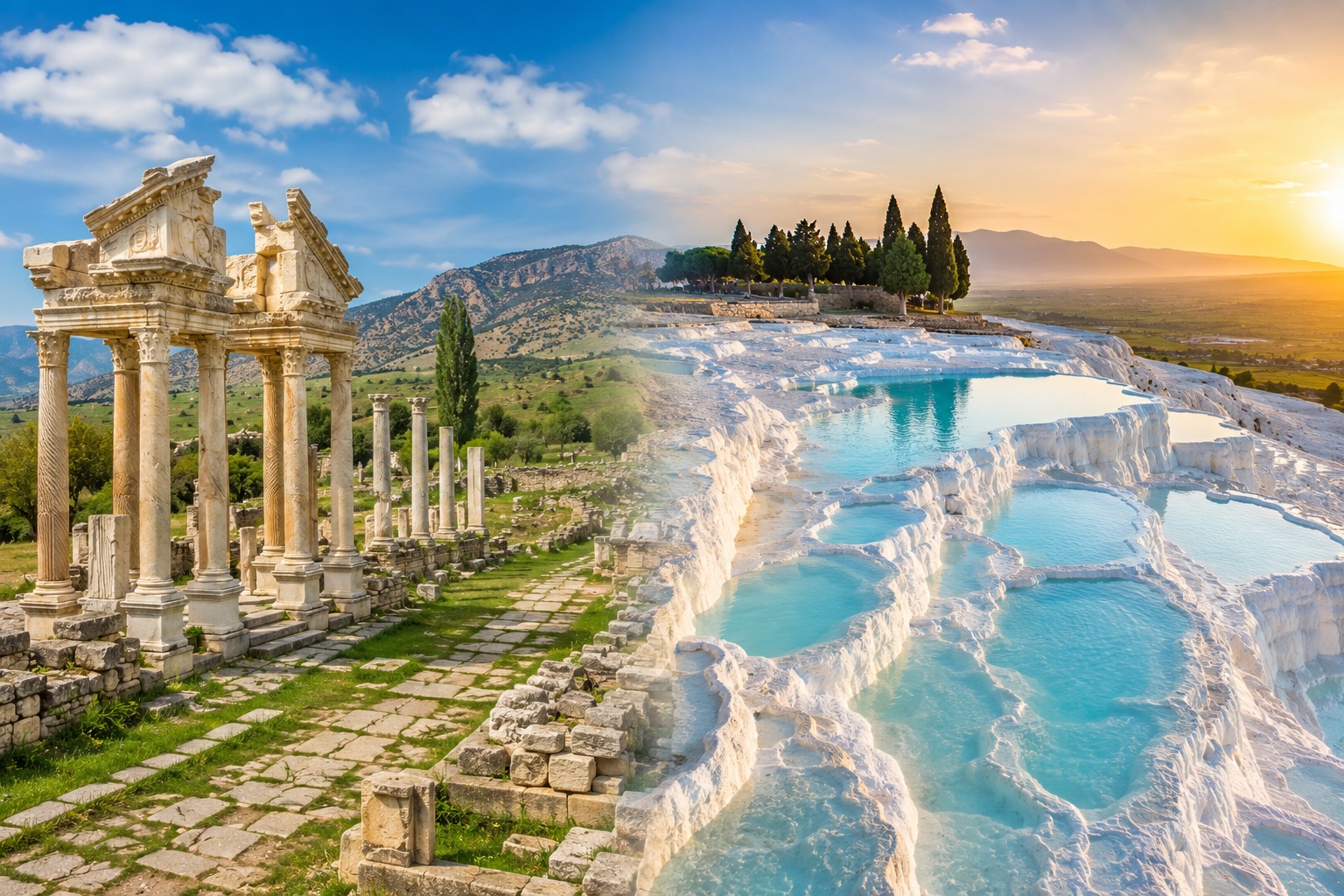
Located in Turkey's Aydın Province, Aphrodisias sits in the fertile valley of the Büyük Menderes River.
The city was named after Aphrodite, the Greek goddess of love and beauty.
Unlike many ancient cities that were built along the coast, Aphrodisias flourished inland thanks to its fertile land and famous marble quarries.
Today, it remains remarkably well preserved and offers visitors a peaceful atmosphere away from the crowds.
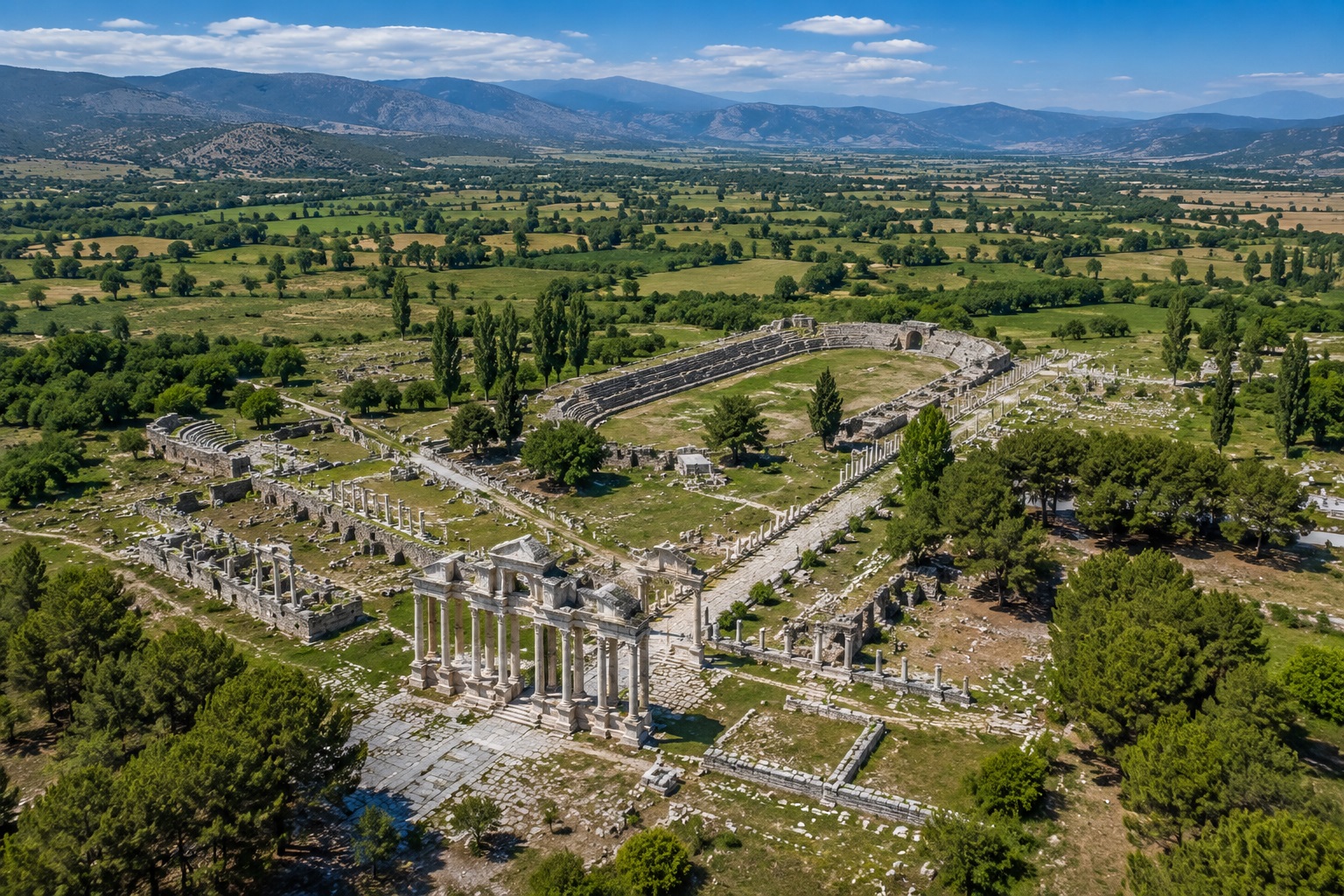
In 2017, Aphrodisias was officially inscribed on the UNESCO World Heritage List.
The designation recognizes not only its exceptionally preserved ruins but also its importance as one of the greatest artistic centers of the Roman world.
The city's famous School of Sculpture produced masterpieces that were exported throughout the Roman Empire.
Many statues created here can now be admired in museums around the world.
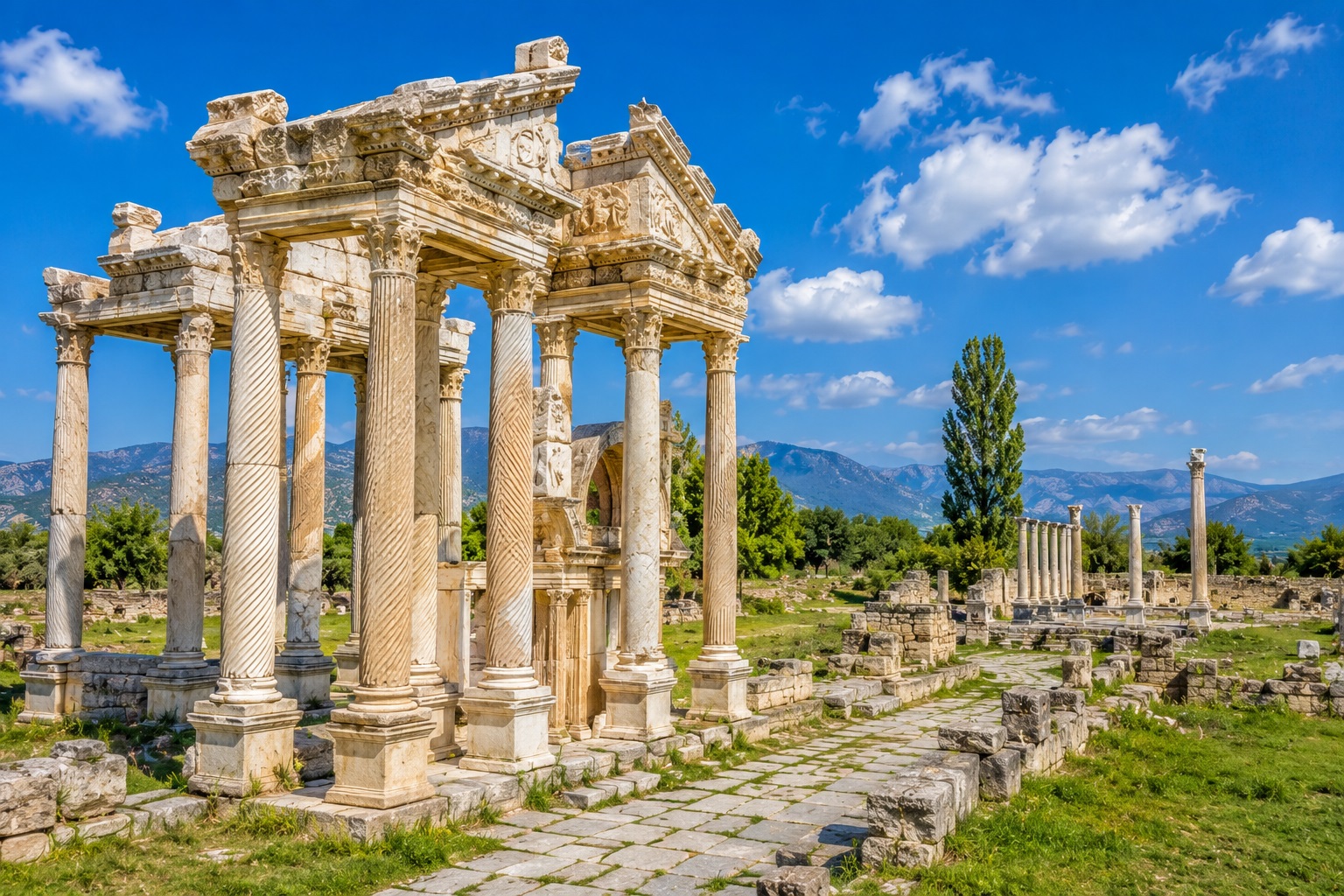
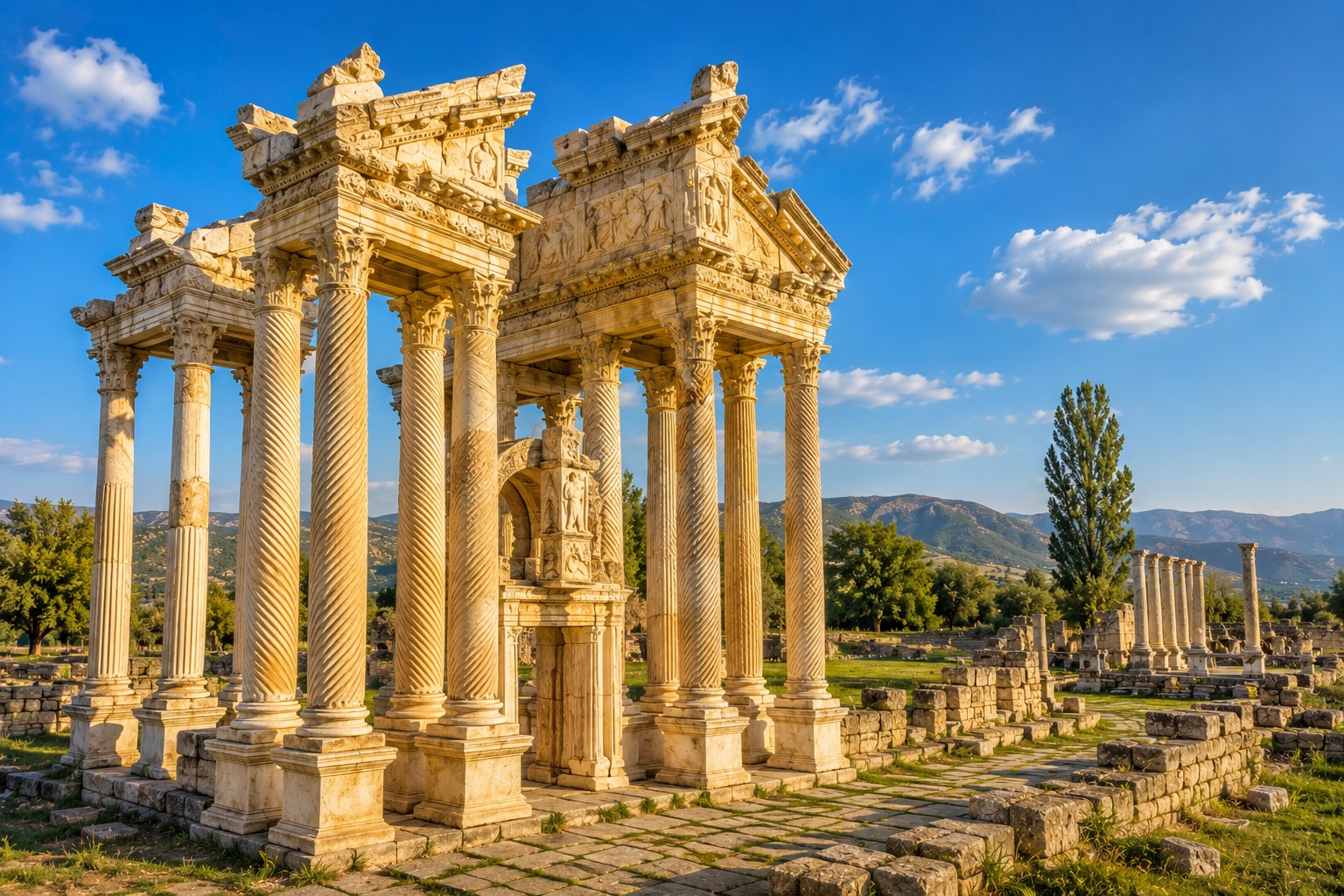
One of Aphrodisias' most iconic landmarks is the Tetrapylon.
This beautifully restored ceremonial gateway once marked the entrance to the Temple of Aphrodite.
Its sixteen elegant marble columns and richly decorated Corinthian capitals demonstrate the extraordinary craftsmanship of Roman architects.
Today, it's one of the most photographed monuments in the ancient city.
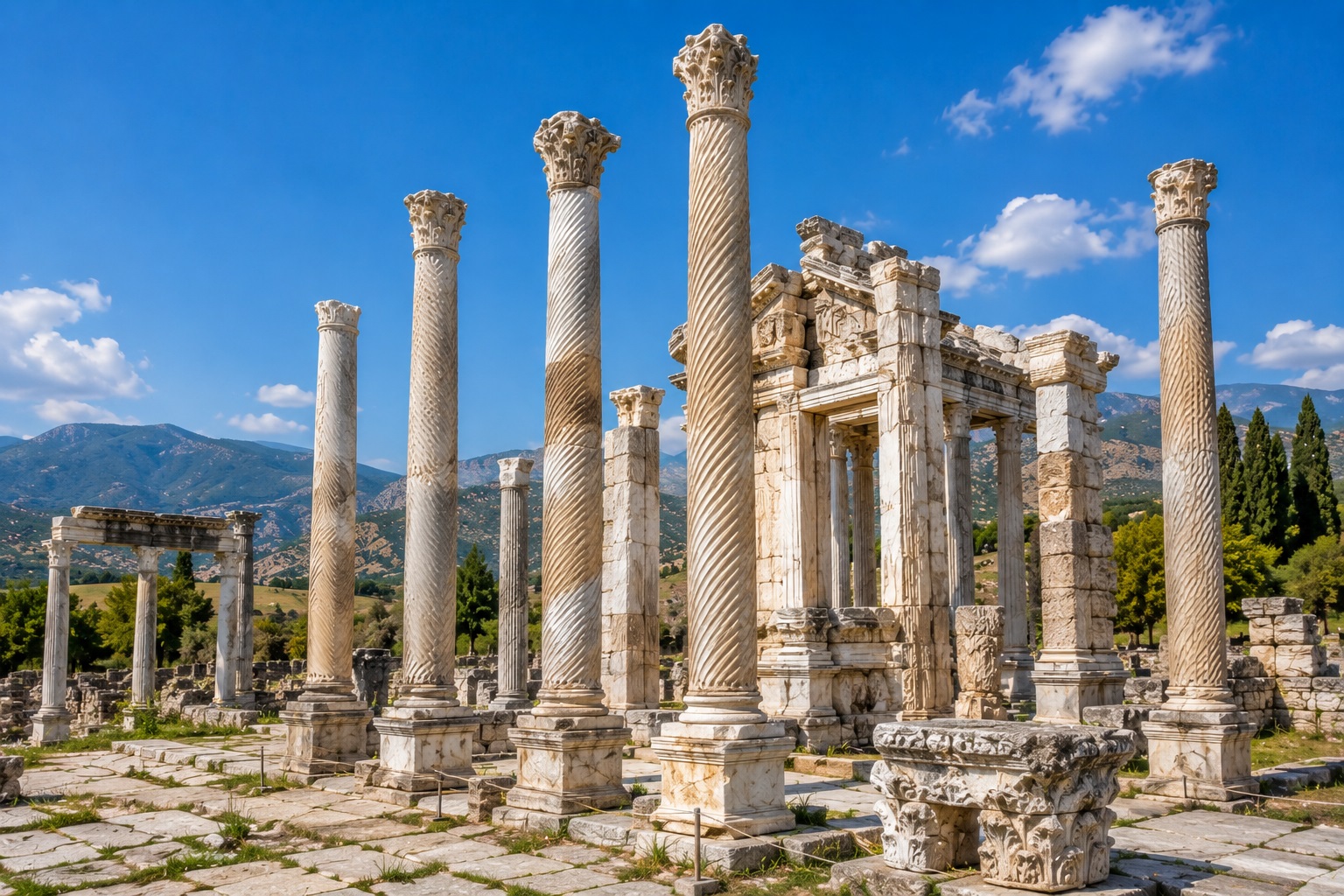
At the heart of the city stood the Temple of Aphrodite.
Dedicated to the goddess of love, beauty, and fertility, the sanctuary attracted pilgrims from across the ancient Mediterranean.
Centuries later, after Christianity spread throughout the region, the temple was transformed into a basilica.
This remarkable transformation reflects the changing religious history of Anatolia.
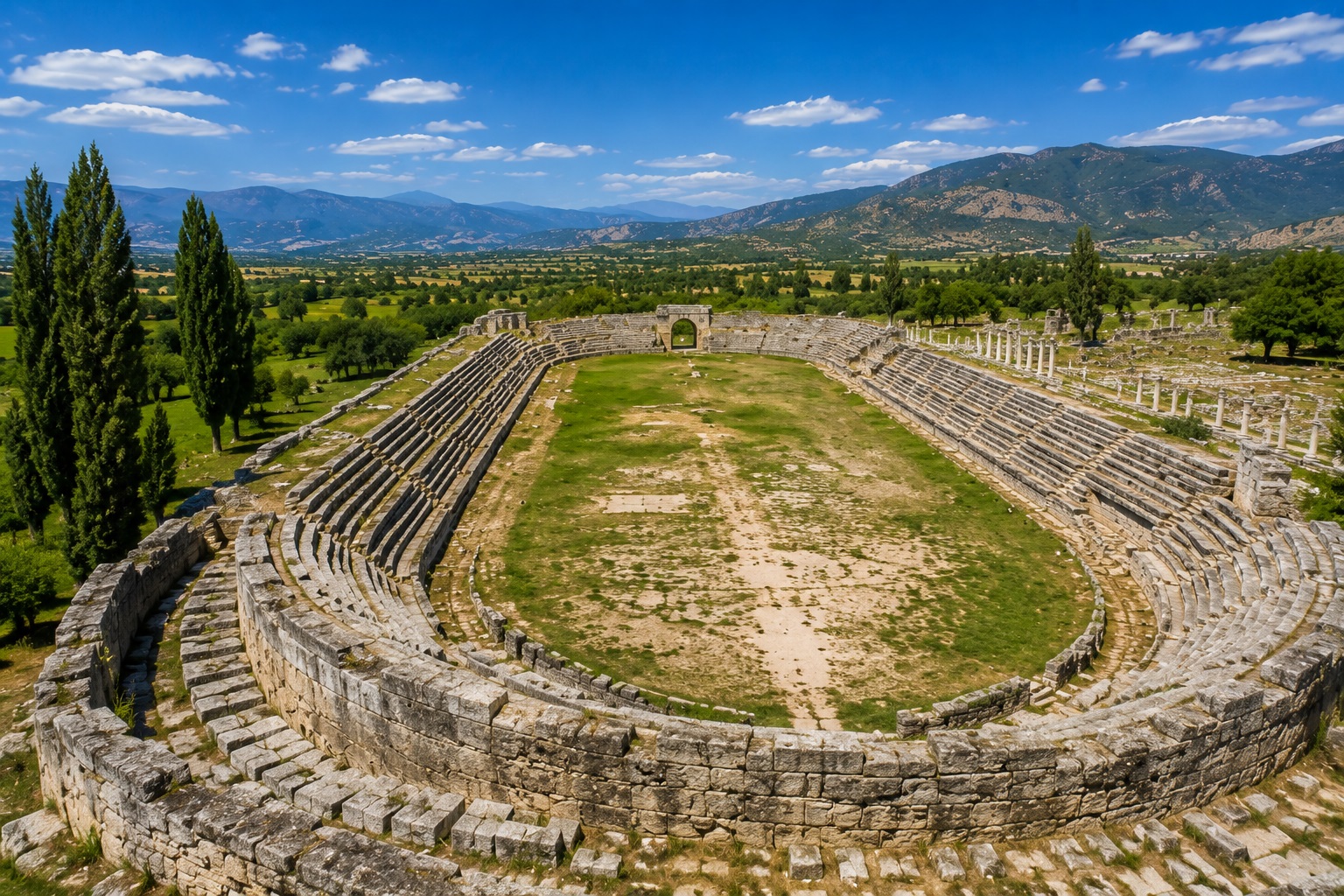
Aphrodisias is home to one of the finest surviving Roman stadiums anywhere in the world.
Stretching approximately 270 meters (885 feet) long and capable of holding around 30,000 spectators, it hosted athletic competitions, gladiator games, and public celebrations.
Unlike many ancient stadiums, much of its original seating remains intact.
Standing here today, it's easy to imagine the excitement that once filled the arena.
Aphrodisias became famous throughout the Roman Empire for its exceptional marble. The city's sculptors were so highly respected that emperors commissioned statues from Aphrodisias for cities across the Mediterranean.
So far we've explored the artistic heart of Aphrodisias.
In the next section, we'll continue our journey to the dazzling white terraces of Pamukkale, discover the ancient city of Hierapolis, swim in Cleopatra's Pool, and see why combining these two UNESCO treasures creates one of Turkey's most unforgettable day trips.
After exploring the artistic treasures of Aphrodisias, it's time to discover one of Turkey's most iconic natural wonders.
Located approximately 100 kilometers (62 miles) from Aphrodisias, Pamukkale is famous for its dazzling white travertine terraces created by mineral-rich thermal waters flowing down the hillside for thousands of years.
From a distance, the landscape looks like a snow-covered mountain—even in the middle of summer.
It's one of the most photographed destinations in Turkey and an unforgettable stop on any Aegean itinerary.
One of the highlights of visiting Pamukkale is walking barefoot across its famous calcium terraces.
To protect this fragile natural wonder, visitors remove their shoes before stepping onto the warm mineral formations.
As crystal-clear thermal water flows gently beneath your feet, it's easy to understand why Pamukkale has fascinated travelers since ancient times.
The combination of bright white terraces and turquoise pools creates a landscape unlike anywhere else on Earth.
At the top of the travertines lies Hierapolis, an ancient Greco-Roman city founded during the 2nd century BC.
Built around the healing hot springs, Hierapolis became a renowned spa destination where wealthy Romans came to relax and recover.
Today, visitors can explore:
Together, Hierapolis and Pamukkale form one of Turkey's most fascinating UNESCO World Heritage Sites.
For an unforgettable experience, many visitors choose to swim in Cleopatra's Antique Pool.
Fed by naturally warm thermal waters, the pool is filled with ancient marble columns that fell during an earthquake centuries ago.
Swimming among these submerged Roman ruins creates one of the most unique experiences in Turkey.
While there's an additional entrance fee, many travelers consider it well worth it.
A combined Aphrodisias and Pamukkale tour allows you to experience two UNESCO treasures in a single day without feeling rushed.
A typical itinerary includes:
It's the perfect combination of archaeology, history, nature, and relaxation.
Pamukkale and Aphrodisias can be visited throughout the year.
However, the most comfortable months are:
During these seasons, temperatures are pleasant for sightseeing, and the natural scenery is especially beautiful.
Summer offers long sunny days, while spring and autumn provide ideal conditions for photography and walking.
Wear comfortable walking shoes, bring sunscreen, a hat, and a swimsuit if you plan to enjoy Cleopatra's Pool. Since you'll remove your shoes on the travertines, lightweight footwear is recommended.
Yes. Their relatively close proximity makes it possible to comfortably explore both UNESCO World Heritage Sites on a full-day guided tour.
The distance is approximately 100 kilometers (62 miles), with a drive of around 1.5 hours depending on traffic.
Aphrodisias is renowned for its Temple of Aphrodite, exceptionally preserved Roman stadium, magnificent Tetrapylon, and world-famous marble sculpture school.
Absolutely. Its unique white travertine terraces, thermal waters, and the ancient city of Hierapolis make it one of Turkey's most extraordinary destinations.
Yes. A professional guide brings both sites to life by explaining their history, mythology, architecture, and cultural significance while making travel between the two destinations effortless.
If you're looking for an unforgettable day trip through western Turkey, combining Aphrodisias and Pamukkale is one of the best choices you can make.
Our Private Pamukkale and Aphrodisias Tour allows you to explore both destinations with a professional local guide, comfortable transportation, and a carefully planned itinerary designed to help you make the most of your day.
Some journeys are memorable because of their scenery.
Others because of their history.
An Aphrodisias and Pamukkale tour offers both.
From the graceful marble monuments of Aphrodisias to the brilliant white terraces of Pamukkale, every stop reveals another chapter of Turkey's remarkable heritage.
Whether you're passionate about archaeology, fascinated by Roman civilization, or simply searching for breathtaking landscapes, this unforgettable day trip delivers experiences you'll remember long after your journey ends.
Two UNESCO World Heritage Sites.
One incredible day.

I graduated from Istanbul University with a degree in Radio, Television, and Cinema. During my academic journey, I focused on storytelling, visual communication, and cultural content creation, while my personal interests led me toward exploration and discovery.
Traveling, discovering new places, and experiencing different cultures are at the heart of my life. My strong interest in mythology allows me to see destinations not only as physical locations but as narratives shaped by history and meaning. My passion for reading continuously enriches and deepens this perspective.
I truly enjoy meeting new people and learning about diverse ways of life. With this mindset, I aim to share my experiences in a sincere, clear, and engaging way.
I love following the traces of stories wherever I go.
Disclosure Notice
By filling out this form, you agree that the personal data you provide to us will be processed in accordance with the Personal Data Protection Law No. 6698 and related legislation.
Your personal data will be processed solely for responding to your application, evaluating your requests, and fulfilling legal obligations; it will not be shared with third parties.
For detailed information, you can review our Privacy Policy.
By submitting the form, you acknowledge and consent to the processing of your personal data for the purposes specified above.

