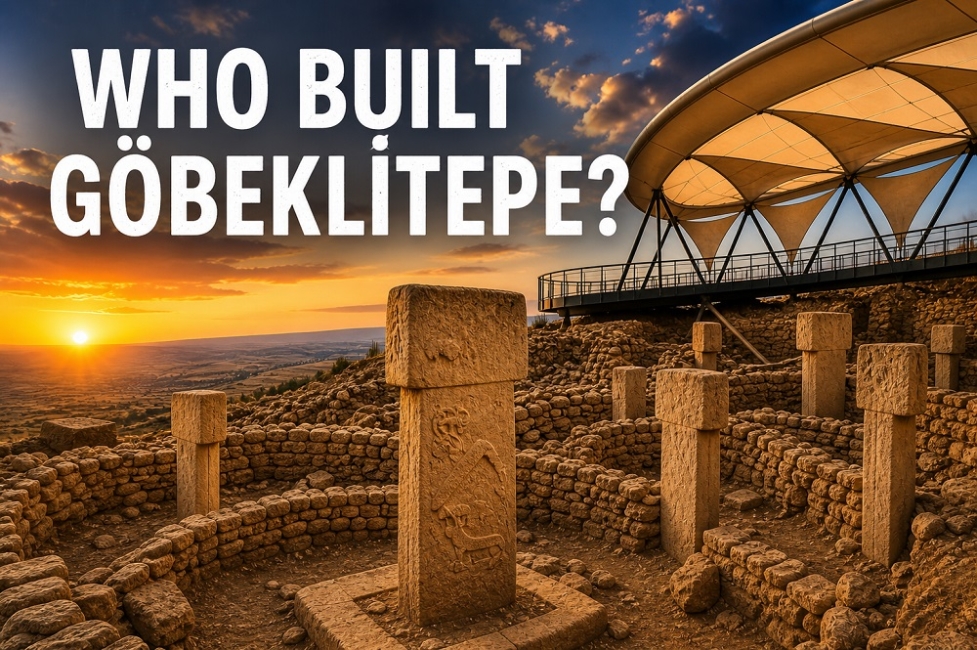
Göbeklitepe stands on a quiet hill in southeastern Turkey, yet it has forced historians, archaeologists, and travelers to rethink the origins of civilization. Built around 9600 BCE, this ancient complex predates writing, pottery, and even settled agriculture.
If you are exploring the gobekli tepe builders history mystery turkey, you are stepping into one of the most fascinating debates in archaeology. The builders left no written records, no names, and no clear explanation. What they did leave behind are massive stone pillars, carved symbols, and a puzzle that still challenges modern science.
Göbeklitepe was built during the Pre-Pottery Neolithic period, around 11,000 years ago. At that time, humans were mostly hunter-gatherers, and cities did not exist.
Despite this, the site features carefully shaped limestone pillars, some weighing several tons, arranged in circular enclosures. These structures suggest planning, cooperation, and shared purpose.
The most accepted theory is that Göbeklitepe was built by hunter-gatherer communities living in the region.
This challenges the idea that advanced societies only developed after agriculture.
One of the biggest questions in the gobekli tepe archaeological mystery is how these communities moved and shaped massive stones without metal tools.
Understanding göbeklitepe kimler yaptı also requires understanding why it was built.
Many researchers believe it was used for ceremonial or religious gatherings.
It may have brought different groups together to strengthen cooperation.
Large gatherings may have encouraged early farming development.
Göbeklitepe challenges traditional ideas about civilization.
Old theory:
New possibility:
One of the most surprising discoveries is that Göbeklitepe was intentionally buried around 8000 BCE.
This burial helped preserve the site for thousands of years.
Seeing the site in person adds depth to the mystery. The scale of the pillars and layout of the enclosures are difficult to fully understand through photos alone.
Many travelers use the Göbeklitepe history resource to prepare for their visit.
Hunter-gatherer communities living in the region around 9600 BCE.
It challenges traditional theories about the development of civilization.
Approximately 11,000 years old.
It is believed to have had a ceremonial or ritual function.
It was intentionally covered, possibly for cultural or ritual reasons.
Yes, it is open to visitors and accessible from Şanlıurfa.
Göbeklitepe does not give clear answers. Instead, it invites questions about human origins and early societies.
The gobekli tepe builders history mystery turkey continues to inspire researchers and travelers alike. If you are curious about the beginnings of civilization, this is one of the most meaningful places you can explore.

I graduated from Istanbul University with a degree in Radio, Television, and Cinema. During my academic journey, I focused on storytelling, visual communication, and cultural content creation, while my personal interests led me toward exploration and discovery.
Traveling, discovering new places, and experiencing different cultures are at the heart of my life. My strong interest in mythology allows me to see destinations not only as physical locations but as narratives shaped by history and meaning. My passion for reading continuously enriches and deepens this perspective.
I truly enjoy meeting new people and learning about diverse ways of life. With this mindset, I aim to share my experiences in a sincere, clear, and engaging way.
I love following the traces of stories wherever I go.
Disclosure Notice
By filling out this form, you agree that the personal data you provide to us will be processed in accordance with the Personal Data Protection Law No. 6698 and related legislation.
Your personal data will be processed solely for responding to your application, evaluating your requests, and fulfilling legal obligations; it will not be shared with third parties.
For detailed information, you can review our Privacy Policy.
By submitting the form, you acknowledge and consent to the processing of your personal data for the purposes specified above.

