Wondering about the best things to do in Sanliurfa, Turkey? Located in southeastern Türkiye, Şanlıurfa is a fascinating destination where prehistoric archaeology, religious traditions, historic bazaars and regional cuisine come together. Known as the City of Prophets, it offers visitors the opportunity to explore ancient monuments, discover local legends and experience a distinctive part of Turkish culture.
The city's highlights range from the monumental stone pillars of Göbeklitepe, one of the world's most significant prehistoric archaeological sites, to Balıklıgöl, a sacred complex associated with Prophet Abraham in local religious tradition. Beyond the city centre, Harran's distinctive beehive houses and the landscapes around the Euphrates River offer even more reasons to explore the region.
Whether you are visiting for one day or planning a longer journey through southeastern Türkiye, this guide covers the main Şanlıurfa attractions, practical sightseeing ideas, traditional markets and local dishes worth trying. For a broader overview of the destination, start with our Şanlıurfa destination guide.
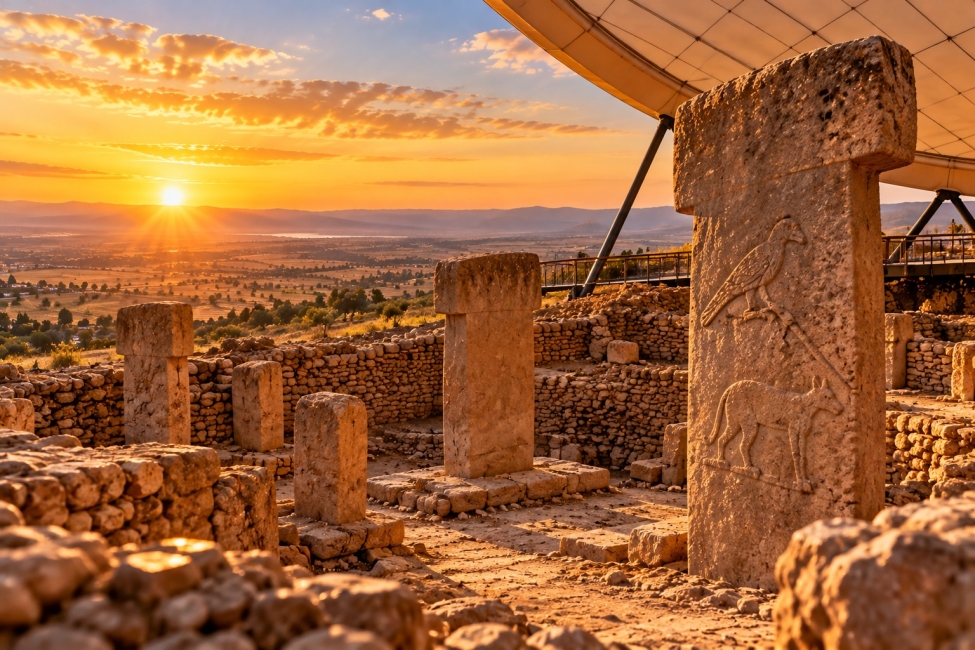
For many travellers, Göbeklitepe is the main reason to visit Şanlıurfa. Located northeast of the city, this archaeological site contains monumental structures built during the Pre-Pottery Neolithic period, broadly dated between 9600 and 8200 BCE. Göbeklitepe was added to the UNESCO World Heritage List in 2018.
The site is famous for its large T-shaped limestone pillars, some decorated with reliefs depicting wild animals. Arranged within monumental enclosures, these pillars demonstrate the ability of early communities to organise complex construction projects long before the development of cities in the modern sense.
Archaeologists interpret the structures as communal buildings probably connected with ritual activities, although their exact functions remain a subject of research. The site is particularly important because it challenges older assumptions about the relationship between settled life, social organisation and monumental architecture.
Allow enough time to explore the visitor areas and interpretive displays. A guided visit can help explain the difference between established archaeological findings and questions that researchers are still investigating.
Many visitors allow around two hours for the site, although the time needed depends on your interests, walking pace and transport arrangements. If you are particularly interested in archaeology, you may want to allow longer and combine the visit with the Şanlıurfa Archaeology Museum.
Göbeklitepe is outside the city centre, so plan your transport in advance. Travellers staying in Istanbul who want to see the site without organising every detail independently can consider the Göbeklitepe day trip from Istanbul.
Balıklıgöl is one of the most recognisable places in Şanlıurfa and a central stop for visitors interested in the city's religious heritage. The complex includes pools, mosques, courtyards and walkways, with the historic citadel rising nearby. It is both a place of pilgrimage and a popular sightseeing destination.
According to local Islamic tradition, Prophet Abraham opposed the rule of King Nimrod and was thrown into a fire. In the story, the fire miraculously became water and the burning wood turned into fish. Balıklıgöl is traditionally associated with this event, and the fish living in its waters are treated with respect.
These stories form an important part of Şanlıurfa's cultural identity. They should be understood as religious traditions rather than archaeological proof of every event described, but their significance to local communities is an essential part of the visitor experience.
Walk around the pools rather than rushing from one viewpoint to another. The reflections, stone architecture and surrounding gardens make this a particularly atmospheric place for photography. Dress respectfully and be considerate of people who are visiting to pray.
The Şanlıurfa Archaeology Museum is an excellent addition to a visit to Göbeklitepe. Its collections help place the region's archaeological discoveries within a broader story of human settlement, artistic expression and cultural change.
One of its best-known objects is the prehistoric statue commonly called the Urfa Man, generally dated to the ninth millennium BCE. The museum also presents material connected with Neolithic communities and the wider archaeological heritage of southeastern Türkiye.
Visiting the museum gives you more context for the objects, structures and artistic traditions encountered at archaeological sites. It is especially useful if you want to understand why Göbeklitepe has attracted so much international attention.
At Göbeklitepe, visitors experience the setting and scale of the ancient structures. At the museum, archaeological objects and interpretive displays provide additional context. Together, the two visits create a more complete experience than seeing either attraction alone.
Check current opening hours and ticket arrangements before your visit, particularly if you are planning to fit both stops into one day.
Art and archaeology enthusiasts should also consider the Haleplibahçe Mosaic Museum. Located near the Şanlıurfa Archaeology Museum, it is known for impressive ancient mosaics, including depictions of Amazon women and the celebrated Orpheus mosaic.
The mosaics provide a different perspective on the region's history. Their detailed figures, decorative patterns and mythological subjects reveal the artistic traditions of a later period than the prehistoric structures at Göbeklitepe.
If you enjoy understanding how a region changed over time, visiting both museums makes sense. Together, they reveal different layers of cultural history, from early monumental architecture to the artistic achievements of ancient urban communities.
One of the most enjoyable things to do in Şanlıurfa is to explore the traditional market area. The old bazaars offer a glimpse of local commerce and craftsmanship, with shops selling spices, textiles, metalwork, household items and regional products.
Unlike an archaeological site, the bazaar is part of the city's living culture. You can browse at your own pace, observe artisans at work, stop for a drink and discover the small details that make Şanlıurfa different from other destinations in Türkiye.
Gümrük Han is a historic inn and courtyard gathering place where visitors can pause for tea or traditional coffee. Its atmosphere makes it a pleasant stop between sightseeing and shopping, particularly if you want to experience the slower rhythm of the old city.
Take a seat, enjoy a drink and watch the activity around the courtyard. This is also a good opportunity to rest during warmer parts of the day.
The historic market district is associated with crafts such as copperwork and other handmade goods. Look closely at the products on display and ask shopkeepers about their materials or techniques. If you plan to buy souvenirs, compare items and prices before making a decision.
Photography can be rewarding in the narrow lanes and workshops, but always ask permission before photographing people at work or inside private premises.
Şanlıurfa's historic centre is worth exploring beyond its most famous religious sites. Traditional stone buildings, narrow streets, courtyards and historic structures reveal the city's distinctive architectural character.
The area around Şanlıurfa Castle offers an elevated perspective over the city and helps visitors understand the relationship between the historic settlement and the surrounding landscape. The castle itself has a long history, although access to individual sections can vary.
Allow time to walk through the surrounding neighbourhoods. Some of the most memorable details are not major monuments but the stonework, doorways, shaded passages and small courtyards that form part of everyday urban life.
If you plan to enter the castle area, check current access information before travelling. Even without entering every structure, exploring the old city provides a valuable complement to the museums and archaeological sites.
Food is an essential part of any visit to Şanlıurfa. The city's culinary traditions are known for grilled meat, regional spices, fresh herbs, flatbreads and dishes that reflect the wider food culture of southeastern Türkiye.
Urfa kebab is one of the region's signature dishes. It is commonly prepared with seasoned minced meat and cooked over charcoal. Recipes and spice levels vary, so ask the restaurant about its preparation if you have a particular preference.
Çiğ köfte is closely associated with southeastern Turkish cuisine. The widely available meat-free version is prepared with fine bulgur, spices, tomato or pepper paste and herbs. Traditional recipes differ, so ask about the ingredients if you have dietary restrictions.
Lahmacun and other regional flatbreads are convenient choices for a quick lunch between attractions. They are often served with fresh herbs, greens and lemon, offering a simple introduction to local flavours.
Mırra is a strong coffee associated with traditional coffee culture in southeastern Türkiye. It is served in small quantities and can be part of social gatherings and ceremonial occasions. If you have the opportunity to try it, ask about the customs surrounding its preparation and serving.
Rather than treating food as a quick break, make time for a meal at a local restaurant. It is one of the easiest ways to connect your sightseeing experience with the living culture of Şanlıurfa.
```html
Harran is one of the most distinctive places to visit near Şanlıurfa. Known for its traditional beehive-shaped houses and archaeological remains, this historic settlement offers a different perspective on the region's heritage. It is an excellent choice for travellers who want to explore beyond the city centre.
Harran has a long history connected with trade, learning and cultural exchange across Upper Mesopotamia. Its historic remains reflect different periods of settlement, while its traditional architecture provides a glimpse into how people adapted their homes to the local climate.
Harran's iconic houses feature domed, beehive-like roofs built using traditional construction techniques. Their distinctive form makes them instantly recognisable, and they are among the region's most photographed architectural features.
Some traditional houses are preserved or presented to visitors, allowing you to learn about their construction and domestic use. When exploring, remember that some buildings may still be private homes. Follow local guidance and ask permission before entering private spaces or photographing residents.
The archaeological area includes remains associated with Harran's historic urban centre. The ruins of the Great Mosque and sections of the historic fortifications help illustrate the settlement's former importance.
Combining the archaeological area with a visit to the traditional houses gives you a more complete picture of Harran. A guide can also help explain the different historical periods represented by the surviving structures.
Harran requires a separate journey from central Şanlıurfa, so allow enough time for transport and sightseeing. It is generally easier to include it in a half-day or full-day regional itinerary than to squeeze it into an already busy city tour.
For travellers with a particular interest in ancient beliefs and archaeology, Soğmatar is another place to consider in the wider Şanlıurfa region. The archaeological landscape is associated with ancient religious traditions, including the worship of celestial bodies.
Soğmatar helps demonstrate that the cultural history of southeastern Türkiye extends well beyond the best-known monuments. The area's remains offer another perspective on the religious diversity and traditions of ancient Upper Mesopotamia.
Because the site is outside the main city centre, plan your route and transport in advance. It is most suitable for visitors spending additional time in the region or arranging an excursion that includes several nearby historical locations.
If you would like to balance archaeology with scenery, consider a trip to Halfeti. Situated beside the Euphrates River, the area is known for its waterside landscape, boat excursions and the partially submerged settlement of Savaşan.
A boat trip offers a different experience from walking through ruins or museums. You can appreciate the river landscape, see parts of the settlement from the water and enjoy a slower pace after a busy sightseeing schedule.
Halfeti is not immediately next to central Şanlıurfa, so consider the travel time before adding it to your itinerary. If you want to visit both Halfeti and Harran, planning a dedicated regional excursion may be more comfortable than trying to fit everything into one day.
Birecik is known for conservation efforts involving the northern bald ibis, an endangered bird with a distinctive appearance. Travellers interested in wildlife and nature can investigate whether local conservation facilities are open to visitors during their trip.
This is an appealing alternative for those who want to explore more than the region's archaeological and religious attractions. As with other out-of-town visits, check access arrangements and transport options in advance.
The best itinerary depends on how much time you have and whether your main interests are archaeology, religious heritage, local culture or regional landscapes. The following suggestions can help you decide how to organise your visit.
This itinerary covers several major attractions but leaves limited time for detailed museum visits or shopping. If you prefer a relaxed pace, focus on Göbeklitepe and the historic city centre rather than trying to see everything.
Two days provide a more balanced experience, allowing you to understand the archaeological significance of the region while also enjoying the city's cultural and culinary atmosphere.
With additional time, you can include Soğmatar or Birecik, depending on your preferred travel style. Since these places are spread across the region, check distances and avoid planning more stops than you can comfortably enjoy.
Yes, a day trip from Istanbul can be an option for travellers who have limited time and want to focus on Göbeklitepe. However, the schedule depends on flight times, airport transfers, the duration of the site visit and the availability of transport on the chosen date.
A focused day trip is best for visitors whose priority is the archaeological site itself. It generally leaves less time for the historic centre, the museums and attractions such as Harran.
Explore the Göbeklitepe day trip from Istanbul if you want to investigate an organised option. Review the itinerary, inclusions and current departure details before booking.
Şanlıurfa can also form part of a longer journey through southeastern Türkiye. Travellers interested in archaeology, ancient landscapes and regional culture may choose to combine it with Mount Nemrut or other destinations in the region.
Mount Nemrut is famous for its monumental statues and the remains of the sanctuary built under King Antiochus I of Commagene. Its setting and monumental sculpture make it a striking contrast with the prehistoric structures of Göbeklitepe.
Combining the two destinations creates a journey through very different periods of history. Göbeklitepe takes visitors back to the Neolithic period, while Mount Nemrut reflects the royal and religious world of the Commagene Kingdom in the first century BCE.
If you would like to explore both sites on a multi-day trip, see the Mount Nemrut and Göbeklitepe tour from Istanbul. Check the current itinerary to understand the route, overnight stays and included services.
For a broader cultural journey, consider combining Şanlıurfa with Diyarbakır and Mardin. These destinations offer different architectural traditions, historic neighbourhoods, religious heritage and regional food experiences.
This kind of itinerary is particularly suitable for travellers who want to explore southeastern Türkiye beyond one famous archaeological site. The route requires more time than a short Şanlıurfa visit, but it allows you to appreciate the diversity of the region.
Explore the Mount Nemrut, Urfa, Diyarbakır and Mardin tour to see whether a multi-destination journey suits your plans.
Spring and autumn are often comfortable seasons for exploring Şanlıurfa, particularly if you plan to spend several hours outdoors at archaeological sites. Summer can be extremely hot, making early starts and regular breaks important. Winter is generally cooler and may bring rain.
For attractions such as Göbeklitepe and Harran, consider visiting early in the day to avoid the hottest hours. Carry water and sun protection, and allow time to rest between outdoor activities.
If your travel dates are fixed, check current opening hours, ticket arrangements and access information before departure. Site schedules and visitor arrangements may change.
The attractions around Balıklıgöl and the historic centre can be explored on foot. Göbeklitepe, Harran and other regional destinations require separate transport arrangements. Depending on your itinerary, you may find a taxi, rental vehicle or organised excursion more convenient.
A guided tour can be particularly useful at Göbeklitepe, Harran and sites with complex archaeological histories. A knowledgeable guide can explain the historical context, help distinguish evidence from tradition and make the most of limited time.
Before booking, compare the itinerary, transport arrangements, entrance fees, guide services and time allocated to each attraction. Choose an option that matches your interests rather than simply selecting the tour with the largest number of stops.
Highlights include visiting Göbeklitepe, exploring Balıklıgöl, discovering the archaeology and mosaic museums, wandering through the historic bazaars, trying local food and taking a trip to Harran's traditional beehive houses.
One day is enough to see a few major highlights, especially if you prioritise Göbeklitepe and Balıklıgöl. Two days or more are preferable if you want to explore the museums, historic markets and wider region without rushing.
Göbeklitepe is especially rewarding for visitors interested in archaeology and early human history. Its monumental Neolithic structures and carved pillars provide a rare opportunity to experience a site that has significantly influenced the study of prehistoric societies.
It may be possible with carefully arranged transport, but it creates a busy day because the two sites are in different directions from the city. If you want time to explore both properly, consider extending your stay or arranging a dedicated regional itinerary.
Şanlıurfa is known for Göbeklitepe, Balıklıgöl, its association with Prophet Abraham in religious tradition, Harran's beehive houses, historic bazaars and regional cuisine.
Start with Urfa kebab, the meat-free version of çiğ köfte, lahmacun and other regional specialities. Mırra is also worth discovering if you are interested in traditional coffee culture.
Yes. Şanlıurfa and Mount Nemrut can be combined in a multi-day itinerary. The two destinations represent different historical periods, making them a useful pairing for travellers interested in archaeology and ancient civilisations.
From the prehistoric monuments of Göbeklitepe to the sacred atmosphere of Balıklıgöl, the traditional streets of the Urfa bazaar and the beehive houses of Harran, Şanlıurfa offers a remarkable variety of experiences. Its appeal lies not only in its famous landmarks but also in its living traditions, regional food and long cultural history.
Whether you are planning a short city break, a focused archaeological visit or a longer journey through southeastern Türkiye, the key is to leave enough time to appreciate each place. A thoughtful itinerary will help you experience both the best-known attractions and the details that make the region unique.
Start planning with our Şanlıurfa attractions and destination guide, or explore the available Göbeklitepe and regional tour options to find an itinerary that fits your travel plans.

I graduated from Istanbul University with a degree in Radio, Television, and Cinema. During my academic journey, I focused on storytelling, visual communication, and cultural content creation, while my personal interests led me toward exploration and discovery.
Traveling, discovering new places, and experiencing different cultures are at the heart of my life. My strong interest in mythology allows me to see destinations not only as physical locations but as narratives shaped by history and meaning. My passion for reading continuously enriches and deepens this perspective.
I truly enjoy meeting new people and learning about diverse ways of life. With this mindset, I aim to share my experiences in a sincere, clear, and engaging way.
I love following the traces of stories wherever I go.
Disclosure Notice
By filling out this form, you agree that the personal data you provide to us will be processed in accordance with the Personal Data Protection Law No. 6698 and related legislation.
Your personal data will be processed solely for responding to your application, evaluating your requests, and fulfilling legal obligations; it will not be shared with third parties.
For detailed information, you can review our Privacy Policy.
By submitting the form, you acknowledge and consent to the processing of your personal data for the purposes specified above.

