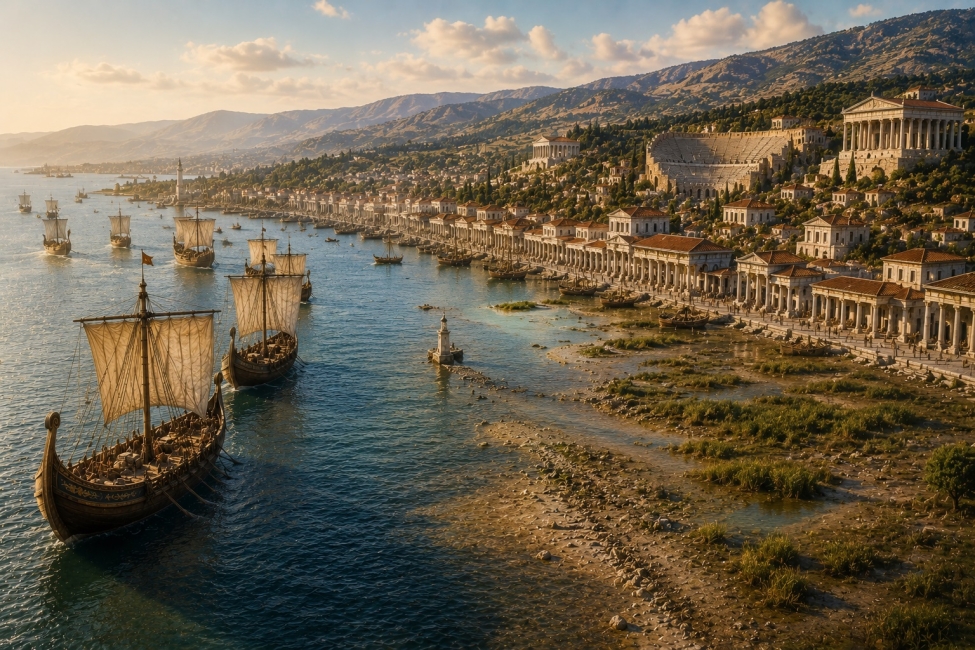
It surprises almost every visitor.
You arrive at one of the greatest port cities of the ancient world...
Yet there's one thing missing.
The sea.
Today, the ruins of Ancient Ephesus stand nearly eight kilometers (five miles) inland.
But two thousand years ago, ships from Egypt, Greece, Rome, Syria, and across the Mediterranean sailed directly into its magnificent harbor.
How could one of history's busiest seaports end up so far from the coastline?
The answer is a fascinating story of rivers, nature, engineering, trade, and the slow transformation of an entire landscape.
Let's discover how Ephesus lost the sea.
During the Roman Empire, Ephesus was much more than a beautiful city.
It was one of the Mediterranean's most important commercial ports.
Merchant ships arrived daily carrying goods from every corner of the known world.
Its strategic location connected Europe, Asia, and Africa, making Ephesus one of the wealthiest cities in the empire.
From its harbor flowed:
The harbor wasn't simply where ships docked.
It was the economic heartbeat of Ephesus.
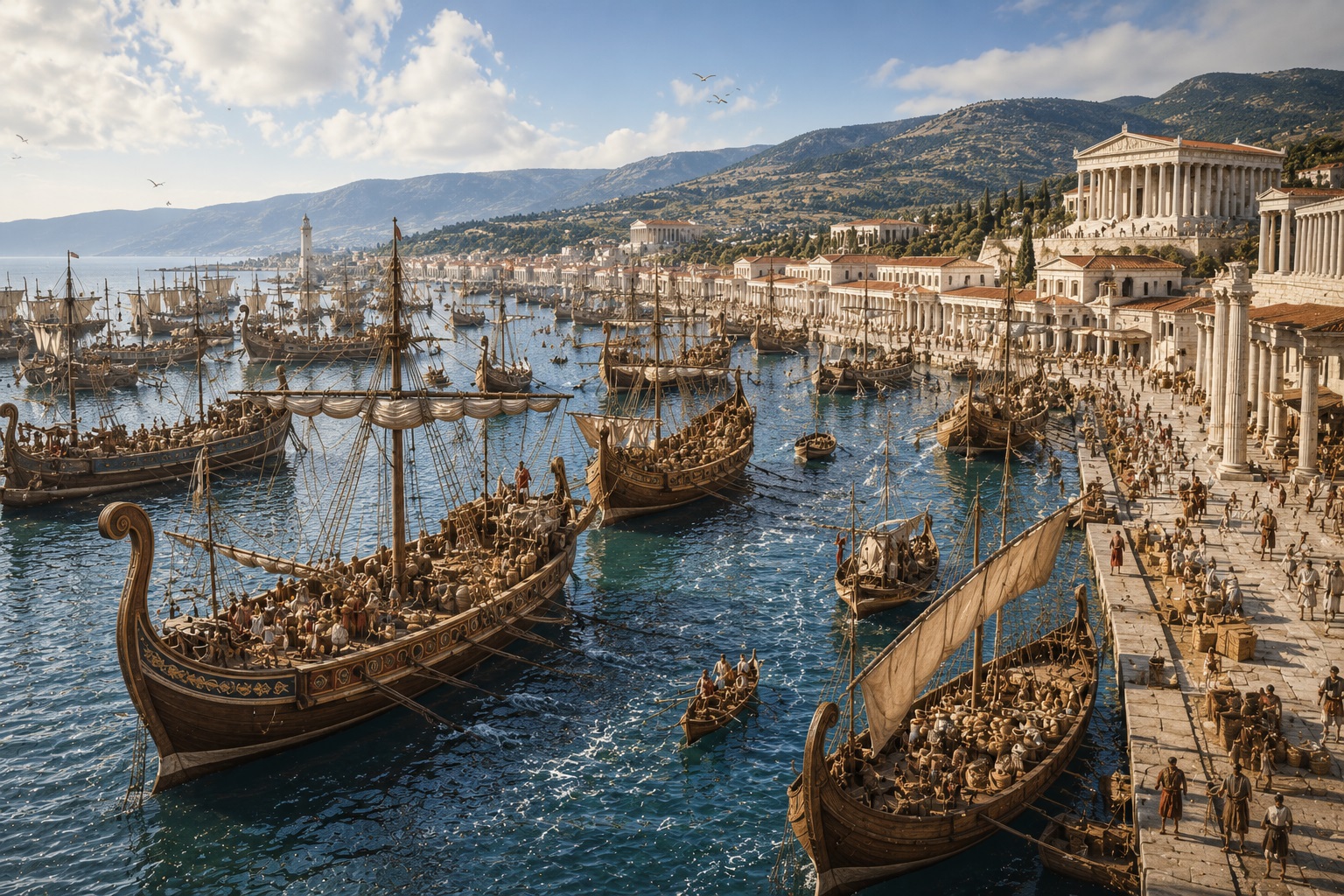
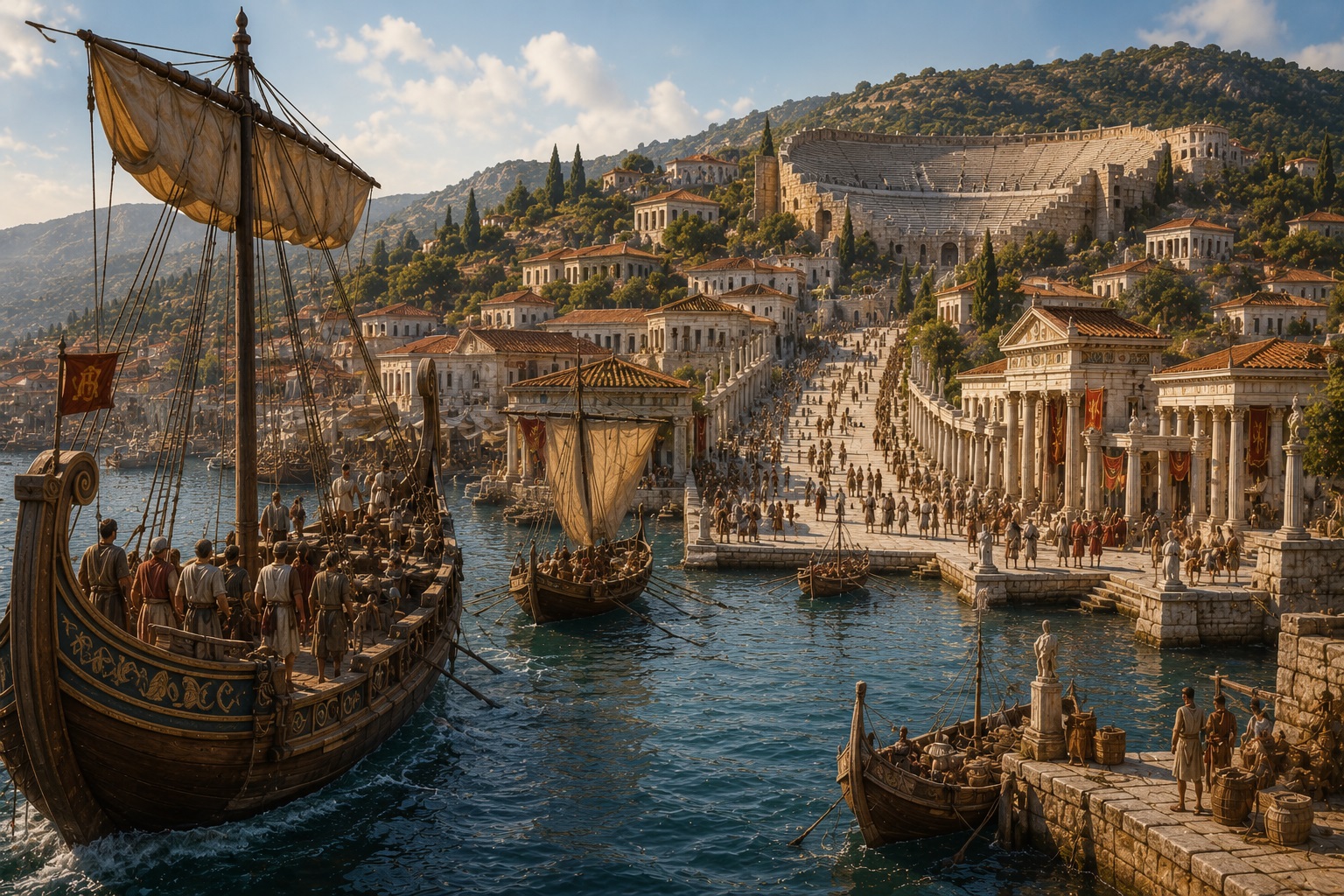
If you stood in front of the Library of Celsus nearly 2,000 years ago, the sea wouldn't have been miles away.
Instead, a broad harbor stretched toward the city, connected by the impressive Harbor Street.
Travelers arriving by ship walked directly from the docks toward the Great Theatre before entering the city's marble streets.
The journey from ship to city center took only a few minutes.
Imagine stepping off a Roman merchant vessel and seeing one of the greatest cities of the ancient world rising before you.
The greatest threat to Ephesus wasn't war.
It wasn't an invading army.
It wasn't even an earthquake.
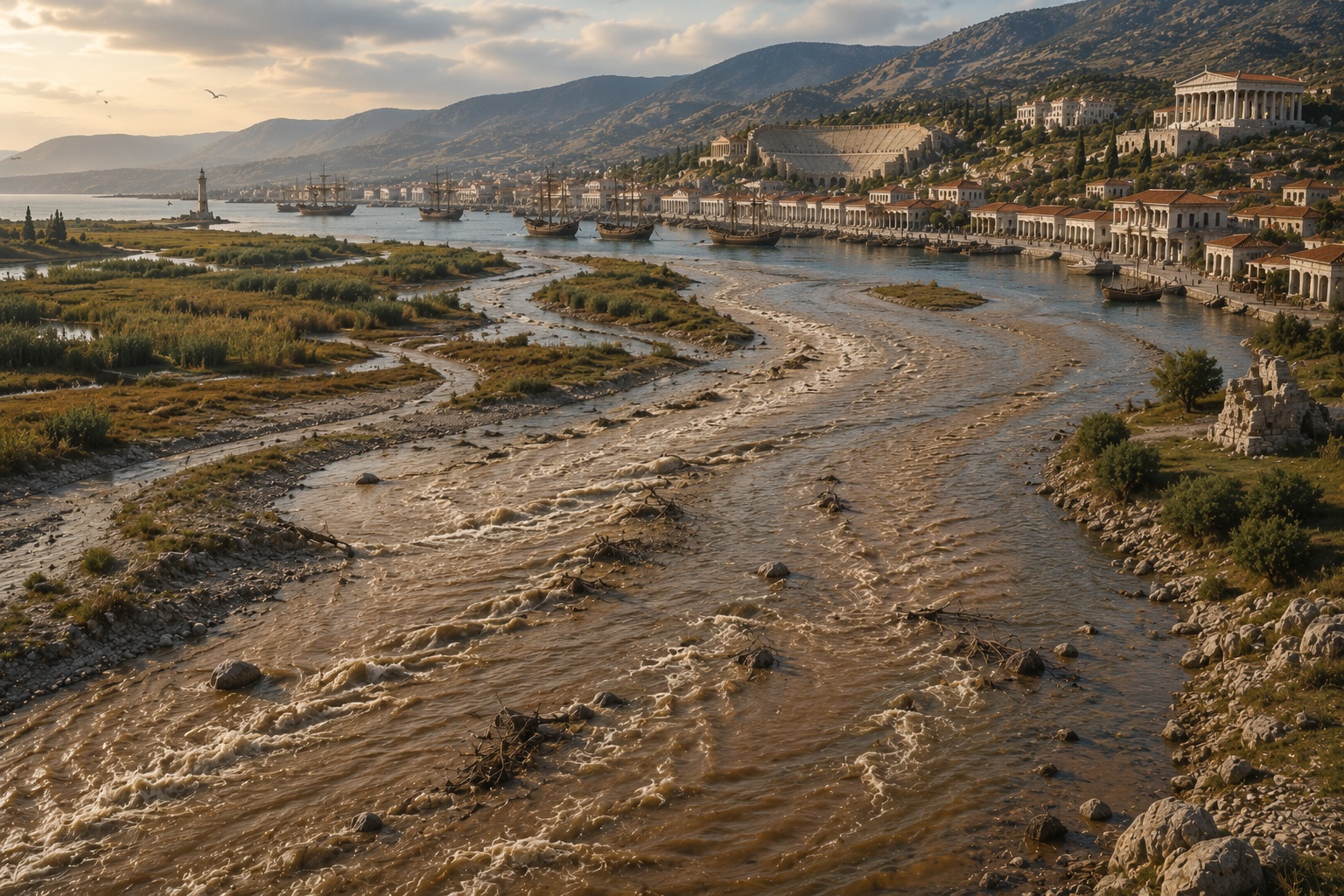
It was a river.
The Küçük Menderes River (known in antiquity as the Cayster River) continuously carried enormous amounts of sand, mud, and silt from the surrounding mountains.
Every winter flood deposited another thin layer into the harbor.
At first, nobody noticed.
Year after year...
Century after century...
The deposits slowly accumulated.
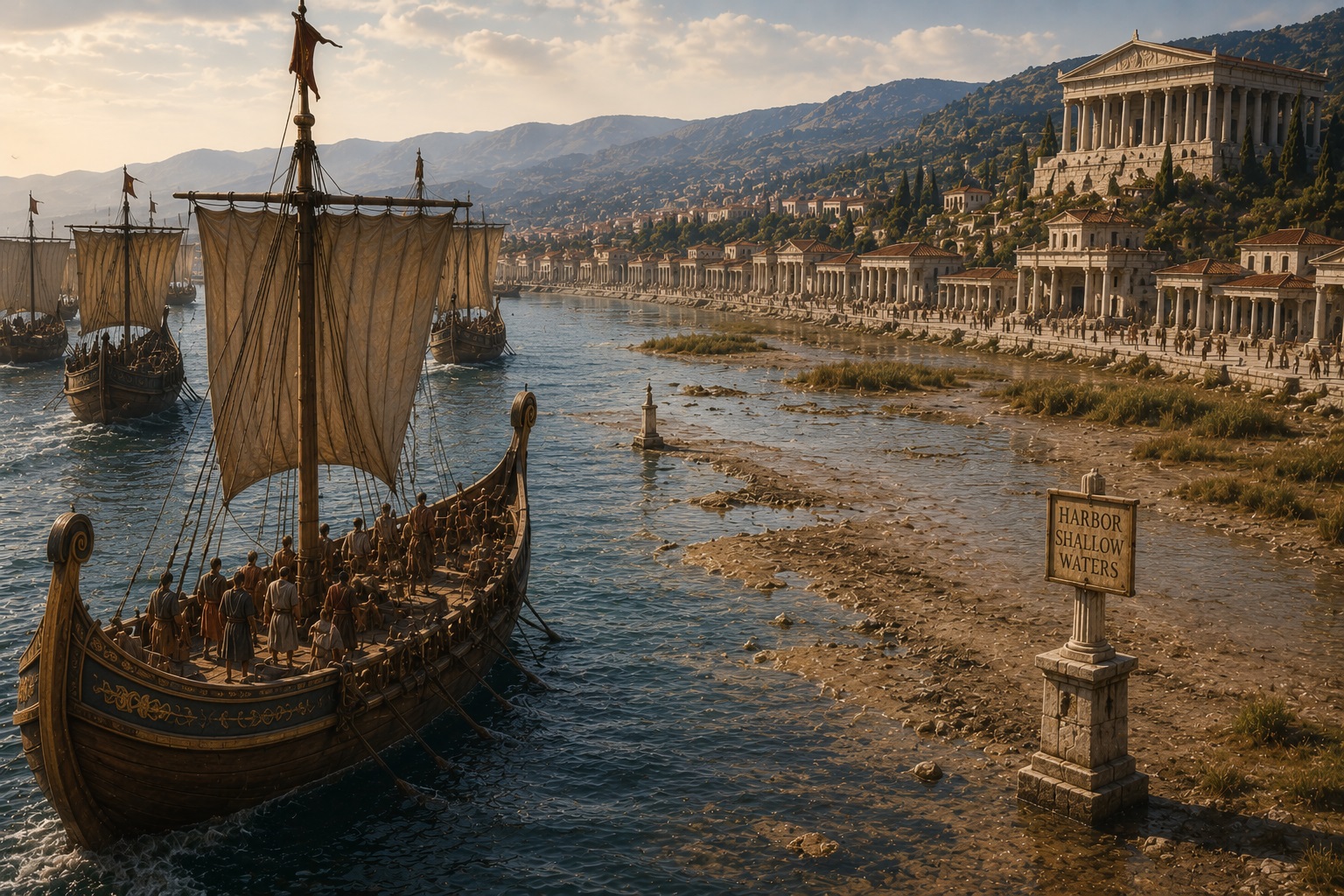
The harbor became shallower.
Large ships found it increasingly difficult to enter safely.
The Romans understood the danger.
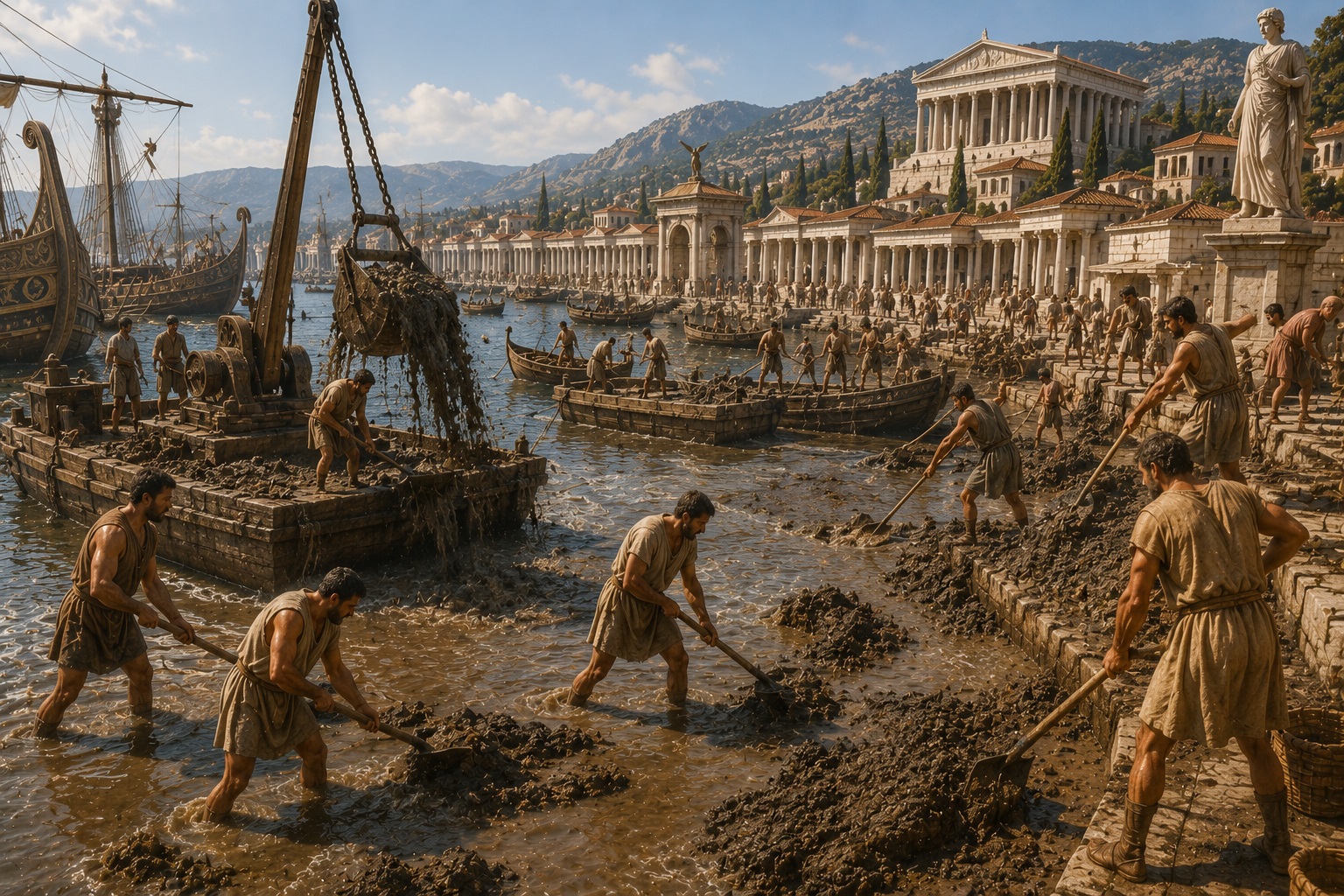
Engineers repeatedly dredged the harbor, removing accumulated mud and sediment.
Canals were cleaned.
Harbor walls were repaired.
Workers fought constantly to keep the waterways open.
But nature never stopped.
Every rainy season brought more sediment.
The river quietly continued reclaiming the coastline.
Eventually, even the greatest engineers of the Roman Empire could no longer keep pace.
The coastline near Ephesus has advanced several kilometers over the past two thousand years due to sediment carried by the Cayster River. What was once open sea is now fertile farmland.
As the harbor continued to disappear, trade declined, wealth faded, and one of the Roman Empire's greatest cities began its slow transformation into the archaeological wonder we visit today.
In the next section, we'll explore how the lost harbor changed the fate of Ephesus forever—and why modern visitors can still trace its ancient shoreline.
As the harbor became increasingly shallow, Ephesus faced a crisis unlike any it had experienced before.
For centuries, the city's prosperity had depended on maritime trade.
Now, large merchant ships struggled to reach the docks.
Captains began choosing alternative ports that were easier to access.
Trade routes slowly shifted.
The constant flow of merchants, sailors, and travelers gradually diminished.
The economic engine that had powered Ephesus for hundreds of years was beginning to fail.
The people of Ephesus refused to give up without a fight.
Roman emperors invested heavily in maintaining the harbor.
Workers dredged channels.
Canals were widened.
Thousands of tons of mud were removed by hand.
Engineers designed new waterways to keep the harbor connected to the sea.
These efforts delayed the inevitable for centuries.
But every winter, the Cayster River returned with more sediment.
Nature simply worked faster than people could remove it.
Losing the harbor didn't immediately destroy Ephesus.
It happened gradually.
As trade declined, wealth decreased.
Fewer merchants meant fewer taxes.
Public buildings became more difficult to maintain.
At the same time, earthquakes damaged important structures, and political instability across the Roman Empire created additional challenges.
By the early Byzantine period, Ephesus was no longer the thriving commercial powerhouse it had once been.
The disappearing harbor had changed the city's destiny forever.
Over the centuries, the coastline continued moving westward.
The ancient harbor slowly transformed into wetlands.
Eventually, fertile agricultural land replaced the sea.
Today, fields, roads, and villages occupy areas where Roman merchant ships once sailed.
It is one of the most dramatic examples of how landscapes can change over time.
Yes—if you know where to look.
Although the water has disappeared, the ancient Harbor Street still survives.
This magnificent marble avenue once connected the harbor directly with the Great Theatre.
Walking along it today allows visitors to retrace the footsteps of Roman merchants arriving from every corner of the Mediterranean.
From elevated viewpoints or aerial photographs, archaeologists can still identify the outline of the former harbor basin and the ancient shoreline.
The sea may be gone, but its story remains written across the landscape.
Harbor Street in Ephesus was once lined with impressive colonnades and led directly from the port to the Great Theatre, creating one of the most spectacular entrances to any city in the Roman Empire.
Over thousands of years, the Cayster (Küçük Menderes) River carried sediment that gradually filled the harbor, pushing the coastline several kilometers west.
Today, the archaeological site lies approximately 8 kilometers (5 miles) inland from the Aegean coast.
Yes. During the Greek and Roman periods, Ephesus was one of the busiest and most important ports in the Mediterranean.
Absolutely. They repeatedly dredged the harbor and maintained canals for centuries, but they could not stop the continuous buildup of sediment.
The harbor itself has disappeared, but Harbor Street, the Great Theatre, and the surrounding landscape still reveal where the port once stood.
Standing in front of the Great Theatre today, it's difficult to imagine that thousands of merchant ships once anchored just a short walk away.
Yet every marble stone tells the story of a city shaped by the sea.
If you're planning to visit, join one of our guided Ephesus Tours. Our expert local guides will help you visualize the lost harbor, explain how nature transformed one of the world's greatest port cities, and reveal the fascinating history hidden beyond the ruins.
Ephesus wasn't abandoned because people stopped believing in it.
It wasn't destroyed by a single battle.
It wasn't erased overnight.
Instead, a river quietly rewrote the map.
Grain by grain.
Year after year.
Century after century.
Today, visitors walk across fertile fields without realizing they are standing where Roman merchant ships once sailed.
Perhaps that's the greatest lesson Ephesus teaches us.
Even the mightiest cities are shaped not only by emperors and armies—but also by the slow, unstoppable forces of nature.

I graduated from Istanbul University with a degree in Radio, Television, and Cinema. During my academic journey, I focused on storytelling, visual communication, and cultural content creation, while my personal interests led me toward exploration and discovery.
Traveling, discovering new places, and experiencing different cultures are at the heart of my life. My strong interest in mythology allows me to see destinations not only as physical locations but as narratives shaped by history and meaning. My passion for reading continuously enriches and deepens this perspective.
I truly enjoy meeting new people and learning about diverse ways of life. With this mindset, I aim to share my experiences in a sincere, clear, and engaging way.
I love following the traces of stories wherever I go.
Disclosure Notice
By filling out this form, you agree that the personal data you provide to us will be processed in accordance with the Personal Data Protection Law No. 6698 and related legislation.
Your personal data will be processed solely for responding to your application, evaluating your requests, and fulfilling legal obligations; it will not be shared with third parties.
For detailed information, you can review our Privacy Policy.
By submitting the form, you acknowledge and consent to the processing of your personal data for the purposes specified above.

