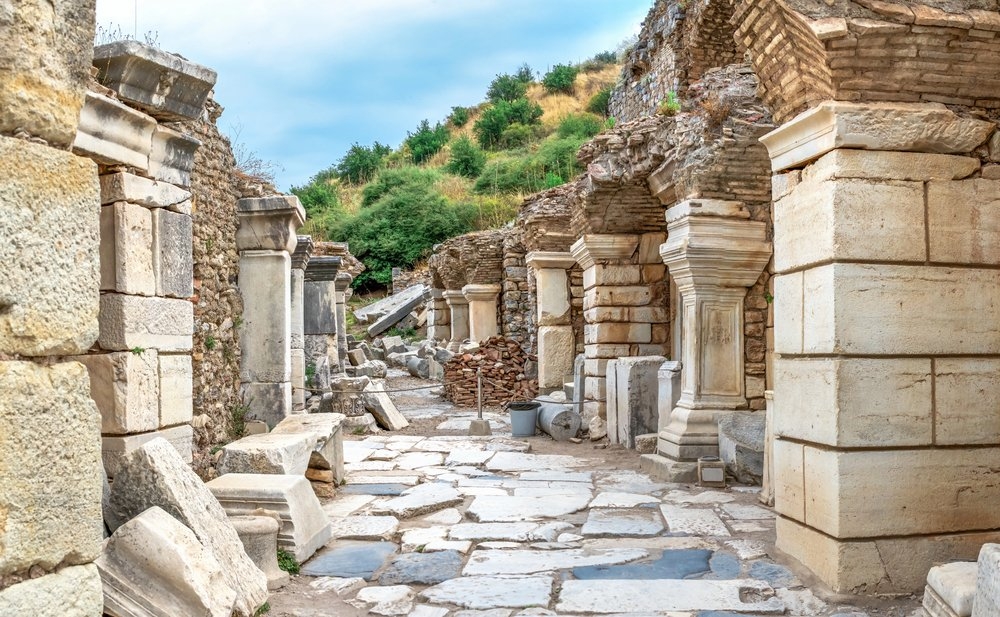
If you are asking what is Ephesus, you are exploring one of the most important ancient cities in human history. Ephesus was a powerful cultural, religious, and commercial center of the ancient world, known for its monumental architecture, strategic location, and lasting influence on history and religion. Today, it stands as one of the best-preserved ancient cities anywhere in the world.
This guide explains what Ephesus is, what it was known for, how old it is, why it mattered so much in antiquity, and why it continues to attract millions of visitors today.
Ephesus was founded in antiquity on the western coast of Asia Minor, in what is now modern-day Turkey. Archaeological evidence shows that settlement in the area dates back thousands of years, but the city rose to prominence during the Greek and Roman periods.
Many travelers wonder when was Ephesus built or when was Ephesus founded. While early settlements existed much earlier, Ephesus became a major city around the 10th century BCE and reached its peak during Roman rule.
At its height, Ephesus was home to hundreds of thousands of residents, featuring paved streets, advanced water systems, public baths, theaters, temples, and libraries. For its time, it was one of the most sophisticated cities in the world.
To understand what Ephesus was known for, it is essential to look at its role in trade, religion, and politics.
Ephesus was famous for:
Because of these features, Ephesus became a center of wealth and influence. When people ask what is Ephesus famous for, the answer lies in its combination of economic power, architectural brilliance, and cultural importance.
Another reason Ephesus holds global significance is its role in early Christianity. Many people search for what is Ephesus in the Bible due to its frequent mention in biblical texts.
Ephesus is referenced in the New Testament and was an important center for early Christian communities. It is traditionally associated with:
This religious importance makes Ephesus a key destination not only for history enthusiasts but also for faith-based travelers.
Despite its greatness, Ephesus eventually declined. Many wonder what did Ephesus look like during its final centuries and why such a powerful city faded.
Several factors contributed to its decline:
As the harbor moved farther inland, Ephesus lost its commercial advantage. Over time, the population decreased, and the city was gradually abandoned.
Today, Ephesus is an open-air archaeological site and a UNESCO World Heritage Site, recognized for its outstanding universal value. Visitors can walk along marble streets, explore monumental buildings, and visualize life in one of antiquity’s greatest cities.
Although no one lives in Ephesus today, its ruins remain remarkably well preserved, offering a clear picture of urban life in the ancient world.
For detailed historical context, visitor information, and planning resources, explore our Ephesus destination .
So, what is Ephesus? It is a city that shaped history, religion, architecture, and trade for centuries. Founded thousands of years ago, Ephesus became one of the most important cities of the ancient world and remains one of the most impressive archaeological sites today.
Understanding what Ephesus was known for helps visitors appreciate not only its ruins, but also its lasting influence on world history.

I hold a degree in International Finance and Trade and completed my Master’s degree in Tourism Management at Adnan Menderes University. Since 2013, I have been actively involved in the tourism industry, working across various areas of travel operations, tour planning, and destination-focused services.
Throughout my career, I have combined my academic background with hands-on industry experience, contributing to tour development, customer experience, and content creation for travel-oriented platforms. My work focuses on presenting destinations in a clear, trustworthy, and engaging way for international travelers.
I see travel as more than just movement from one place to another—it is a powerful way to understand cultures, history, and people through direct experience. With this perspective, I aim to share authentic insights and practical knowledge in a sincere and accessible tone.
Disclosure Notice
By filling out this form, you agree that the personal data you provide to us will be processed in accordance with the Personal Data Protection Law No. 6698 and related legislation.
Your personal data will be processed solely for responding to your application, evaluating your requests, and fulfilling legal obligations; it will not be shared with third parties.
For detailed information, you can review our Privacy Policy.
By submitting the form, you acknowledge and consent to the processing of your personal data for the purposes specified above.

