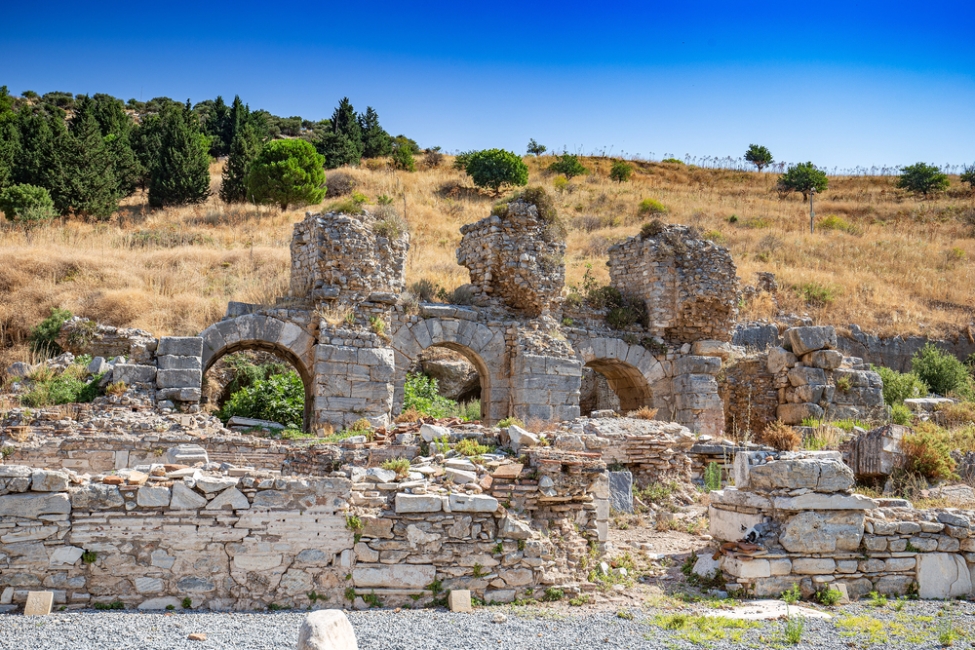
Ephesus is one of the most famous ancient cities in the world, yet many visitors never stop to ask a surprisingly simple question: what does Ephesus mean? The name appears in ancient Greek texts, Roman records, and even in the Bible, but its true meaning is often misunderstood or oversimplified.
Understanding the meaning of the name Ephesus offers a deeper insight into the city’s identity, its religious background, and its role in ancient history. The name itself reflects layers of mythology, language, and cultural transformation that span thousands of years.
To explore how the meaning of the name connects to the place itself, you can also review our Ephesus destination , which provides historical and geographical context for this legendary city.
To answer what does Ephesus mean in Greek, we must start with ancient Greek language and mythology. The name “Ephesus” is derived from the Greek word Ephesos (Ἔφεσος), which has been interpreted in several ways by historians and linguists.
One of the most widely accepted interpretations connects the name to a Greek verb meaning “to permit” or “to let go.” In this sense, Ephesus may have originally referred to a place of passage, transition, or release.
In Greek mythology, Ephesus was associated with Artemis, the goddess of nature and fertility. Some scholars suggest the name may be linked to pre-Greek Anatolian words that were later adapted into Greek pronunciation.
It is important to note that many ancient cities adopted Greek names that were adaptations of earlier local languages. This means that while Ephesus has a Greek name, its deeper roots may extend even further back in time.
Many people search for what does the name Ephesus mean or what does the word Ephesus mean expecting a single, clear definition. In reality, the name carries layered meanings rather than one exact translation.
Because Ephesus stood at the crossroads of trade routes between Asia and Europe, the name may symbolically reflect movement, exchange, and openness. This interpretation aligns well with the city’s historical role as a gateway between cultures.
The name Ephesus became closely tied to the cult of Artemis. Over time, the city’s name came to represent not just a location, but a religious and cultural center known throughout the ancient world.
Rather than a strict dictionary definition, the meaning of Ephesus evolved through usage, belief, and reputation—much like the city itself.
Another common question is what does Ephesus mean in Hebrew. While Ephesus is not a Hebrew word by origin, it appears in Jewish and early Christian contexts through Greek and Latin sources.
In Hebrew-related biblical studies, the name Ephesus is generally treated as a proper noun rather than translated for meaning. It retains its Greek form when referenced in religious texts.
Some interpretations suggest symbolic meanings associated with separation, calling, or spiritual testing, though these are theological interpretations rather than linguistic translations.
The association with Hebrew thought largely comes through Christianity, where Ephesus became an important center of early Christian teaching.
Many people also ask what does Ephesus mean in the Bible. In biblical contexts, Ephesus is less about linguistic meaning and more about spiritual significance.
Ephesus appears prominently in the New Testament, especially in:
In the Bible, Ephesus represents a strong but challenged Christian community. The name becomes associated with themes of faith, perseverance, and spiritual renewal rather than its original Greek meaning.
Over time, “Ephesus” transformed from a geographical name into a symbol of early Christianity’s struggles and achievements.
One of the most remarkable aspects of Ephesus is that its name has survived largely unchanged for over two millennia.
When the Romans took control of the city, they preserved its Greek name rather than renaming it. This continuity helped solidify the name Ephesus in historical records.
During the Byzantine era, the city’s biblical importance ensured that the name continued to be recorded in religious texts and pilgrim accounts.
Today, Ephesus remains the internationally recognized name for the ancient city, even though the surrounding modern town is called Selçuk.
To see how the ancient name connects to the physical site today, explore our Ephesus destination .
Understanding what does Ephesus mean adds depth to any visit. The name reflects the city’s role as a meeting point of cultures, religions, and ideas.
The name reveals layers of Greek, Roman, and early Christian influence.
Knowing the meaning behind the name enhances appreciation of the site’s symbolic importance.
Learning the origin of the name helps transform Ephesus from a collection of ruins into a living historical narrative.
So, what does Ephesus mean? The answer is complex and layered. Rooted in Greek language, influenced by earlier Anatolian cultures, enriched by biblical symbolism, and preserved through history, the name Ephesus represents far more than a simple translation.
It stands for transition, cultural exchange, spiritual significance, and historical continuity.
If you want to experience how this ancient name comes to life in stone, streets, and monuments, begin with our Ephesus destination and discover the story behind one of the world’s most legendary cities.

I hold a degree in International Finance and Trade and completed my Master’s degree in Tourism Management at Adnan Menderes University. Since 2013, I have been actively involved in the tourism industry, working across various areas of travel operations, tour planning, and destination-focused services.
Throughout my career, I have combined my academic background with hands-on industry experience, contributing to tour development, customer experience, and content creation for travel-oriented platforms. My work focuses on presenting destinations in a clear, trustworthy, and engaging way for international travelers.
I see travel as more than just movement from one place to another—it is a powerful way to understand cultures, history, and people through direct experience. With this perspective, I aim to share authentic insights and practical knowledge in a sincere and accessible tone.

Discover Pamukkale from Kusadasi with lunch, featuring travertines and ancient Hierapolis.
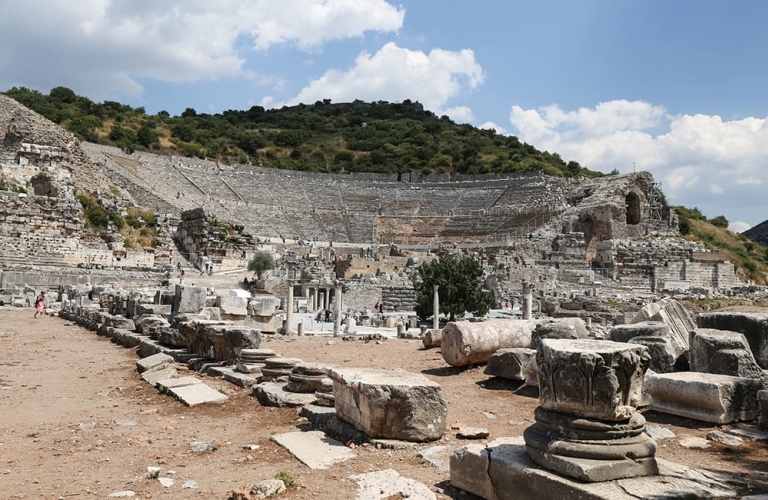
Discover archaeological highlights of Ephesus on a private tour from Kusadasi.

Discover Ephesus by night on a unique evening tour experience.
Disclosure Notice
By filling out this form, you agree that the personal data you provide to us will be processed in accordance with the Personal Data Protection Law No. 6698 and related legislation.
Your personal data will be processed solely for responding to your application, evaluating your requests, and fulfilling legal obligations; it will not be shared with third parties.
For detailed information, you can review our Privacy Policy.
By submitting the form, you acknowledge and consent to the processing of your personal data for the purposes specified above.

