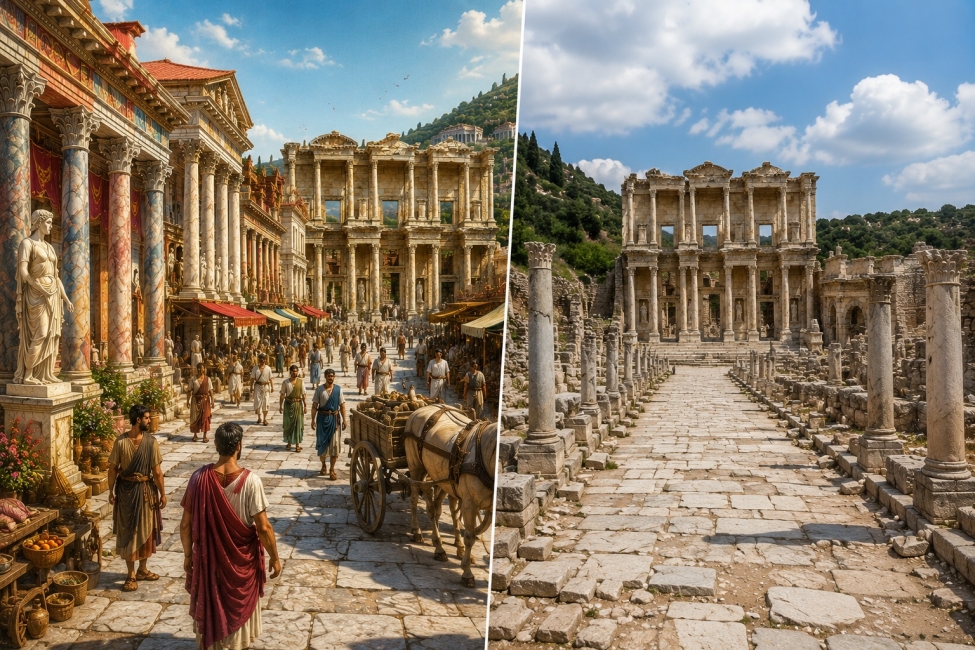
Close your eyes for a moment.
Forget the quiet archaeological site you see today. Imagine standing beneath a brilliant Mediterranean sky as thousands of people pass by. Merchants call out in different languages. Horses pull richly decorated carts across polished marble streets. The scent of freshly baked bread mixes with exotic spices, olive oil, incense, and perfume drifting from nearby market stalls.
Welcome to Ephesus nearly 2,000 years ago—one of the wealthiest, busiest, and most cosmopolitan cities in the Roman Empire.
Today, millions of travelers visit the impressive ruins of Ephesus. But with a little imagination, those ancient stones transform into a vibrant city that once welcomed traders, emperors, philosophers, pilgrims, and explorers from every corner of the Mediterranean.
If you've ever wondered what did Ephesus look like, let's travel back in time and experience this extraordinary city as its ancient residents once did.
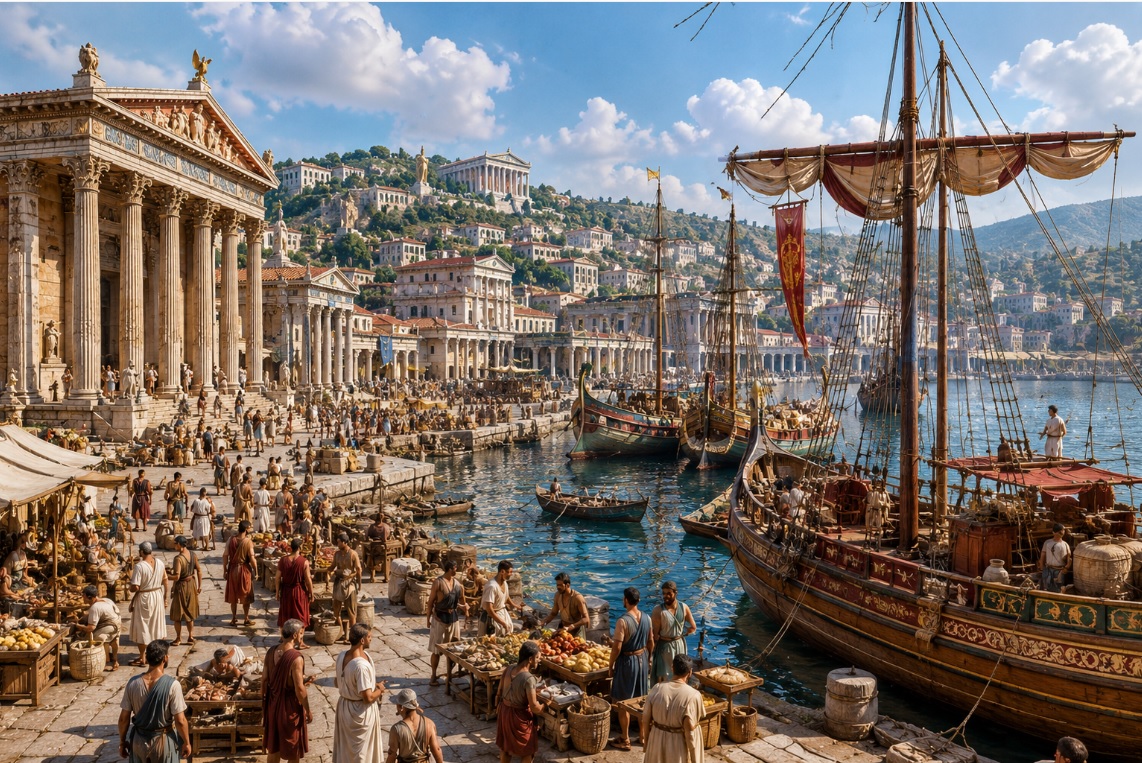
Your journey begins at the harbor.
Unlike today, Ephesus was once a thriving coastal city. The sea reached directly to its harbor, making it one of the busiest trading ports in the Roman Empire.
Ships arrived daily carrying goods from across the known world.
Some brought grain from Egypt. Others transported fine wine from Greece, marble from nearby quarries, silk from the East, and luxury goods destined for wealthy Roman families.
The harbor buzzed with activity.
Dockworkers unloaded cargo while merchants negotiated prices in Greek, Latin, and other languages. Sailors prepared for long voyages across the Mediterranean, and travelers stepped ashore eager to explore one of the empire's greatest cities.
For many visitors, Ephesus was their first impression of Asia Minor.
Leaving the harbor, you would make your way toward Curetes Street, the city's magnificent marble avenue.
Today, visitors walk through quiet ruins.
Two thousand years ago, the street was alive.
Elegant citizens dressed in flowing robes strolled beneath impressive monuments. Local shopkeepers displayed colorful fabrics, jewelry, perfumes, pottery, and imported treasures.
Children laughed as they chased one another through the busy streets.
Street musicians entertained passing crowds.
Travelers stopped to admire fountains decorated with marble sculptures while philosophers debated ideas in shaded porticoes.
Every corner revealed something fascinating.
It wasn't simply a road.
It was the beating heart of Ephesus.
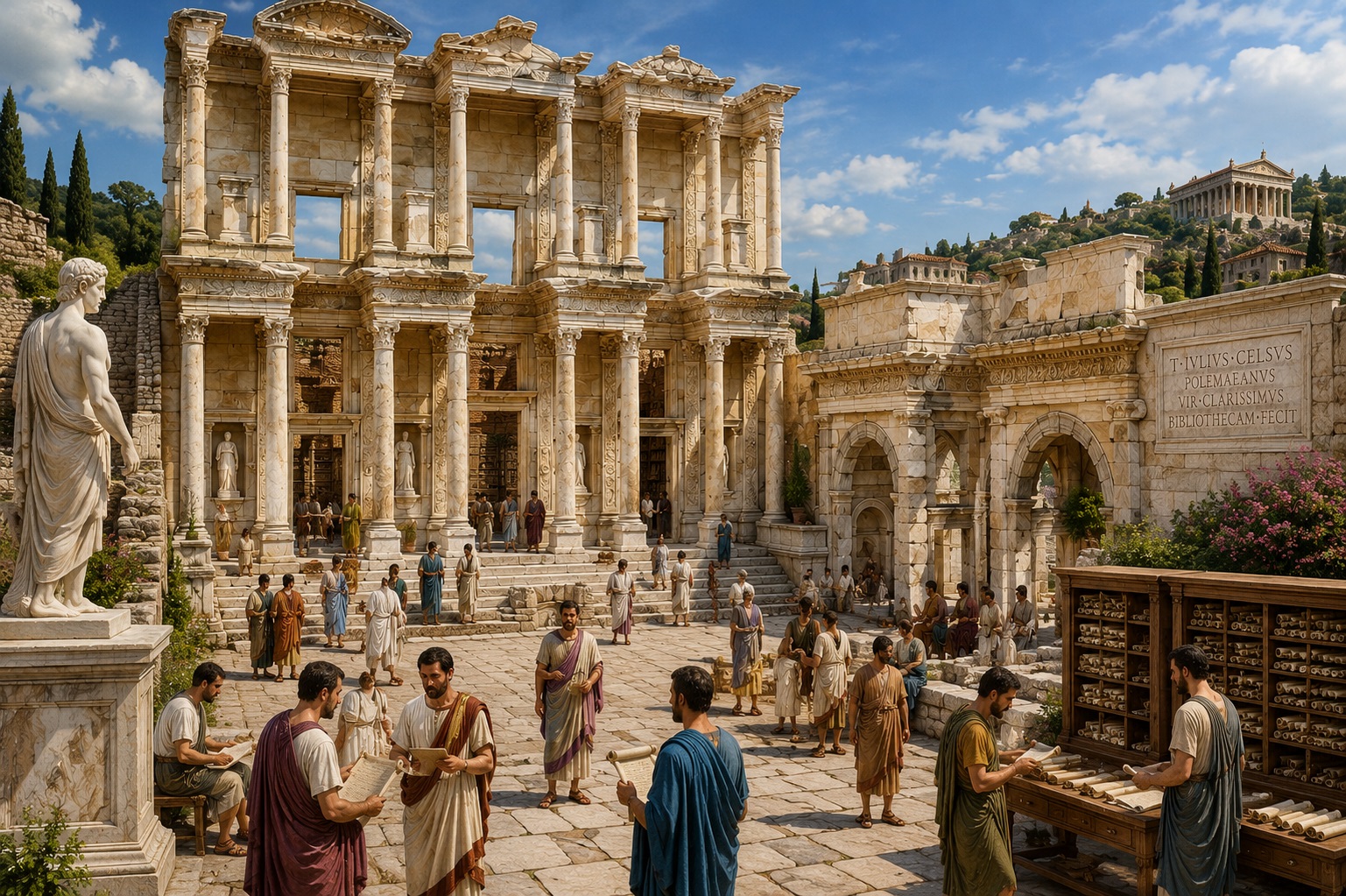
Today, the Library of Celsus is one of the world's most photographed archaeological landmarks.
In Roman times, however, it served a much greater purpose.
Inside, approximately 12,000 handwritten scrolls filled elegant wooden shelves.
Students came here to study.
Scholars exchanged ideas.
Writers copied manuscripts by hand.
Public speakers gathered outside to discuss philosophy, politics, science, and literature.
Knowledge was one of the city's greatest treasures.
Standing before the library today, it's easy to admire its architecture.
Imagine it instead filled with conversation, learning, and intellectual curiosity.
No Roman city was complete without its marketplace, and Ephesus had one of the busiest in the eastern Mediterranean.
Picture rows of colorful market stalls.
Merchants loudly advertised their products while customers bargained for the best prices.
The Agora wasn't only a shopping destination.
It was where business deals were made, friendships were formed, and news spread throughout the city.
Long before travelers admired the Library of Celsus, many came to Ephesus for one reason alone.
The Temple of Artemis.
As one of the Seven Wonders of the Ancient World, it inspired awe across the Mediterranean.
Imagine approaching the sanctuary.
Towering marble columns rose toward the sky.
Pilgrims gathered from distant lands.
Priests performed sacred rituals.
Offerings filled the temple grounds.
The atmosphere combined religion, celebration, commerce, and spectacle.
Although little remains today, it once represented the pride of the city.
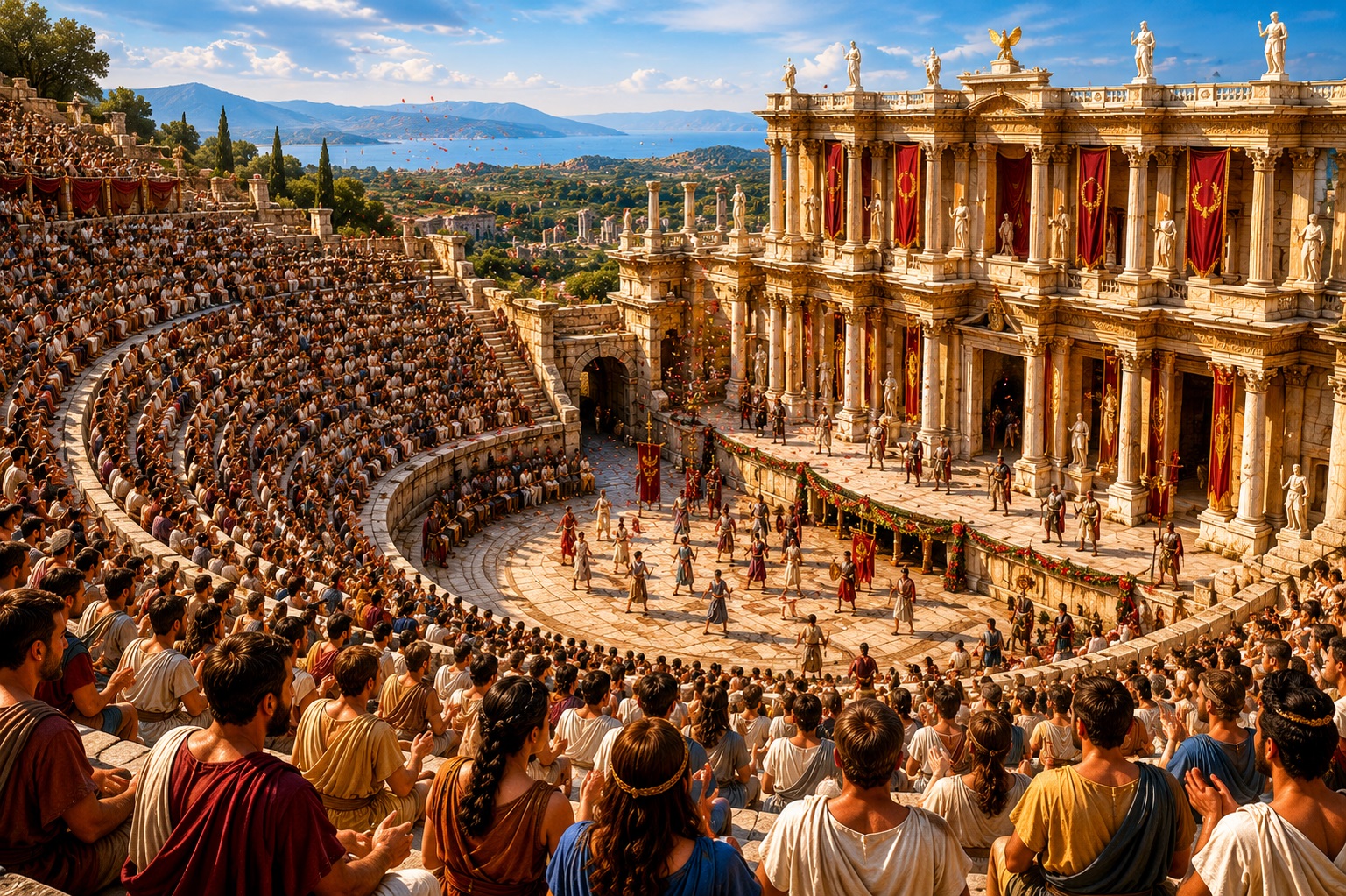
Imagine joining a crowd of twenty-five thousand people.
The Great Theater echoed with excitement.
On some days, audiences watched dramatic performances.
On others, political leaders addressed enormous crowds.
Gladiators entertained spectators.
Musicians performed before thousands.
The sound of applause rolled across the valley.
Standing in the theater today, visitors often admire the remarkable acoustics.
Two thousand years ago, those same seats vibrated with the voices of one of the Roman world's largest audiences.
Not everyone in Ephesus lived equally.
The city's wealthiest citizens occupied magnificent hillside homes now known as the Terrace Houses.
These residences featured:
The decoration rivaled that of luxurious Roman villas found throughout the empire.
Walking through these homes today offers one of the clearest glimpses into daily life among Ephesus' elite.
History books often describe what ancient cities looked like.
Few describe how they sounded.
Imagine hearing:
It was a city constantly alive with movement and sound.
Silence, which defines the archaeological site today, simply did not exist.
Perhaps the most overlooked question is also the most fascinating.
Visitors would have noticed:
Like every great city, Ephesus appealed to all the senses.
When darkness arrived, the city transformed once again.
Oil lamps illuminated homes, temples, and public streets.
Restaurants welcomed evening guests.
Families gathered for meals.
Travelers found lodging before continuing their journeys.
Above everything stood the stars of the Anatolian sky.
Without electric lights, the night sky appeared brighter than most people today have ever experienced.
Even after sunset, Ephesus remained vibrant.
Today, visitors walk among weathered columns and ancient foundations.
Two thousand years ago, those same streets were lined with brightly painted buildings.
The marble gleamed.
Statues stood proudly in every square.
Fountains sparkled in the sunlight.
Every monument served a purpose.
Every building was alive.
Understanding this transformation changes the entire experience of visiting Ephesus.
Instead of seeing ruins, you begin to see a living city frozen in time.
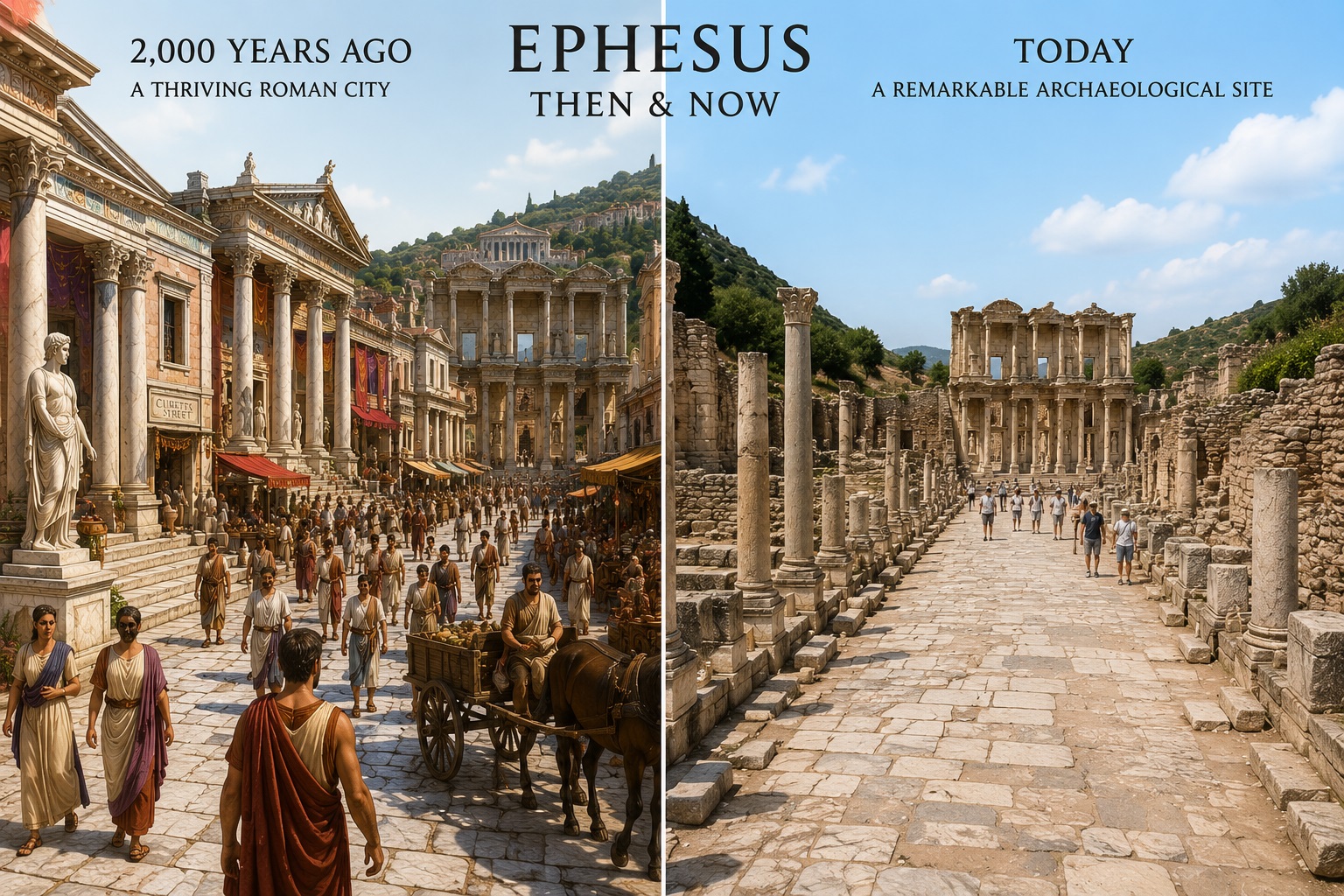
No photograph or reconstruction can fully capture what it feels like to stand where emperors, philosophers, merchants, and pilgrims once walked.
The best way to appreciate Ephesus is to explore it in person.
If you're planning to visit Turkey's Aegean coast, the Ephesus tour from Kuşadası with lunch offers an excellent opportunity to discover the city's remarkable history with an experienced local guide who brings these stories vividly to life.
Ephesus was a prosperous port city filled with marble streets, grand temples, theaters, fountains, marketplaces, luxurious homes, and impressive public buildings.
Yes. During antiquity, Ephesus was a major harbor city connected directly to the Aegean Sea before sediment gradually pushed the coastline farther away.
Historians estimate that between 200,000 and 250,000 people lived in Ephesus during its peak, making it one of the largest cities in the Roman Empire.
Yes. Visitors can walk on many of the original marble streets, including the famous Curetes Street.
Absolutely. Its exceptional preservation, fascinating history, and remarkable monuments make it one of Turkey's most unforgettable archaeological destinations.
Looking at Ephesus today, it's easy to admire its impressive ruins.
But when you imagine crowded marketplaces, magnificent temples, elegant homes, bustling streets, and ships filling the harbor, the ancient city comes alive in an entirely new way.
The next time you visit Ephesus, don't just look at the stones beneath your feet.
Imagine the footsteps that came before yours.

I graduated from Istanbul University with a degree in Radio, Television, and Cinema. During my academic journey, I focused on storytelling, visual communication, and cultural content creation, while my personal interests led me toward exploration and discovery.
Traveling, discovering new places, and experiencing different cultures are at the heart of my life. My strong interest in mythology allows me to see destinations not only as physical locations but as narratives shaped by history and meaning. My passion for reading continuously enriches and deepens this perspective.
I truly enjoy meeting new people and learning about diverse ways of life. With this mindset, I aim to share my experiences in a sincere, clear, and engaging way.
I love following the traces of stories wherever I go.
Disclosure Notice
By filling out this form, you agree that the personal data you provide to us will be processed in accordance with the Personal Data Protection Law No. 6698 and related legislation.
Your personal data will be processed solely for responding to your application, evaluating your requests, and fulfilling legal obligations; it will not be shared with third parties.
For detailed information, you can review our Privacy Policy.
By submitting the form, you acknowledge and consent to the processing of your personal data for the purposes specified above.

