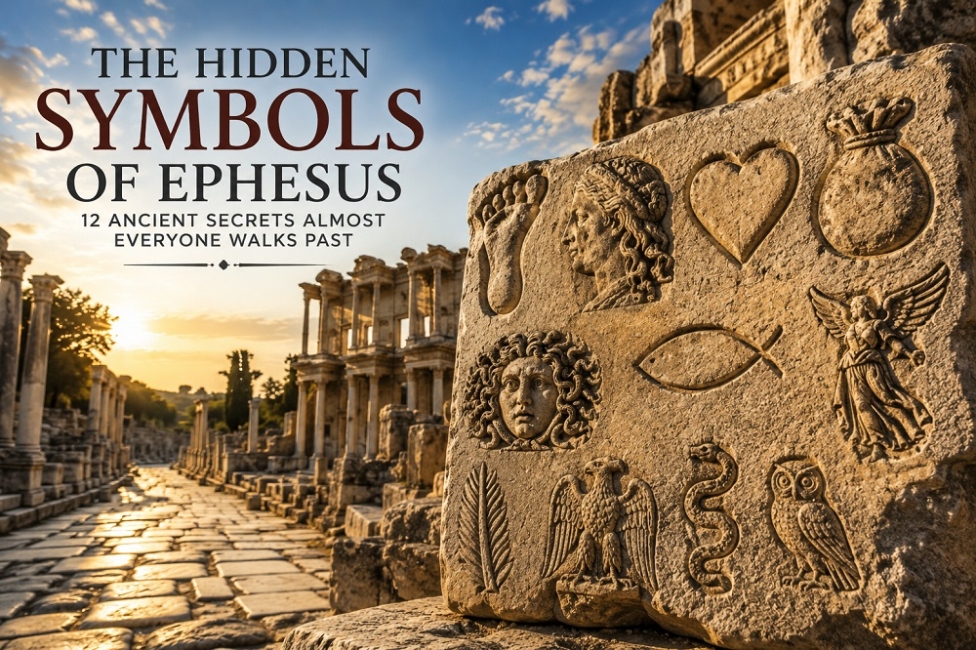
Imagine walking through Ephesus with thousands of other visitors.
You admire the magnificent Library of Celsus.
You climb to the top of the Great Theatre.
You take dozens of photographs along the marble streets.
Then you leave, believing you've seen everything.
But have you?
Hidden among the columns, carved into marble blocks, and quietly watching over the ancient city are dozens of symbols that most visitors never notice.
Some protected buildings from evil spirits.
Some advertised businesses nearly 2,000 years before modern billboards.
Others revealed secret religious beliefs, political power, or myths that shaped one of the greatest cities of the Roman Empire.
Once you learn to recognize them, you'll never look at Ephesus the same way again.
Perhaps the most famous hidden symbol in Ephesus isn't hidden at all.
It's carved directly into the marble street.
Most tourists walk over it without realizing its significance.
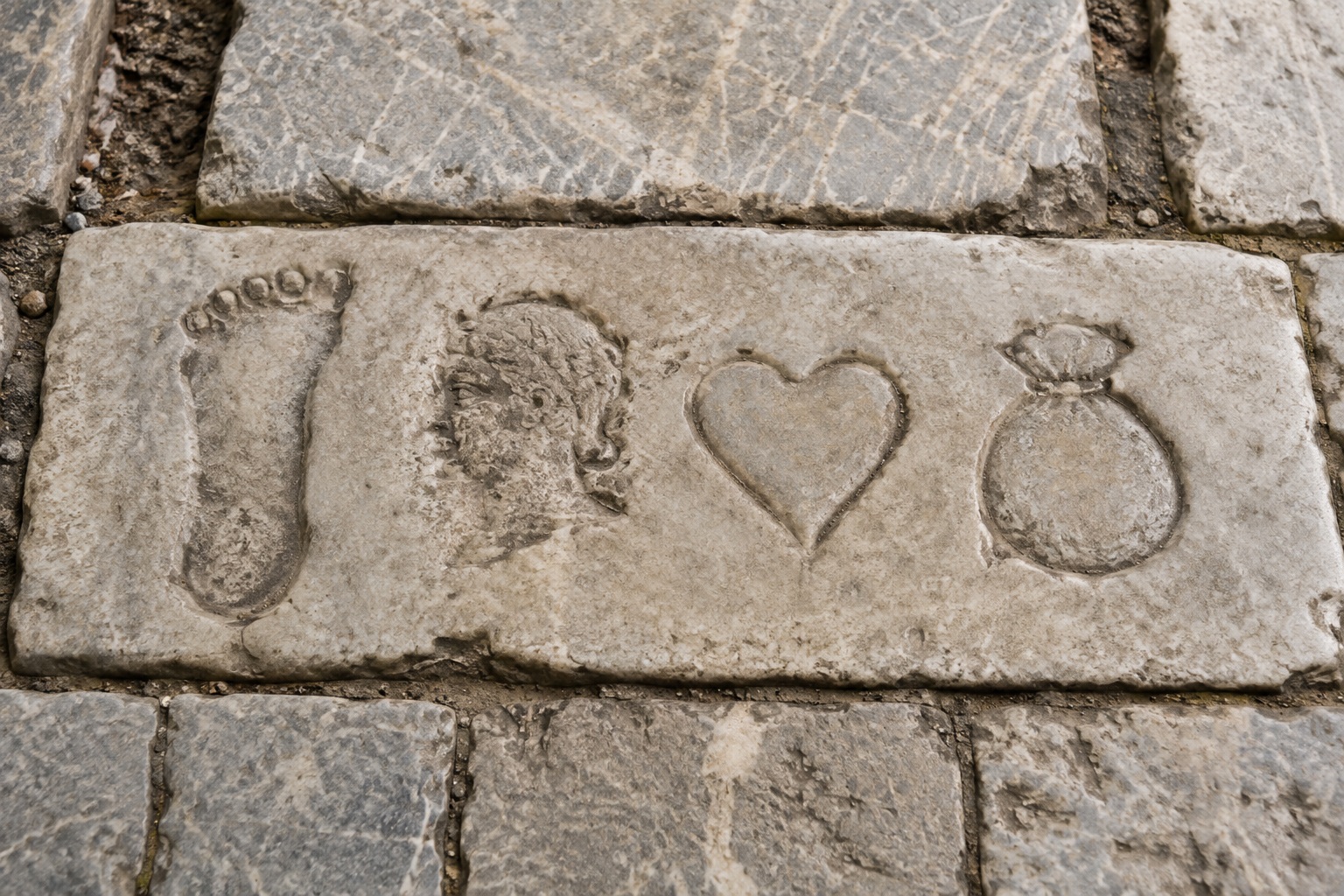
The carving shows:
Many guides explain this as one of the world's earliest advertisements.
The footprint pointed the direction.
The woman's face represented the destination.
The heart symbolized love.
The coin reminded visitors they needed money.
Whether this interpretation is entirely correct is still debated by historians, but it has become one of the most fascinating stories told inside Ephesus.
📍 Where to find it: Marble Street near the Library of Celsus.
Look carefully at the Temple of Hadrian.
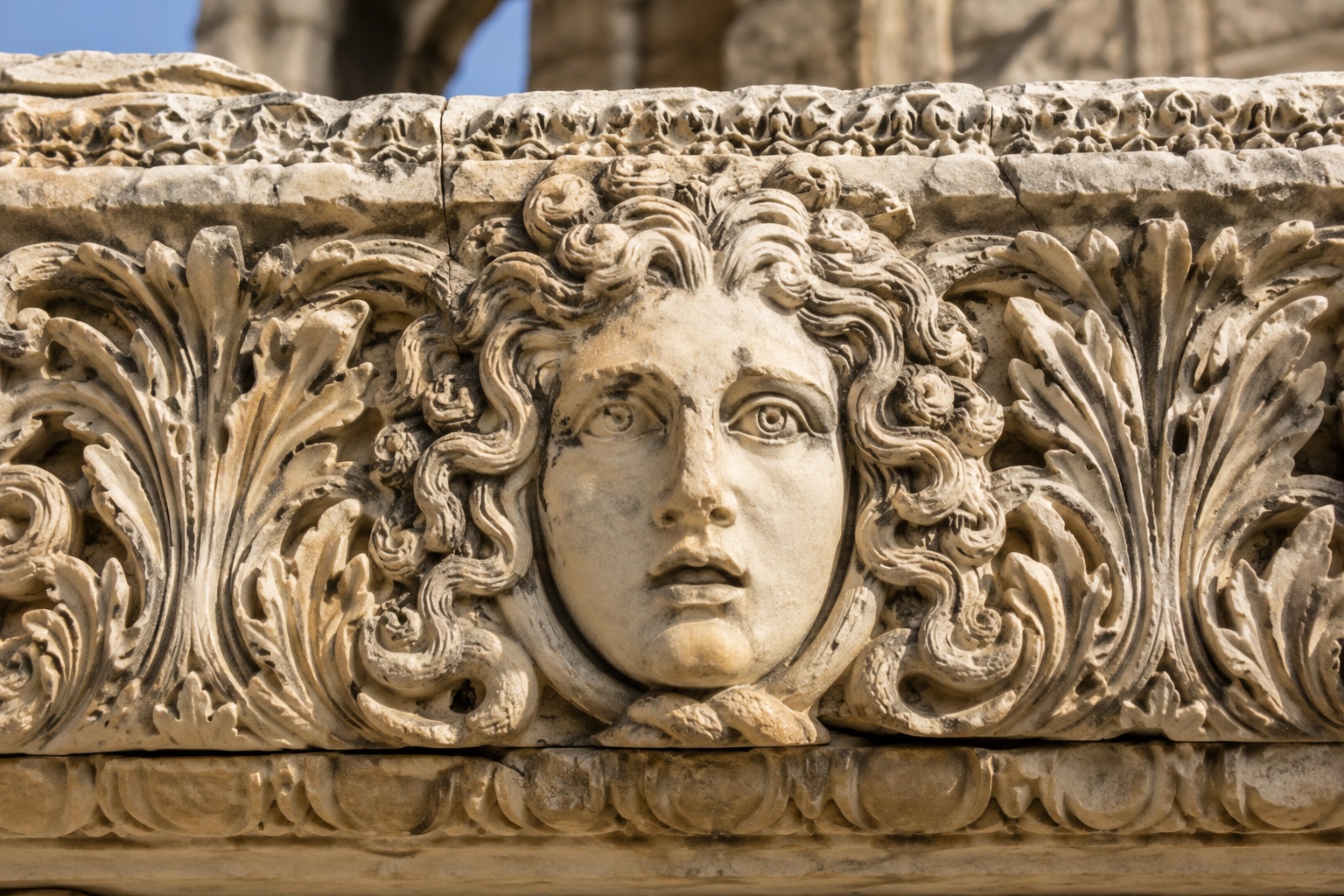
High above the entrance you'll discover the face of Medusa.
In Greek mythology, anyone who looked directly into Medusa's eyes turned to stone.
Yet Romans often placed her image on important buildings.
Why?
Because they believed Medusa protected structures from evil spirits and brought good fortune.
Rather than representing fear, she became a powerful guardian.
📍 Where to find it: Temple of Hadrian.
Many visitors unknowingly photograph one of the world's most famous symbols.
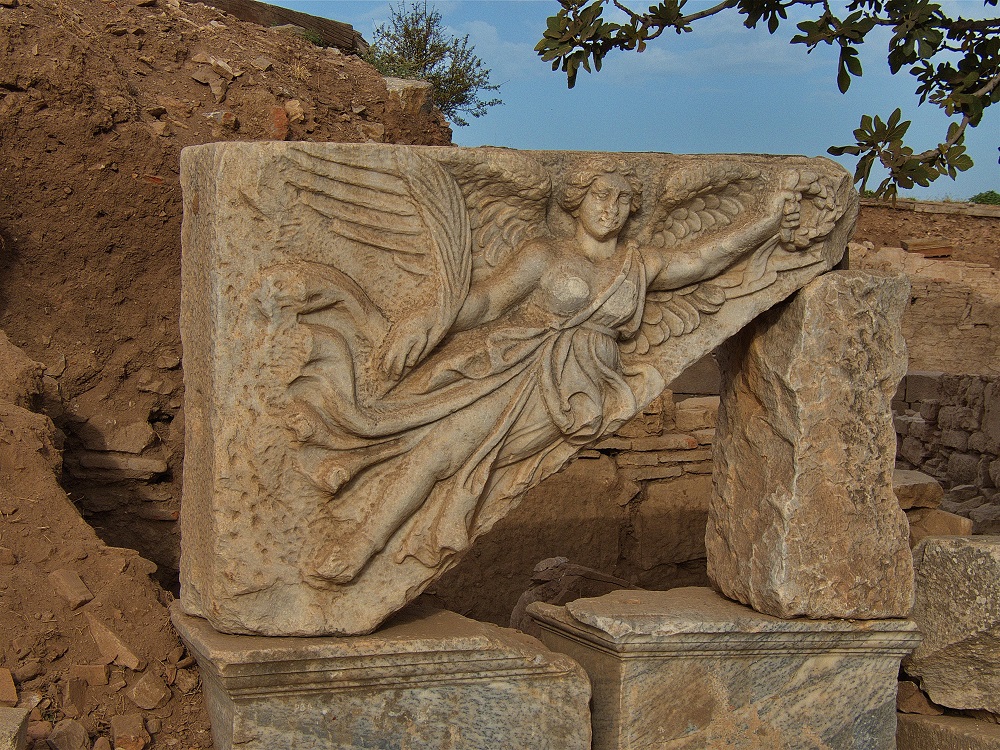
Nike, the winged goddess of victory, appears in several decorative carvings throughout Ephesus.
Long before the modern sports brand borrowed her name, Nike represented triumph, success, and achievement.
Her presence reminded citizens that Ephesus belonged to one of history's greatest empires.
📍 Where to find it: Decorative reliefs near major public buildings.
One of the smallest symbols in Ephesus may also be one of the most important.
The simple outline of a fish.
To most people it appears meaningless.
To early Christians, however, it served as a secret code.
The Greek word Ichthys formed an acronym meaning:
Jesus Christ, Son of God, Savior.
During periods of persecution, believers could quietly identify one another using this simple symbol.
Finding fish carvings inside Ephesus offers a fascinating glimpse into the city's transition from pagan Rome to one of Christianity's most significant centers.
📍 Where to find it: Various marble pavements and archaeological remains.
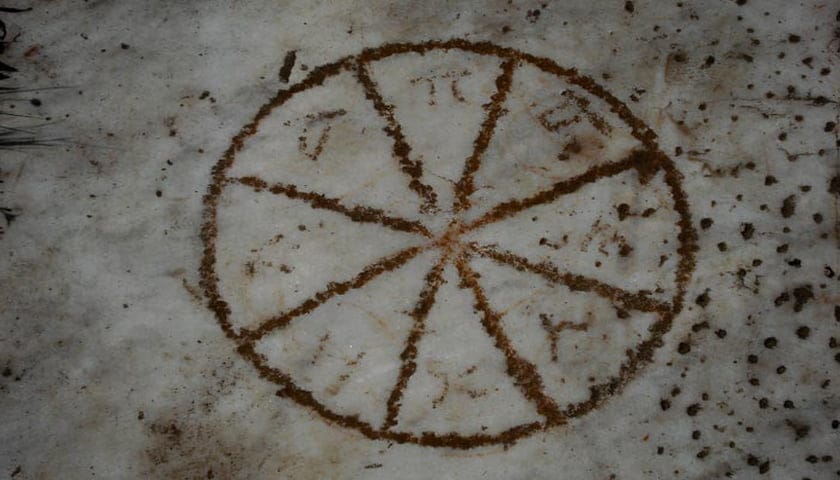
The eagle wasn't simply an attractive decoration.
It represented the Roman Empire itself.
Associated with Jupiter, king of the gods, the eagle symbolized strength, authority, and imperial protection.
Whenever Roman citizens saw an eagle carved into a monument, they immediately understood its message.
Rome was watching.
📍 Where to find it: Monumental buildings and architectural fragments throughout Ephesus.
Modern hospitals often use a snake wrapped around a staff as part of their logo.
That tradition began thousands of years ago.
In Ephesus, snake imagery represented Asclepius, the ancient god of medicine.
Far from being feared, snakes symbolized healing, renewal, and good health.
Visitors seeking medical treatment often associated the symbol with hope and recovery.
📍 Where to find it: Decorative carvings connected with healing and public buildings.
[IMAGE: Ancient snake relief symbolizing Asclepius]
Archaeologists believe hundreds of carved symbols once decorated the monuments of Ephesus. Many have been damaged by earthquakes, weather, or centuries of reuse, meaning visitors today see only a small part of the city's original decorative program.
The symbols you've seen so far are only the beginning.
In the next part of this guide, we'll uncover owls, lions, palm branches, laurel wreaths, Byzantine crosses, theatrical masks, and finish with an interactive challenge to see how many hidden symbols you can spot during your own visit to Ephesus.
At first glance, it looks like nothing more than a decorative bird.
But to the people of the ancient world, an owl carried a powerful meaning.
It symbolized wisdom, intelligence, and knowledge.
The owl was closely associated with Athena, the Greek goddess of wisdom, whose influence continued well into the Roman period.
Considering that Ephesus was home to philosophers, scholars, and one of the ancient world's greatest libraries, it's hardly surprising that owl imagery appears throughout the city.
Keep your eyes open while exploring decorative reliefs and architectural fragments—you may spot one watching silently from above.
📍 Where to find it: Decorative architectural fragments throughout Ephesus.
[IMAGE: Owl carving hidden among the architectural decorations of Ephesus]
Palm branches appear frequently in Roman art, but they were never added simply to make buildings look beautiful.
In antiquity, the palm represented victory, eternal life, peace, and divine blessing.
A victorious athlete received a palm branch.
A successful general celebrated beneath palm decorations.
Even in early Christian symbolism, palms came to represent eternal life and spiritual triumph.
Once you begin recognizing them, you'll notice palm motifs carved into monuments across Ephesus.
📍 Where to find it: Temple decorations and architectural carvings.
Another symbol hidden in plain sight is the laurel wreath.
In the Roman world, laurel crowns represented honor, achievement, and imperial authority.
Emperors wore them.
Victorious generals wore them.
Successful athletes earned them.
Whenever you notice a circular wreath carved into marble, you're looking at one of the ancient world's most recognizable symbols of prestige.
📍 Where to find it: Public monuments and honorary inscriptions.
[IMAGE: Marble laurel wreath carved into an ancient monument]
Lions guarded important buildings throughout the ancient world.
In Ephesus, they symbolized courage, royal authority, and protection.
Their purpose wasn't simply decorative.
Ancient visitors believed these powerful creatures protected temples, fountains, and public buildings from danger.
Even today, lion reliefs continue to watch over parts of the archaeological site.
📍 Where to find it: Monumental architecture and sculptural fragments.
Not every carving inside Ephesus belongs to the Roman period.
Centuries after the Roman Empire embraced Christianity, new generations left their own marks on the ancient city.
Crosses carved into marble columns, walls, and stones remind visitors that Ephesus continued to thrive long after the pagan temples had fallen silent.
These small symbols reveal one of the city's greatest transformations—from one of the world's most important pagan centers to one of early Christianity's most influential cities.
📍 Where to find it: Various columns and reused architectural stones.
[IMAGE: Byzantine cross carved into ancient marble]
The Great Theatre is one of the largest and best-preserved Roman theatres in the world.
Look carefully at nearby decorative carvings and you'll sometimes find theatrical masks.
These masks represented comedy and tragedy—the two great forms of ancient theatre.
For Roman audiences, they instantly symbolized entertainment, storytelling, and civic life.
They remind us that Ephesus wasn't only a religious or commercial center.
It was also a city of culture.
📍 Where to find it: Around the Great Theatre and decorative architectural fragments.
[IMAGE: Ancient theatrical mask carved in marble]
Now it's your turn.
The next time you visit Ephesus, challenge yourself to spot every hidden symbol in this guide.
| Hidden Symbol | Found It? |
|---|---|
| ✔ Ancient Advertisement | ☐ |
| ✔ Medusa | ☐ |
| ✔ Nike | ☐ |
| ✔ Fish Symbol | ☐ |
| ✔ Eagle | ☐ |
| ✔ Snake | ☐ |
| ✔ Owl | ☐ |
| ✔ Palm Branch | ☐ |
| ✔ Laurel Wreath | ☐ |
| ✔ Lion | ☐ |
| ✔ Byzantine Cross | ☐ |
| ✔ Theatre Mask | ☐ |
Most visitors leave Ephesus having seen only the famous monuments.
Now you'll be looking for the hidden stories carved into the stones themselves.
One of the greatest joys of exploring Ephesus is discovering details that many visitors simply walk past.
These symbols transform a walk through ancient ruins into a journey through mythology, religion, politics, engineering, and everyday Roman life.
If you'd like to uncover these hidden stories with the help of an experienced local guide, explore our Ephesus Tours. Many of these fascinating symbols are easy to miss unless someone knows exactly where to look.
The marble footprint, together with a woman's face, a heart, and a coin, is widely interpreted as one of the world's earliest advertisements pointing visitors toward a brothel. While historians debate this interpretation, it remains one of the most famous stories told in Ephesus.
In the ancient world, Medusa was believed to protect buildings by frightening away evil spirits. Her image was often used as a protective symbol.
The fish, known as Ichthys, became a secret symbol used by early Christians to identify one another during times of persecution.
Many crosses were carved centuries after the Roman period, when Ephesus became an important center of early Christianity during the Byzantine era.
Some are easy to spot, but many are small, weathered, or hidden among architectural details. A knowledgeable guide can help you discover symbols that most visitors never notice.
The true magic of Ephesus isn't found only in its grand monuments.
It lives in the details.
A carved snake that once symbolized healing.
A hidden fish that revealed secret faith.
A marble footprint that may have advertised one of the city's oldest businesses.
Each symbol tells a story.
Together, they transform Ephesus from an archaeological site into a living city filled with messages left behind by the people who once walked its streets.
The next time you visit Ephesus, don't just look at the buildings.
Look closely at the stones.
You may discover that the city's greatest secrets have been hiding in plain sight for nearly two thousand years.

I graduated from Istanbul University with a degree in Radio, Television, and Cinema. During my academic journey, I focused on storytelling, visual communication, and cultural content creation, while my personal interests led me toward exploration and discovery.
Traveling, discovering new places, and experiencing different cultures are at the heart of my life. My strong interest in mythology allows me to see destinations not only as physical locations but as narratives shaped by history and meaning. My passion for reading continuously enriches and deepens this perspective.
I truly enjoy meeting new people and learning about diverse ways of life. With this mindset, I aim to share my experiences in a sincere, clear, and engaging way.
I love following the traces of stories wherever I go.
Disclosure Notice
By filling out this form, you agree that the personal data you provide to us will be processed in accordance with the Personal Data Protection Law No. 6698 and related legislation.
Your personal data will be processed solely for responding to your application, evaluating your requests, and fulfilling legal obligations; it will not be shared with third parties.
For detailed information, you can review our Privacy Policy.
By submitting the form, you acknowledge and consent to the processing of your personal data for the purposes specified above.

